 Currencies
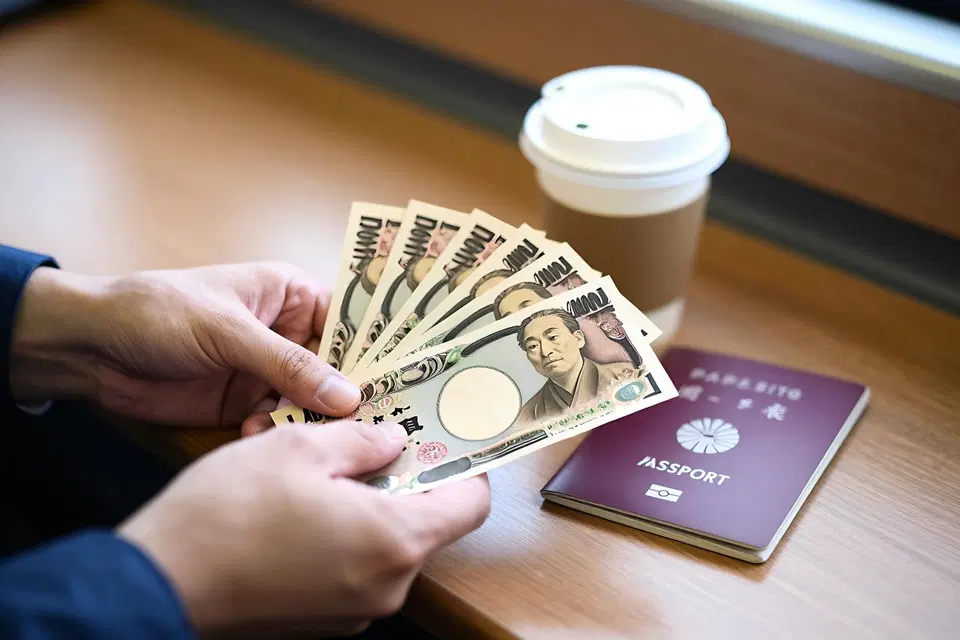
The yen has had a wild few years. In 2011, one US dollar bought roughly 76 yen. By the summer of 2024, it bought more than 161. Anyone who travelled to Tokyo in both eras paid wildly different prices for the same bowl of ramen, even though the ramen itself never changed. That gap is the whole story of the us dollar to japanese yen exchange rate: a single number that quietly rewrites the cost of a holiday, an import contract, or a wire transfer.
Here's what the number means, why it moves, and how to make sure the rate you see on the screen is close to the rate you actually get.
What USD/JPY is actually telling you
A quote of USD/JPY 155.20 means one US dollar buys 155.20 Japanese yen. Flip it around and one yen is worth about 0.0064 dollars, or roughly two-thirds of a cent. Currency pairs are always quoted in one direction, and for the dollar-yen that direction is dollars first.
Two details trip people up. First, the second decimal place matters more than it looks. A move from 155.20 to 158.00 is not a rounding error, it's a 1.8% shift in the value of your money. On a $3,000 travel budget that's about $54 either way. Second, USD/JPY is one of the most heavily traded pairs on earth, which means it reacts within seconds to news, sometimes before the news is even officially confirmed.
Why the dollar-yen rate swings so hard
Most of the big moves come down to one thing: the gap between US and Japanese interest rates.
Japan spent years with its policy rate pinned at or below zero while the US Federal Reserve pushed rates above 5%. When you can borrow yen at almost no cost and park the proceeds in US Treasuries paying 5%, plenty of funds do exactly that. This is the carry trade, and it creates enormous, persistent demand for dollars.
The unwind is just as violent. In July 2024 the yen touched 161.96, its weakest level in nearly four decades. Weeks later, after a Bank of Japan rate hike and softer US jobs data, USD/JPY collapsed to around 142 in roughly three weeks. Anyone holding the carry trade lost a decade of interest income in a fortnight.
Other forces matter too:
- Energy imports. Japan buys almost all of its oil and gas in dollars. When crude prices spike, Japanese importers need more dollars, which pushes the yen down further.
- Official intervention. Japan's Ministry of Finance has stepped into the market repeatedly, most memorably in 2022 and again in 2024, spending tens of billions of dollars to slow the yen's slide.
- Safe-haven flows. In a global panic, money often runs to the yen as well as the dollar, so the pair can move in either direction depending on which currency investors fear less.
- Trade balances. A shrinking Japanese current account surplus reduces the structural demand for yen that once kept the currency strong.
The rate you see is not the rate you get
Look up the rate online and you'll find something like 155.20. Walk into an airport currency kiosk and the board might say 151.10. That four-yen gap is the dealer's margin, and it is where a lot of travellers quietly lose money. We looked at this in detail in why the number on the board isn't the number you get, and the short version is that retail spreads are far wider than the interbank rate you see quoted in the news.
Say you change $2,000 at 151.10 instead of the mid-market 155.20. You hand over $2,000 and receive 302,200 yen instead of 310,400. That's 8,200 yen gone, roughly $53, for the privilege of using a counter at the terminal.
The hidden costs stack up quickly:
- Spread of 1% to 5% depending on where you convert
- Flat commission, often $5 to $15 per transaction
- ATM fees at Japanese convenience stores, usually 110 to 220 yen per withdrawal
- Foreign transaction fees of about 3% on many US credit cards
- Dynamic currency conversion, where a terminal offers to charge you in dollars at a terrible rate. Always decline.
Translating the rate into real prices on the ground
Numbers on a screen mean nothing until you attach them to things you buy. At 155 yen to the dollar, a 1,000-yen item costs about $6.45. That's a decent coffee and a pastry, a convenience store lunch, or a couple of subway rides in Tokyo where base fares run 170 to 210 yen.
A $100 bill converts to 15,500 yen, which in practice buys a solid dinner for two with drinks at a mid-range izakaya, a night in a business hotel, or a taxi from central Tokyo to Haneda if traffic behaves. For a fuller breakdown of what that amount covers, see how many yen you get for 100 USD and what it actually buys in Japan.
Shrink the lens and it gets more interesting. A single dollar is worth about 155 yen, which is roughly one canned coffee from a vending machine, half a subway ride, or a rice ball from a konbini. What a single dollar really buys in Japan is a surprisingly good gut check for whether a price is reasonable.
Doing the maths in your head
You do not need a calculator app open at every till. At around 150 yen to the dollar, the shortcut is to drop two zeros and multiply by two-thirds. A 3,000-yen ticket becomes $20. A 12,000-yen hotel night becomes $80. At 160, multiply by 0.625 instead; at 140, by 0.71.
Anchor yourself with a few fixed prices and you'll never be far off. A convenience store coffee is about 150 yen, a bowl of ramen 900 to 1,200 yen, a Shinkansen seat from Tokyo to Kyoto around 14,000 yen. Change the exchange rate and everything shifts proportionally.
Getting yen without getting taken to the cleaners
The cheapest routes, in rough order, are a no-foreign-fee debit card, a multi-currency account like Wise or Revolut, and a 7-Bank or Japan Post ATM once you land. Airport kiosks sit at the bottom of the list for a reason. If you want a sense of what the boards actually say day to day, what the yen board means for your wallet walks through the signage you'll meet at a Japanese bank or airport.
Two habits are worth adopting. Withdraw larger amounts less often, since the ATM fee is fixed per transaction. And always choose to be charged in yen, not dollars, when a card terminal asks. The dollar price it offers is usually 3% to 5% worse than letting your bank do the conversion.
What to watch if you're waiting for a better rate
Nobody calls the top of a currency market reliably, and anyone who says otherwise is selling something. But three signals do most of the work.
The Bank of Japan's policy path
Japanese rates have been creeping up from rock bottom. Each hike narrows the gap with the US and tends to strengthen the yen. The BOJ moves slowly and telegraphs its intentions, so the direction is usually visible before the decision lands.
The Fed's next move
Rate cuts in the US reduce the carry trade's appeal. The August 2024 yen surge was triggered partly by weaker US employment data, not by anything Japan did. Watch US payrolls and inflation prints if you have a large transfer pending.
Intervention risk
Japanese officials start talking louder when the yen weakens past levels they consider disorderly. Verbal warnings alone can push USD/JPY down several yen. Actual intervention can move it much further in minutes.
If you need a specific amount of yen on a specific date, a flight in six weeks or a tuition payment due in March, split the conversion into two or three tranches rather than betting everything on one day's rate. You'll never get the best price, but you'll avoid getting the worst one, which is the only realistic goal in currency exchange.