 Currencies
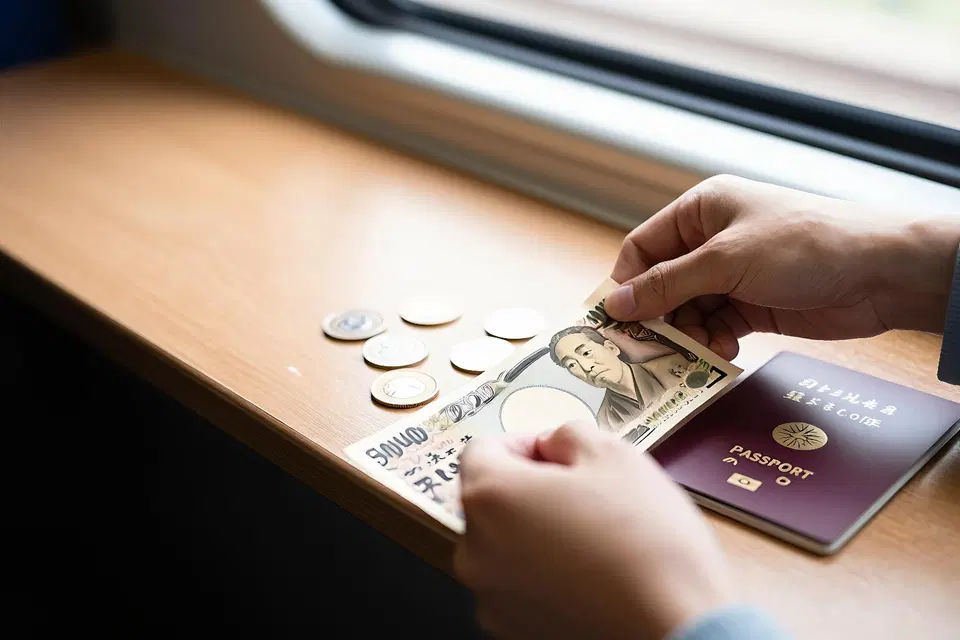
You land at Narita, find the currency counter, and the board reads 149.80. Two weeks earlier your banking app was showing 156. Same trip, same dollars, and somehow your daily budget just got tighter. That swing is the US dollar exchange rate in Japan doing what it does, and it's worth understanding before you hand over a single bill.
The rate isn't a fixed price for Japan. It's a live market price for the yen, quoted in dollars, and it moves every few seconds during the trading week. What follows is the short version of what drives it, plus the part that matters more: why the number on the board is never quite the number you end up with.
What the USD/JPY Rate Is Actually Telling You
USD/JPY answers one question. How many yen does one dollar buy right now? When the number goes up, the dollar is strengthening and your trip gets cheaper in dollar terms. When it drops, the yen is strengthening and everything in Japan costs you more.
The long swings have been dramatic. In late 2011 a dollar bought roughly 76 yen. In 2022 the pair broke 150 for the first time in 32 years. By mid-2024 it touched 161 before Japanese authorities intervened and shoved it back toward the 140s. A traveler in 2011 got 76 yen per dollar. A traveler in 2024 got more than double that. Same hotels, same shinkansen tickets, roughly half the price in dollars.
If you want a sense of what that translates to on the ground, this look at what a single dollar really buys in Japan is a useful reality check against the headline figure.
Why the Yen Moves the Way It Does
Interest rate gaps, mostly
For most of the past decade the Bank of Japan held rates near zero while the Federal Reserve climbed to 5.25–5.50%. Money flows toward higher yields, so investors borrowed cheap yen and bought dollar assets. That steady selling pressure is the single biggest reason the yen weakened so far, so fast. When the BOJ finally started nudging rates up in 2024, the trade unwound violently and USD/JPY dropped several yen in days.
Energy imports
Japan imports close to 90% of its energy, and oil is priced in dollars. When crude gets expensive, Japanese importers need more dollars to pay for it, which pushes the yen down further. It's a structural drag that shows up whenever fuel prices spike.
Safe-haven flows, with an asterisk
The yen has a reputation as a crisis currency. In a global panic, Japanese investors repatriate money and the yen strengthens. That still happens, but it has been outweighed by the rate gap. Reputation isn't the same as behaviour.
The Board Rate Is Not the Rate You Get
Here's where most people lose money without noticing. The mid-market rate you see on Google is the wholesale price banks charge each other. Nobody sells it to you at the airport.
An airport kiosk might quote 145 when mid-market is 150. A major bank counter might quote 148.5. A 7-Eleven ATM might cost you 1–2% plus a flat fee. On a $1,000 exchange, a five-yen gap is 5,000 yen gone, which is a decent dinner for two in Tokyo. This breakdown of the yen rate, the fees, and what you actually get walks through the maths on a typical exchange.
The pattern isn't unique to Japan, either. The same gap between the advertised rate and the delivered rate shows up in every currency pair, which is why the dollar-peso rate you see is rarely the one you get either.
- Airport and hotel counters: convenient, usually the worst rate on offer, often 3–5% off mid-market.
- Bank branches in Japan: better, still typically 1–2% off, and limited opening hours.
- ATM withdrawals: usually the best deal for travelers, especially 7-Eleven and Japan Post machines.
- Card payments: close to mid-market, but always decline the offer to be charged in dollars.
What a Strong Dollar Changes About Your Trip
When the dollar buys 150 yen instead of 110, the arithmetic of a trip shifts in ways that aren't obvious until you're there.
- A business hotel that runs 9,000 yen a night costs $60 instead of $82.
- A seven-day Japan Rail Pass at roughly 50,000 yen lands near $330 rather than $450.
- A 1,200-yen bowl of ramen is eight bucks. Two years ago it was closer to eleven.
- Department store purchases and electronics get noticeably cheaper, which is why luggage allowances suddenly matter.
- Cash still rules in many small restaurants, so plan withdrawals rather than assuming cards work everywhere.
The flip side is that a weak yen makes imported goods pricier for residents, and it lifts the cost of anything you book through a Japanese-facing site in yen. If you're planning a longer stay, this guide to what the yen rate means and where your money goes is worth reading before you set a budget.
Getting Yen Without Losing 4% Doing It
Practical rules that hold up in most situations. Withdraw larger amounts less often, since flat fees punish small withdrawals. Use 7-Eleven or Japan Post ATMs, which accept far more foreign cards than most bank machines. Take yen out at the airport only for the first day, not the whole trip.
If a card terminal or ATM offers to convert your purchase into dollars for you, say no. That's dynamic currency conversion, and it quietly adds 3–7% on top. Always choose to pay in yen and let your bank handle the conversion at its own rate.
Notify your bank before you travel. A blocked card at a rural station with no staff around is a genuinely bad afternoon.
If You Live There or Send Money Home
Remittances are where the spread bites hardest, because it happens every month. A traditional bank wire on $500 can carry a 3–5% markup once you add the FX margin and the sending fee. Specialist services usually land within 1% and charge a small flat amount instead. Over a year of monthly transfers, that difference runs into hundreds of dollars.
Anyone paid in yen but holding dollar obligations should think about timing rather than hoping. A forward contract, even a short one, locks in today's rate for a payment due in three months. It removes the guessing.
Timing the Rate: Honest Advice
Nobody reliably calls the top or the bottom, and anyone who says they can is selling something. The 2024 intervention showed how quickly a fifteen-yen move can reverse on a single policy decision.
What actually works is boring. If you know you'll need yen in three months, buy a chunk now and a chunk later so you average out. Set a rate alert at a level you'd be happy with and act when it hits, rather than checking the app five times a day and dithering. For a trip, the difference between 149 and 152 on a $2,000 budget is about $27, which is worth roughly ten minutes of planning and not worth weeks of anxiety.
The rate will do whatever it does. The spread, though, is entirely within your control, and closing that gap is the one move that reliably puts more yen in your pocket.