 Currencies
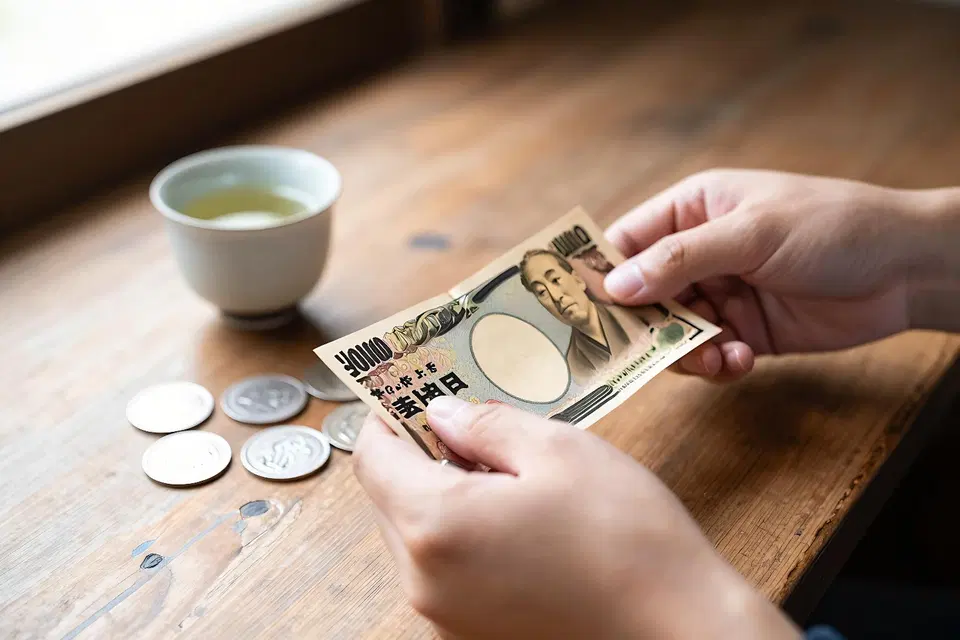
A hundred dollars is a tidy, round number. In yen, it stops being tidy. At a rate of ¥152 to the dollar, $100 becomes ¥15,200 — enough for a Shinkansen ticket or a week of convenience-store breakfasts, depending on how you spend it. At ¥147, the same hundred dollars gets you ¥14,700. Same wallet, ¥500 less. That gap is the whole story of converting dollars into yen, and it's worth understanding before you tap your card in a Tokyo station.
What 100 USD Converts to in Yen
The arithmetic is simple: multiply the dollar amount by the current USD/JPY rate. For most of the past few years the rate has bounced between roughly ¥130 and ¥160, so $100 has landed somewhere between ¥13,000 and ¥16,000. That's a wide range — a ¥3,000 swing on a single hundred-dollar note.
To do it in your head, round the rate to a friendly number. If the board says ¥151.80, treat it as ¥150 and add a bit back. A hundred dollars at ¥150 is ¥15,000; the extra ¥1.80 per dollar adds another ¥180. So you're looking at about ¥15,180. If you'd rather see the same rate applied to smaller amounts, this breakdown of what a single dollar really buys in Japan makes the conversion feel less abstract.
The mental maths shortcut for any amount
Divide the yen figure by 100 to get a rough dollar figure. A ¥1,200 ramen bowl is about $8. A ¥15,000 hotel night is about $100. Once you've trained your eye, prices stop feeling foreign within a day or two.
Why the Rate on the Board Isn't the Rate You Get
The number displayed at a currency kiosk at Narita is not the number the market is trading at. It's a retail price, marked up to pay for the counter staff, the lease, and the margin. A kiosk quoting ¥147 when the interbank rate is ¥152 is charging you five yen per dollar — ¥500 on a hundred-dollar exchange, or roughly 3.3%.
That spread is why the number on the board isn't the number you get. Airport counters and hotel desks tend to have the widest gaps; bank branches and major post offices are usually tighter. If you're converting only $100, the difference is a coffee and a sandwich. If you're converting $2,000, it's a decent dinner for four.
Cards, cash, and ATMs each take a slice
Paying by card feels fee-free, but most issuers add a foreign transaction fee of around 3% on top of the network's own exchange rate. On $100 that's $3 — the equivalent of about ¥450. Withdrawing from a 7-Eleven or Japan Post ATM usually costs ¥110–¥220 per withdrawal from the machine, plus whatever your home bank charges (often $5 plus 3%). Pull out $300 at once instead of three separate $100 withdrawals and you've saved yourself two sets of fees.
This is the same principle covered in more detail in the rate, the fees, and what you actually get — the headline rate is only half the calculation.
What ¥15,200 Actually Buys on the Ground
Here's where the conversion gets useful. At roughly ¥152 to the dollar, $100 becomes a very concrete list of things:
- Ramen and gyoza at a local shop: ¥900–¥1,200, so about 13 meals
- Onigiri from a konbini: ¥150–¥200 each — a week of breakfasts for under ¥1,500
- Canned coffee from a vending machine: ¥130, or 116 cans if you're committed
- Tokyo Metro ride: ¥180–¥210, so roughly 75 journeys
- Beer at an izakaya: ¥500–¥600, about 25 rounds
- Business hotel room: ¥8,000–¥12,000 — one night, or a capsule hotel for two
- Shinkansen, Tokyo to Kyoto: around ¥14,000 reserved, which eats almost the entire hundred
That last line is the one that surprises people. A hundred dollars feels substantial until it meets a bullet train ticket. Conversely, it feels enormous in a ¥100 shop, where it's 152 items.
Sending $100 to Japan Instead of Spending It
If the hundred dollars is going to a person rather than a cash register, the maths changes. A wire transfer through a traditional bank might cost $25–$45 in fees, which is absurd on $100. Specialist remittance services typically charge $3–$8 plus a small spread, so your recipient nets maybe ¥14,300–¥14,800. On amounts that small, check whether the fee is flat or percentage-based — a flat $5 hurts a $100 transfer far more than a $1,000 one.
For a sense of how much slippage is normal, this look at what the yen board really means for your wallet is a useful reality check before you hit send.
Timing Makes a Real Difference at This Size
Currency markets move. A shift from ¥150 to ¥155 on the dollar adds ¥500 to your hundred — a bowl of ramen and a beer, essentially free, just for waiting a week. A move the other way takes it away. Nobody predicts these swings reliably, so the practical rule is simpler: don't convert at the airport at 11pm after a twelve-hour flight, and don't convert your entire budget on day one if you have weeks to go.
Watch the rate for a few days before you travel. If it's near the top of its recent range, convert a bit more; if it's near the bottom, convert what you need and leave the rest. Small discipline, small gains — but on a hundred dollars, small gains are the whole margin.
A Practical Playbook for Your First Hundred
Land with some yen already in your pocket. Order ¥10,000–¥15,000 from your home bank before you fly, accept that you'll pay a modest spread, and skip the airport counter entirely. That cash covers your first train, a meal, and a taxi if the trains have stopped.
Once you're settled, use a 7-Eleven ATM for larger withdrawals and pay by card where it's accepted — which in Japan is now most places in cities, though smaller restaurants, temples, and rural shops still run on cash. Keep ¥10,000 or so on you at all times; a surprising number of excellent little restaurants are cash-only, and the nearest ATM might be a ten-minute walk.
And treat the exchange rate as a live number rather than a fixed fact. Check it the morning you leave. A hundred dollars is always a hundred dollars — but the yen it turns into is a moving target, and knowing roughly what it should be is the difference between getting ¥15,200 and getting ¥14,600 without noticing.