
Loading article...
Slot ID: blog-post-top
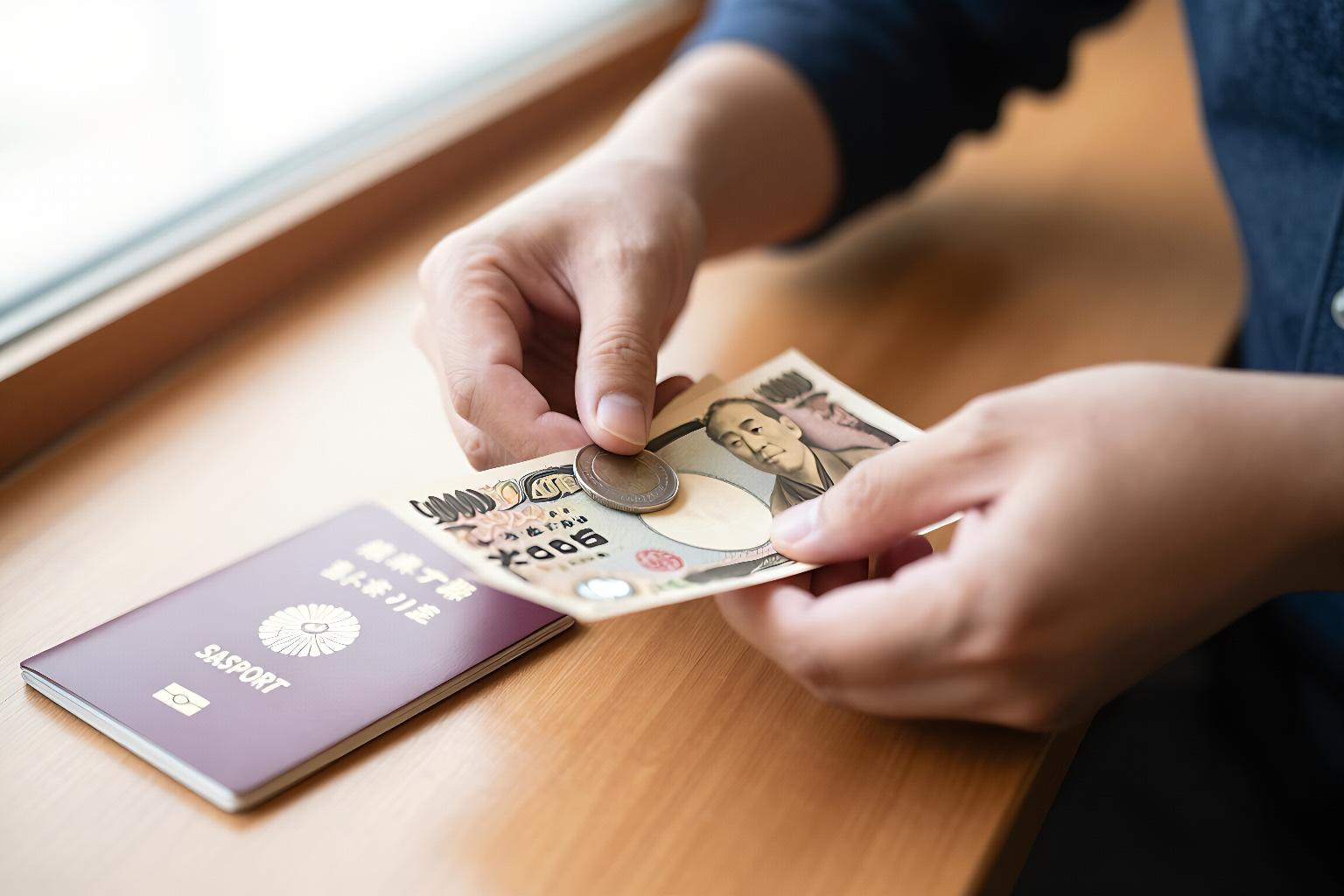
You type 500 into a currency converter, USD to JPY, and it answers 76,200 yen. A week later you add up what the trip actually cost and the same money worked out closer to 74,800. Nothing broke. Nobody cheated you. That gap is the difference between a reference rate and a transaction rate, and understanding it is worth more than any packing list before a trip to Japan.
The figure a converter returns is the mid-market rate, sometimes called the interbank rate. It's the midpoint between the price at which big institutions will buy dollars and the price at which they'll sell them, in trades that run into the hundreds of millions. It's real, it's published, and it's the fairest single benchmark available.
You are not a bank trading in hundreds of millions. You're buying a retail product, and retail products carry a cost. The question isn't whether there's a gap between the converter and your statement — there always is — but whether the gap is 0.8% or 4%.
USD/JPY is quoted as the number of yen per one US dollar, so the figure looks large. That's just a convention, not a sign the yen is cheap. If the rate reads 152.40, one dollar buys 152.40 yen, and $1,000 buys 152,400 yen before any costs.
The direction matters too. A move from 152 to 156 means the dollar has strengthened — your dollars now buy more yen, which is good news if you're holding USD and heading to Japan. A drop to 148 works against you. Keep that in mind whenever you see a headline saying the yen "fell"; it usually means good things for anyone spending dollars.
Four costs stack up on top of the mid-market rate. Not all of them apply every time, but most conversions include at least two.
None of these appear in the converter's answer. That's why the tool is a starting point rather than a quote — a point worth remembering with any pair, which is exactly why the number you see in a converter isn't the amount that leaves your account.
Suppose mid-market USD/JPY is 152.40 on a Tuesday. Here's roughly what you might see from three places on that same day:
On $1,000, that's the difference between 151,300 yen and 148,000 yen. About $22 evaporates purely on where you chose to convert. Airport counters and hotel desks are the most expensive places to swap money precisely because they know you have no alternative at that moment.
The mechanics are identical across currencies, so learning to read the spread once pays off everywhere. This breakdown of why the rate you see isn't the rate you get covers the same trap with a different currency pair, and the logic transfers directly to yen.
Here's how it plays out with a mid-market rate of 152.40 and an online transfer service charging a 0.6% markup plus a $4 flat fee.
You send $1,000. The provider keeps $4, leaving $996 to convert. At 0.6% below mid-market, the effective rate is about 151.49. Multiply it out and you get roughly 150,884 yen arriving in the recipient's account. The pure mid-market value was 152,400 yen, so the total cost was around ¥1,516 — about $10, or 1%.
Run the same $1,000 through a bank wire at a 2.5% markup with a $35 flat fee and you land near 145,635 yen. Same dollars, same day, ¥5,249 less. That's the entire argument for shopping around, made in one number.
These are two different problems and they get solved differently.
For rent, tuition, or paying a Japanese supplier, use a service that publishes its markup instead of burying it in the rate. Compare the total yen that arrives, not the headline fee. A $3 fee with a 1.5% markup is worse than a $9 fee with a 0.4% markup on anything above about $600. Transfers typically clear in one to three business days, and the rate you lock in depends on when the provider actually executes, not when you clicked submit.
Japan still leans on cash more than most wealthy economies. Small restaurants, temples, rural train stations, and many market stalls take notes only. A ¥10,000 note covers most everyday situations, and coins go up to ¥500.
Withdrawing yen from a 7-Eleven or Japan Post ATM with a debit card usually beats any exchange counter, even after fees, and it's the standard approach for most visitors. Decline the ATM's offer to convert the amount into dollars for you — that's dynamic currency conversion, and it typically costs an extra 3–5% for the convenience of seeing a familiar number. Pay in yen and let your bank handle it.
USD/JPY is one of the more volatile major pairs. It travelled from around 115 in early 2022 to above 150 within roughly eighteen months, and daily swings of 0.5% are routine. That's meaningful on large sums and mostly noise on small ones.
On a $200 transfer, a one-yen move is about ¥200 — call it $1.30. Not worth losing sleep over. On $20,000, a two-yen move is ¥40,000, or roughly $260. At that size, watching the rate for a week or setting a target alert makes sense. The realistic rule: don't try to call the bottom on a $500 holiday budget, and don't convert a house deposit on a whim on a Sunday night when spreads widen.
After any conversion, divide the yen you received by the dollars you spent. That's your effective rate. Compare it to the mid-market rate published for the same day.
Say you spent $1,000 and received 150,884 yen. Your effective rate is 150.88. If mid-market was 152.40, you paid about 1% to move the money. That's a good outcome for a transfer and an excellent one for a card payment abroad.
Effective rate within 0.5–1.5% of mid-market: you did well. Between 2% and 3%: acceptable if you needed speed or convenience. Above 4%: you paid for something — urgency, a hotel desk, an airport kiosk at midnight — and it's worth knowing which. Checking that single ratio, once per conversion, teaches you more about how exchange costs actually behave than any rate alert, and it makes the next quote far easier to judge. A quick look at what today's rate actually means for your money is a useful habit the first few times you run the calculation.
Currency converters are honest tools doing a narrow job. They tell you what a dollar is worth in yen at wholesale, right now. They don't know about your bank's markup, the ATM in Shinjuku charging ¥220, or the counter at Narita quoting 147.80. Get the rate from the converter, get the total from the provider, then compare the two. That gap is the only number that decides whether you got a good deal.
Slot ID: blog-post-bottom