
Loading article...
Slot ID: blog-post-top
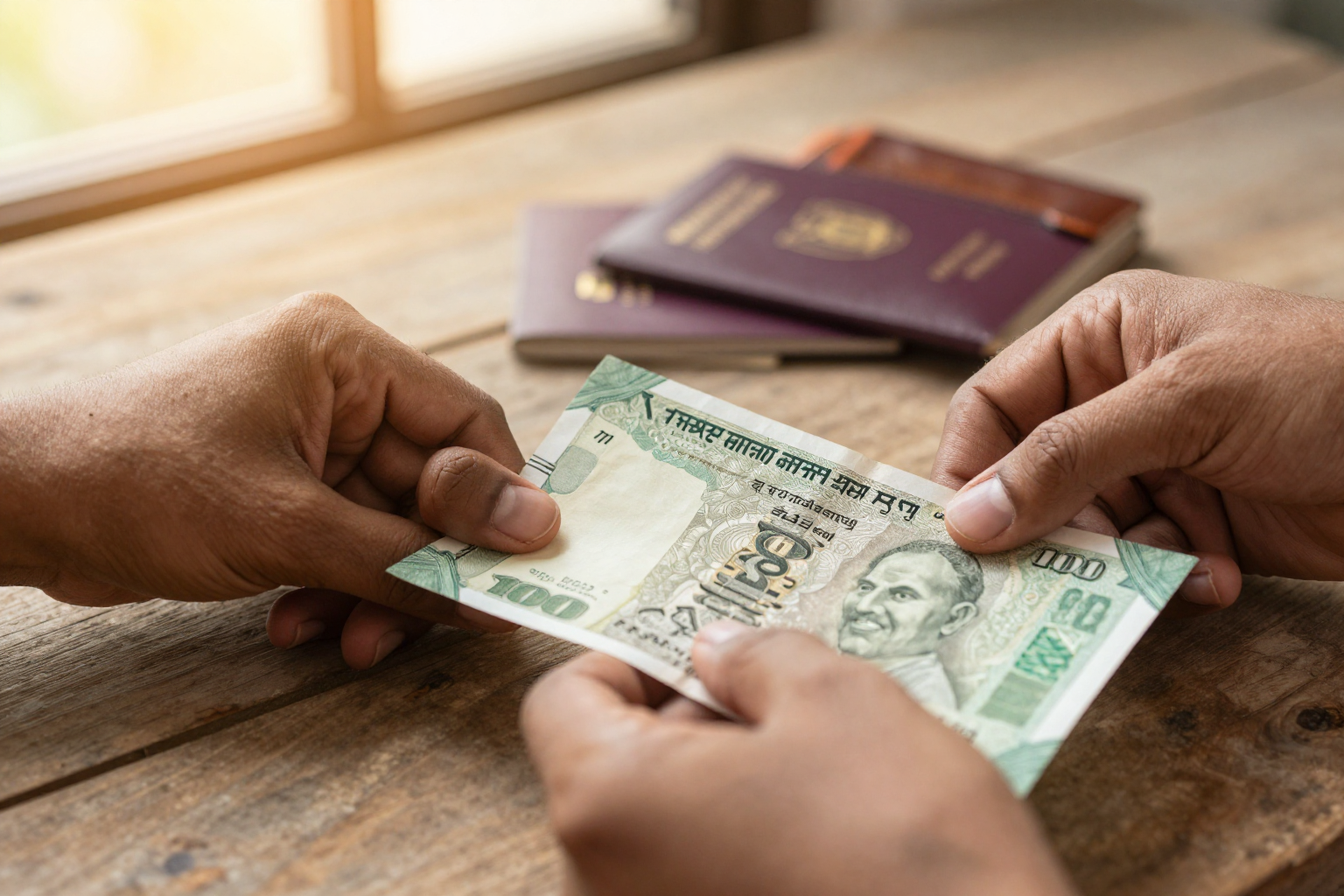
Type "500 dollars in rupees" into a search bar and you'll get an answer before your finger leaves the keyboard: roughly ₹43,750 if the rate is sitting at 87.50. That single number is what most people mean when they ask for a USD to INR currency converter. It's fast, it's free, and it's also the source of a lot of confusion once you try to actually get that rate from a bank or a money transfer app.
The gap between the number on your screen and the number on your receipt isn't a scam. It's how currency retailing works. Understanding where the difference comes from puts you in a much better position to compare providers and stop overpaying on every conversion.
The figure on Google, XE, or a bank's homepage is the mid-market rate. It sits halfway between the price at which large institutions buy dollars and the price at which they sell them, on a market where trades are measured in millions. If the mid-market rate is 87.50, one US dollar is worth 87 rupees and 50 paise in wholesale terms.
That rate is a reference, not an offer. Nobody is obliged to hand you 87.50 rupees for your dollar, and when someone does, they're usually making money elsewhere in the transaction. When a converter says $1,000 equals ₹87,500, the real question is how much of that ₹87,500 survives the journey to your account. If you want the longer version of what a converter tool really shows you, that split between the published rate and the dealable rate is the whole story.
Retail currency providers build their margin in a few ways, and most of them use more than one at once.
Here's the trick worth remembering: convert backwards. Ask how many dollars you need to send to land a specific rupee amount, then divide that dollar figure into the rupees. Compare the result to the mid-market rate. Within 1% is a good deal. If you're 4% off, shop around.
People often assume the rupee moves because of politics or headlines. In practice, a handful of structural forces do most of the work.
India imports the large majority of its crude. When oil prices climb, importers need more dollars to pay for the same barrels, demand for USD rises, and the rupee tends to weaken. It's one of the most reliable pressures on the currency.
When the US Federal Reserve keeps rates high, dollar-denominated assets pay more and global money drifts toward them. A widening gap between US and Indian yields usually pushes USD/INR higher. When the Fed cuts, that pressure eases.
Institutional money moving in and out of Indian equities moves the rupee quickly. A strong quarter on the Sensex can bring dollars in; a risk-off week pulls them straight back out.
India receives well over $100 billion a year in remittances, plus a large IT services export bill paid in dollars. Both create steady natural supply of USD, which is part of why the rupee grinds lower gradually rather than collapsing. If you want to understand why the rate keeps moving day to day, these flows matter more than daily news.
The RBI intervenes to smooth volatility rather than to hit a target. It doesn't stop the rupee from drifting over years, but it does prevent the violent swings that would spook importers.
You don't need a converter for rough math. If the rate is around 87, a dollar is close to ₹90 minus a small discount. So $50 is about ₹4,350, $200 lands near ₹17,400, and $1,000 comes to roughly ₹87,000.
Going the other way, divide rupees by the rate. ₹10,000 at 87 is about $115. For a quick estimate, knock 12% off the rupee figure and you're near the dollar value. That's accurate enough for comparing prices, splitting a bill, or checking whether a shopkeeper's mental arithmetic is being generous.
For small amounts, cash is convenient but usually the most expensive per rupee converted. Airport counters often quote 5% to 8% off the mid-market rate, and the "no commission" sign outside genuinely means the margin is baked into the rate itself.
Debit and credit cards are better than people expect, especially cards with no foreign transaction fee. You get close to the network rate, usually within 0.5% to 1%, though some Indian issuers add a markup of up to 3.5%. On ATM withdrawals abroad, expect a local operator fee on top.
For anything above a few hundred dollars, a specialist transfer service almost always wins, because the good ones publish their rate openly and let you benchmark it yourself. If you're new to this, the fundamentals in this guide to exchange rates from scratch are worth ten minutes before your first big transfer. Bank rates published online are usually indicative too, so treat them the way you'd treat OANDA's converter: a useful benchmark, not a promise.
Most converters let you set a target rate and email you when USD to INR crosses it. That beats trying to time the market, because nobody reliably calls the top or the bottom. If you need to send money in the next month, pick a level that works for your budget, set the alert, and act when it fires. If it never fires, convert anyway on the day you need to. A 0.5% difference in rate matters far less than a missed rent payment.
One habit worth building: check the mid-market rate on the morning of every conversion, even if you've used the same provider for years. Rates shift, providers quietly reprice, and five seconds of checking is the cheapest insurance you'll ever buy against a widened spread.
Slot ID: blog-post-bottom