
Loading article...
Slot ID: blog-post-top
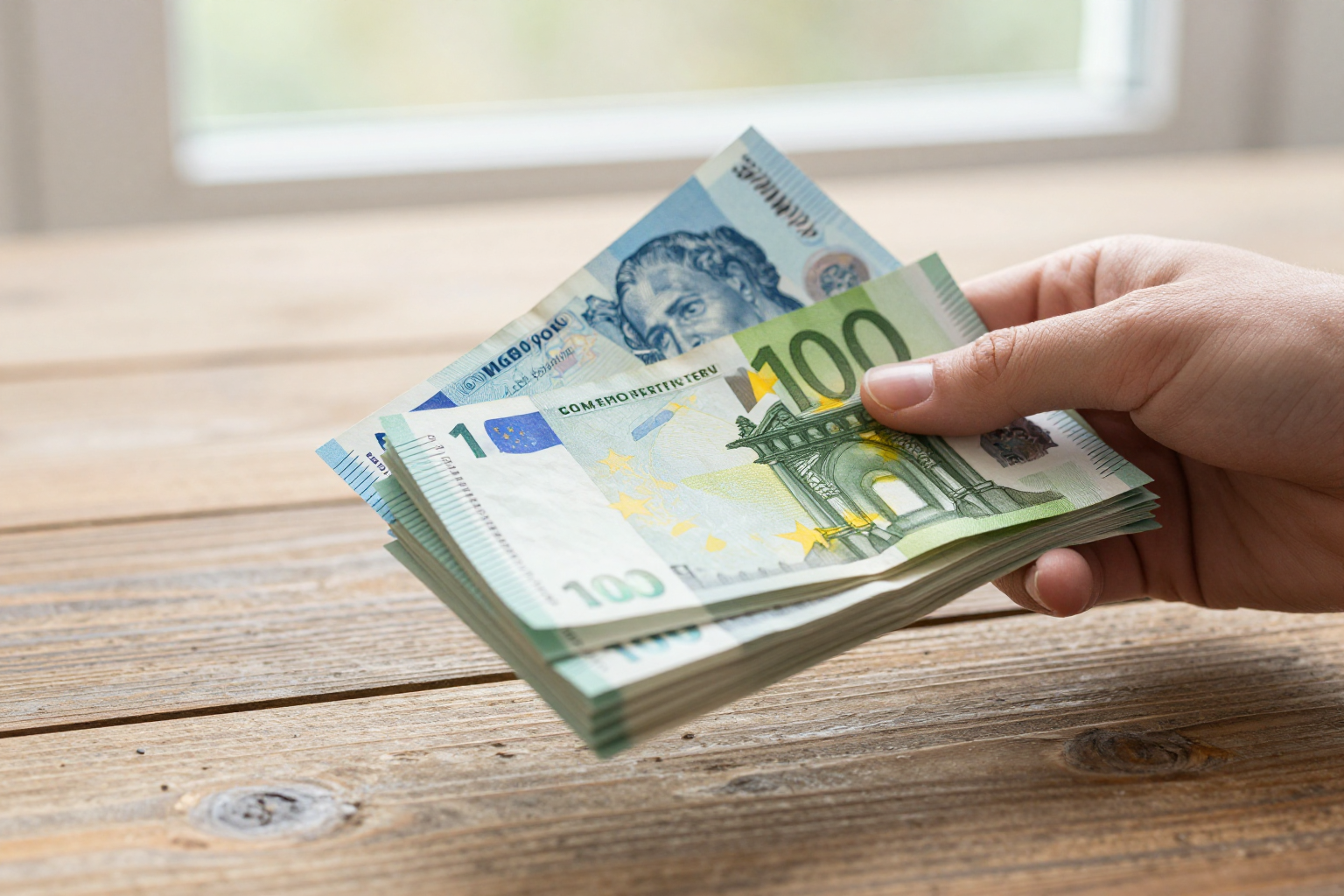
If you've ever typed "10000 yen in pounds" into a search box or opened a banking app before a holiday, you've used a money converter. It feels like a magic little calculator: choose a currency, type an amount, and get a number. But that number can be almost meaningless when you try to use it in real life. The tool itself is simple; the exchange rate behind it is not. So let's start from zero and unpack what a money converter actually does, where its numbers come from, and why the amount you really pay rarely matches the pretty quote on your screen.
Every currency is a product that can be bought and sold, just like apples or petrol. When you see a rate like 1.08, you're really looking at the price of one currency in terms of another. One euro might cost 1.08 US dollars. One British pound might cost 1.27 US dollars. That price changes constantly because of supply and demand, central bank decisions, inflation data, elections, even natural disasters. If you've ever watched a rate flicker by a thousandth of a cent, you've seen the market adjusting to something, somewhere.
For a beginner, it can help to step back from the screen for a minute. The money converter you're using is just a window into this global marketplace. To understand how exchange rates are formed and why they shift, you need to know that these numbers come from an interbank market where large banks trade currencies in enormous volumes. The rate you see online is your view of that very active wholesale market.
Every currency pair has two parts. The base currency is the first one; the quote currency is the second. If the pair reads EUR/USD = 1.08, then EUR is the base and USD is the quote. That means one euro buys 1.08 dollars. Flip it to USD/EUR = 0.93, and it means one dollar buys 0.93 euros. Same transaction, different angle.
Money converters usually let you pick any amount and any pair. But they're not all built the same. Some will convert your money through a third currency behind the scenes, often the US dollar, even when you don't ask for it. That two-step conversion can quietly add a little cost. A good converter will show you the direct rate, so pay attention to how your chosen pair is expressed.
Most online money converters, including Google and the big finance portals, use something called the mid-market rate. It sits exactly halfway between the price at which banks are willing to buy a currency (the bid) and the price at which they'll sell it (the ask). Because it's the midpoint, it's never actually available to regular consumers or even most businesses. It's a reference rate, not a tradable one.
That reference comes from live data feeds provided by financial data companies. The numbers update every few seconds, based on the latest trades in the wholesale market. The mechanics behind all this switching and quoting can feel like a black box, but the basic logic is straightforward. For a clear, plain-language explanation of how a currency converter calculates its displayed number, you don't need to calculate it yourself. The tool does that for you.
Here's the trap that catches nearly every beginner. You look up 500 US dollars to Mexican pesos. The money converter says you'll get 10,050 pesos. You walk into a currency exchange booth and walk out with only 9,720 pesos. What happened?
The bank or kiosk didn't use the mid-market rate. It added a margin of, say, 2% to your transaction. Plus, some places charge a flat fee as well. Banks and exchange services are businesses, not charities. They make money on the difference between the wholesale rate and the retail rate they offer you. This difference is called the spread, and it's the hidden cost inside every currency trade.
Some online money converters are more honest than others. A few will show you the rate you'd actually get from a specific provider like Wise, or from the converter's own currency account product. But the majority just show the mid-market rate and leave you to discover the markup later. That's why the exchange rate you see in the morning can be very different from the one you get when your bank executes a transfer in the afternoon. Time delays plus invisible margins mean your final amount is rarely what the converter promised.
Not every money converter is worth your time. When you're comparing tools, look for these features:
One well-known tool often appears in beginner searches: OANDA. It's primarily a trading platform, but its free converter is widely used as a reference. There's a useful breakdown of what the OANDA currency converter can and cannot tell you, because even that popular app won't guarantee the price you'll get at a bank teller.
Let's look at the typical faces of misuse.
Saving the wrong direction. You check 100 euro to pounds and see 85.37. Then you ask your bank to send 85.37 pounds to a European friend and are shocked when only 90 euros arrive. You used the rate in the wrong direction. Always check which currency is the base.
Using one rate for the entire budget. Currency moves constantly, so setting an exact number in your travel budget is pointless. Rates can shift 1% in a single day, especially for the mainstream pairs. For example, the euro exchange rate is influenced by everything from European Central Bank speeches to US jobs reports, so a rate you looked at last week could be long gone by the time you're at the airport.
Ignoring the markup when comparing deals. One transfer company may show a better headline rate but charge a £15 fee. Another shows a slightly worse rate but no fee and faster delivery. The money converter can't weigh those trade-offs for you; you have to look at the total price.
Think of a money converter as an estimator, not a promise. If you're planning a trip and want a rough figure for how much cash to get, use the mid-market rate and then add a 3–5% buffer. That gives you a realistic upper bound. For an actual transfer, never rely on the converter. Open your bank's app, check the live quote including all fees, and use that as the number you agree to.
You can also use a converter to check whether a provider's quoted rate is fair. Say you want to send 1,000 pounds to euros. The converter shows a mid-market rate of 1.16. A provider offers 1.14. That's about 1.7% markup, which is actually typical. If they offer 1.05, you know it's a horrible deal and you should look elsewhere.
The biggest limits of a money converter aren't technical. The biggest limit is that it tells you what one currency is worth right now, not whether that value is expected to rise or fall. No converter can predict tomorrow's central bank announcement or next month's inflation figures. And because it only shows a midpoint, it will never show you the real price you'll pay when you exchange physical cash or pay an international invoice.
Occasionally, people try to use money converters to follow speculative ventures like the Iraqi dinar, hoping for a sharp revaluation. Those dreams are built on a misunderstanding of how exchange rates work. If you've ever encountered a website claiming that the next currency reset will make you a millionaire, this beginner-friendly guide to dinar speculation might save you a lot of money.
Being a savvy user of a money converter simply means respecting its limits. Use it to get the big picture, to compare rough costs, and to understand how much a currency is worth in the wholesale market. Then hold on to your wallet until you see the final price from a real provider, in writing, with every fee spelled out. That's the number that actually matters.
Slot ID: blog-post-bottom