 Currencies
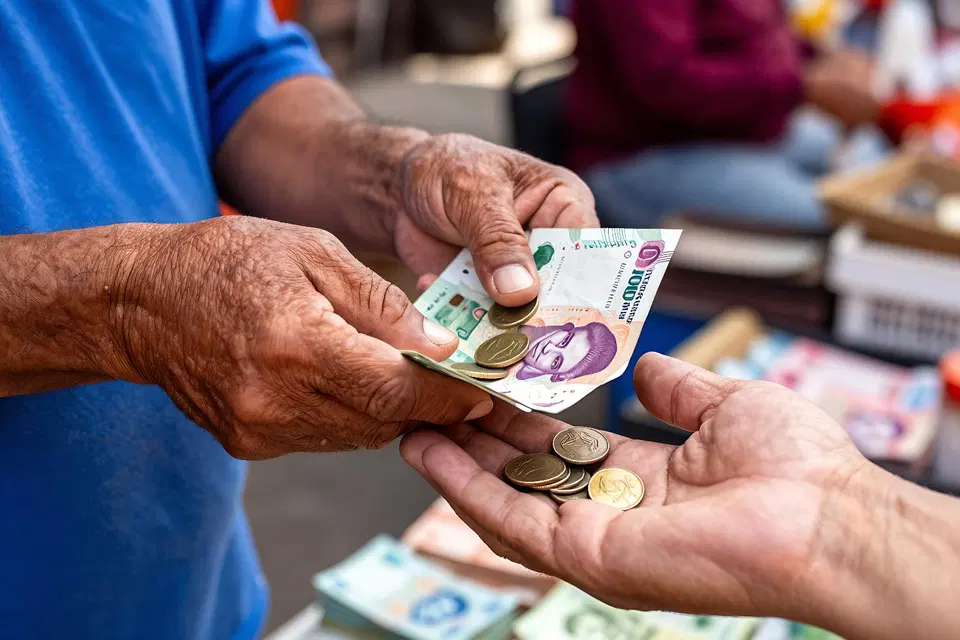
Two people land at Mexico City's Benito Juárez airport on the same flight, each carrying $500 to turn into pesos. By dinner, one has roughly 9,200 pesos in their wallet and the other has about 8,400. Same city, same afternoon, same dollar. The gap comes down to where they changed their money and what they agreed to at the counter.
That is the tricky thing about the US dollar exchange rate in Mexico. The quoted number is only the starting point. What actually lands in your pocket is a separate calculation, and it's one you control more than most travellers realise.
What that number on the board is really quoting
When you look up the rate and see 18.40 MXN to the dollar, you're looking at the mid-market rate, also called the interbank rate. It's the midpoint between buy and sell prices in the wholesale market where banks trade with each other in enormous volumes. Nobody hands you that rate at a counter. It's simply the reference point every other rate gets measured against.
The gap between the mid-market rate and what a currency desk offers you is how that business makes its money. A spread of 2% sounds trivial until you're converting a few thousand dollars. To get a feel for the scale, what one dollar really gets you in Mexico is a useful benchmark, because it strips the exchange rate back to everyday purchases instead of abstract numbers on a screen.
Why the peso moves as much as it does
The dollar-peso pair is one of the most heavily traded in the world, and it swings harder than most visitors expect. A rate sitting near 16.3 in April 2024 was trading closer to 20 a few months later. If your trip budget is in dollars, that's the difference between a comfortable fortnight and a careful one.
Interest rates do much of the work
Banxico, Mexico's central bank, kept its benchmark rate high through 2023 and into 2024 to fight inflation. When Mexican rates sit well above US rates, foreign money flows in to collect the difference, and that demand lifts the peso. As Banxico cut rates through 2024 and 2025, some of that support faded. Watch both central banks, not just the one closest to home.
Remittances and tourism act as ballast
Mexico receives more than $60 billion a year in remittances from workers abroad, most of it from the United States, plus heavy tourism earnings. That steady flow of dollars into the economy props up the peso even when sentiment elsewhere turns sour.
Headlines move it within hours
Elections, judicial reform debates, US tariff talk, oil prices. The peso reacts to all of it at speed. In June 2024 the rate jumped sharply after Mexico's election results came in. If you're converting a large sum, that kind of volatility is something to plan around rather than react to.
The rate you're offered depends entirely on where you change money
Here's a rough sense of what different routes cost, based on typical spreads over the mid-market rate:
- Airport currency counters: 3% to 8% below the market rate, sometimes worse for small notes.
- Casas de cambio in city centres: 1% to 3%. Checking two or three on the same street takes five minutes and is completely normal.
- Bank branches: 2% to 4%, plus a queue and a passport check.
- ATMs: close to the interbank rate, minus a flat fee of roughly 30 to 100 pesos per withdrawal.
- Hotel front desks: routinely the worst rate in the building.
- Paying in dollars at a shop or restaurant: often an implicit rate 10% to 15% below market, assuming they accept dollars at all.
Every currency counter runs the same business model, whether you're changing into pesos or working out what a buck converts to in Canada. The full breakdown of fees, card surcharges and conversion tricks is worth understanding before you fly, and what the rate really costs you and how to beat it walks through the mechanics properly.
How to get close to the real rate
Always choose pesos, never dollars, at the ATM
Mexican ATMs increasingly offer to convert your withdrawal into dollars for your convenience. Decline it. That's dynamic currency conversion, and it hands the machine a markup of 3% to 6% on top of everything else. The screen will usually ask twice. Say no to dollars both times and let your own bank handle the conversion at its end.
Take out larger amounts, less often
A 60-peso ATM fee on a 1,000-peso withdrawal is 6%. The same fee on a 5,000-peso withdrawal is 1.2%. If your bank reimburses foreign fees this matters less, but most don't. One bigger withdrawal every few days beats four small ones.
Use bank-branded machines inside branches
BBVA, Santander, Banorte and Scotiabank ATMs are generally reliable and give reasonable rates. Standalone machines in convenience stores and on tourist strips can carry much higher fees. During business hours, an ATM inside a bank lobby is the safest bet.
Reach for a card on the big purchases
Hotels, flights, larger restaurants and car rentals process fine on a credit card with no foreign transaction fee. That gets you close to the interbank rate with no cash handling at all. Keep notes and coins for markets, taxis, street food and small shops.
What a two-peso swing does to a two-week trip
Suppose you plan to spend $1,500 over two weeks. At 17.00 MXN you get 25,500 pesos. At 19.00 you get 28,500. That 3,000-peso difference is roughly a week of tacos and coffee, or a very good dinner for four in Mexico City, or two nights in a mid-range hotel in Oaxaca. It isn't abstract.
Concrete prices help you calibrate. Street tacos run 18 to 30 pesos each. A latte in Roma Norte is 55 to 75. A litre of milk at a supermarket is around 25. An Uber across the city is 120 to 200. An ADO bus from Mexico City to Oaxaca is about 700. A sit-down dinner for two with drinks in a nice neighbourhood lands between 900 and 1,500. What that number actually buys you depends heavily on where in the country you're standing, since prices in Mexico City and San Cristóbal aren't the same conversation.
Buy pesos before you leave, or change on arrival?
Changing a small amount at home, maybe $100 worth, is sensible for airport coffee and a taxi. Beyond that you'll usually do better in Mexico. The exception is if your home bank offers genuinely fee-free conversion at a fair rate, which is rarer than the marketing suggests.
Timing the market is a losing game for most travellers. Rates move on headlines nobody can predict. What you can control is the spread you pay. Someone who gets within 1% of the mid-market rate on a mediocre day beats someone who accepts a terrible rate on a strong one, every single time. Converting a large sum in two or three chunks over a few weeks smooths out the risk without requiring any forecasting skill at all.
One more check before you go: does your usual card charge a foreign transaction fee of about 3%? On a $1,500 trip that's $45 gone before you've bought a single taco. A card without that fee pays for itself almost immediately.
Habits that beat rate-watching
None of the habits below require you to predict anything, which is precisely why they work.
- Check the mid-market rate on the morning you travel so you know what good looks like when a counter quotes you.
- Refuse dollar conversion on every card terminal and every ATM screen, without exception.
- Keep 500 to 1,000 pesos in small notes for markets, tips and taxis that don't take cards.
- Photograph your ATM receipts. Disputes and expense claims both need a paper trail.
- Ask your bank what it charges for foreign withdrawals before you leave, not after you get home.
The dollar-peso rate will keep doing what it does, drifting on rate decisions and jumping on political news. Your job is simpler than forecasting it. Know the mid-market number, refuse the conversions offered to you, and use the route that keeps the spread thin. Do that and a two-peso swing stops feeling like something that happens to you and starts looking like something you can plan around.