 Currencies
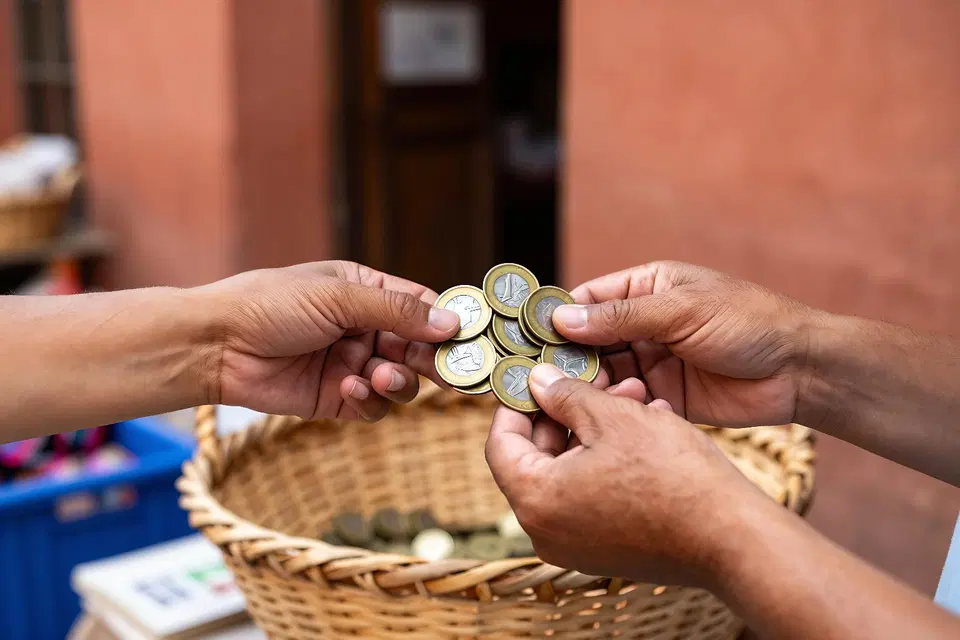
You check the rate the morning before a trip to Mexico City and see 18.42 pesos to the dollar. Two weeks later, the same screen reads 19.06. Nothing about your bank balance changed, yet the $800 you set aside is suddenly worth 512 more pesos. That's roughly a good dinner for two, or a week of café con leche. The gap between those two numbers is the whole story of the US dollar in Mexican pesos: a price that moves every day, and one you almost never get in full.
The quoted rate is a price, not a fact
When you see USD/MXN at 18.60, it means one US dollar buys 18.60 Mexican pesos. Turn it around and a single peso is worth about 5.4 US cents. Currency desks quote it to four decimals — 18.6032 — because big institutions trade on fractions of a centavo across millions of dollars.
That mid-market number is what banks and funds trade with each other at. It's the figure Google and XE show you. It is real, but it's also the wholesale price, and you are shopping at retail.
What actually moves the dollar-peso rate
Mexico has one of the most heavily traded currencies in the world, and the peso reacts to a handful of forces more than most.
The interest rate gap
Banxico's benchmark rate sat near 11% for much of 2023 and 2024 while the Federal Reserve was closer to 5%. That gap made it profitable to borrow in dollars and hold pesos, a carry trade that pulled enormous amounts of money into Mexico and kept the peso unusually strong. When Banxico starts cutting ahead of the Fed, some of that money leaves, and the peso softens. Watch the two central banks, not the headlines.
Trade, oil and remittances
Mexico's economy runs on exports to the US, Pemex's oil revenue, and roughly $60 billion a year in remittances from workers abroad. Nearshoring has poured factory investment into the north of the country. All of it creates steady demand for pesos. Every time a US tariff threat or a constitutional reform spooks investors, the opposite happens fast.
Risk appetite
The peso is what traders call a liquid emerging-market currency. In calm weeks it trades like a developed one. In a global panic, it gets sold first and asked questions later. That's why a quiet Tuesday can hand you 18.20 and a bad Friday can leave you at 17.65.
Where your money goes before it reaches your pocket
Every provider takes a slice, and the slice is almost always hidden inside the rate rather than shown as a fee. Understanding what the rate really costs you once the markup is counted is the difference between losing 1% and losing 8%.
Typical markups on the dollar-peso conversion
- Major US bank branch: 2% to 4% over mid-market, plus a flat fee for non-customers.
- Airport currency kiosk in Mexico: 5% to 10%, often worse at 11pm when you have no alternative.
- Debit card at a Mexican bank ATM: network fee of 30 to 60 pesos plus a 3% foreign transaction fee, unless your card waives it.
- Online transfer to a Mexican account: 0.5% to 1.5% all-in, the best of the lot if you have somewhere to send it.
- Street-level casas de cambio: wildly variable, from competitive in San Miguel de Allende to genuinely bad in resort towns.
A $1,000 conversion, three ways
Assume mid-market is 18.60, so $1,000 is theoretically 18,600 pesos.
A US bank branch at a 2.5% markup hands you about 18,135 pesos. An airport kiosk at 7% gives you roughly 17,298. A debit card withdrawal spread across three ATM trips at a 1% markup plus 150 pesos in total machine fees nets you around 18,264. Same dollars, and the spread between best and worst is over 1,300 pesos — the price of two nights in a decent Puebla hotel.
Timing is a guess; structure is a strategy
Nobody reliably calls the peso. Forecasters who nailed 2023 missed 2024. What you can control is how you buy.
If you need 20,000 pesos for a trip six weeks out, buying it all on one Tuesday is a bet on that Tuesday. Buying 5,000 pesos a week for four weeks averages out the noise and removes the regret of a single bad day. Set a limit order with your bank or transfer app if it offers one — many will execute automatically when the rate touches your target, so you don't need to watch it.
Long stays and property purchases deserve a different approach. Paying a Mexican landlord or contractor monthly? A recurring transfer at a published rate beats a wallet full of cash every time. Rates on transfers also tend to be far more stable than kiosk rates, which drift with whatever the shopkeeper feels like posting that morning.
The same arithmetic applies to every currency pair
Once you understand that the mid-market figure is a wholesale price and every retail conversion carries a spread, you can read any quote properly. The identical logic explains what the USD/CAD number actually means for your money if you're heading north instead of south, and it's why $100 USD rarely gets you what the headline rate suggests in Canada. Two borders, one rule: the spread eats first.
Cash still matters in Mexico
Cards are accepted in Mexico City's Roma Norte and in every Oxxo, but smaller markets, taxis, roadside taquerías and many family-run hotels still run on pesos in hand. Plan on carrying 2,000 to 3,000 pesos for a week of small purchases, and keep the notes small — vendors will struggle to break a 500. Tipping is usually 10% to 15%, and it's easier in cash.
One practical habit: never pay a Mexican merchant in dollars. A shop that offers to charge you in USD is applying its own exchange rate, usually 4% to 8% worse than the one your card would have used. Always choose pesos.
The ATM screen that asks a trick question
Halfway through a withdrawal, a Mexican ATM will offer to convert your money for you: "Would you like to be charged in USD?" It looks helpful. It isn't. That's dynamic currency conversion, and the rate behind it typically runs 5% to 9% above mid-market, with the markup buried in the exchange rate rather than disclosed as a fee.
Tap decline, or "no," and let your own bank handle the conversion. Withdraw from a bank-branded machine inside a branch during daylight rather than a freestanding kiosk on a street corner, take out larger amounts less often to shrink fixed fees, and check whether your card charges the 3% foreign transaction fee before you leave. Three small decisions on one screen can save you more than a week of careful rate-watching ever will.