 Currencies
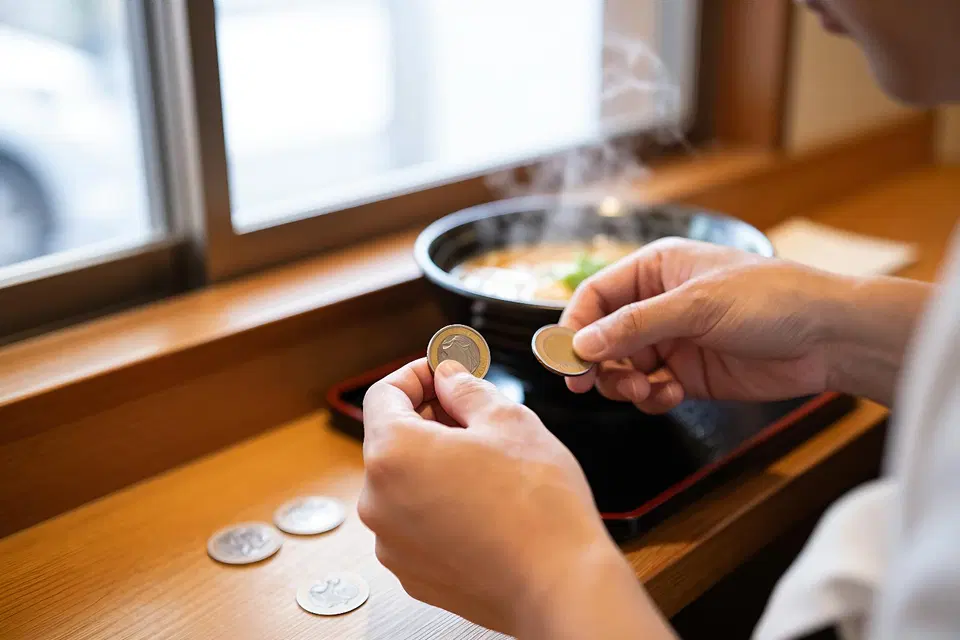
Type "1 us dollar in japanese yen" into a search bar and you want one thing: a number. Fine. That number currently floats somewhere between roughly 140 and 160 depending on the week, so a dollar buys you around 150 yen. Simple enough.
Except that single figure hides a lot. The rate is a moving target driven by central banks and bond markets, the number you're quoted at a counter is almost never the number you looked up, and what 150 yen gets you in Tokyo is a genuinely different experience from what $1 gets you in Ohio. Here's the full picture.
What the USD/JPY quote is actually telling you
Currency pairs are read left to right. USD/JPY at 150 means one US dollar buys 150 Japanese yen. Flip it and one yen is worth about $0.0067, which is why nobody quotes it that way outside a trading desk.
To put 150 in context: in 2011 a dollar bought about 76 yen. Through the 2010s the pair hovered near 100 to 120. In 2022 it broke past 150 for the first time in 32 years, and it has spent most of the time since in the 140s and 150s. So if you last visited Japan a decade ago, your mental exchange rate is badly out of date.
Why the number keeps moving
Exchange rates aren't mysterious. They respond to a handful of forces, and for the yen right now one force dominates.
The interest rate gap
For years the Bank of Japan held rates at or below zero while the US Federal Reserve pushed its benchmark above 5%. Money follows yield. Why hold yen earning nothing when you can hold dollars earning 5%? That gap created a huge, persistent flow out of the yen, and it's the single biggest reason the currency has stayed weak.
Japan's import bill
Japan imports nearly all its oil and gas, and those are priced in dollars. When energy prices rise, Japanese companies buy more dollars and sell more yen, which pushes the rate up further. It's a feedback loop that hits households through higher grocery and utility bills.
Intervention
Japan's Ministry of Finance has stepped into the market several times to prop up the yen, spending tens of billions of dollars in single operations. These moves slow a slide, but they don't reverse a trend driven by interest rates. If you see a sudden 3-yen jump in an afternoon, that's usually what happened.
What 150 yen actually buys in Japan
Abstract rates are dull. Concrete prices are not. At around 150 to the dollar, a single buck is roughly:
- A can of hot coffee from a vending machine (130 to 160 yen)
- A rice ball from a convenience store (150 to 180 yen)
- One stop on the Tokyo Metro (180 yen, so slightly more than a dollar)
- About a sixth of a bowl of ramen (900 to 1,200 yen)
- Half a litre of milk or a small bottle of tea
The vending machine coffee comparison is the one that lands with most visitors: a dollar still buys a hot drink in Japan, which is not something you can say in many major cities anymore. If you want a deeper breakdown of everyday prices, what a single dollar really buys in Japan walks through it item by item.
The rate you're offered is not the rate you searched
This is where people lose real money. The mid-market rate, the one you see on Google or a bank's website, is a wholesale number between institutions. Nobody sells you cash at that price.
A currency kiosk at Narita Airport might post 141 when the mid-market rate is 150. That's a 6% haircut, and it means your $500 becomes roughly $470 worth of yen before you've left the terminal. City exchange counters in Tokyo do better, often 2% to 3% off the mid-market rate. Bank ATMs are usually better still.
The gap has a name and a purpose: it's the spread, and it's how the operator makes money. Understanding it is the difference between a fair deal and an expensive one. Why the number on the board isn't the number you get explains exactly where that margin gets baked in.
Practical ways to get closer to the real rate
A few habits make a measurable difference over a two-week trip.
- Use convenience store ATMs. 7-Eleven's Seven Bank machines and Japan Post ATMs accept most foreign cards and apply rates close to the mid-market, with a fixed fee of around 110 to 220 yen per withdrawal.
- Withdraw larger sums, less often. A flat fee on 10,000 yen is painful; the same fee on 50,000 yen is nearly irrelevant.
- Always decline "pay in your home currency." Dynamic currency conversion lets the merchant or ATM set the rate, and it's usually 3% to 5% worse.
- Carry a card with no foreign transaction fee. The typical 3% surcharge quietly undoes any rate advantage you gained.
- Keep some cash. Smaller restaurants, temples, and rural shops still run on yen notes and coins.
Where your money actually goes between the rate and the receipt is covered in more detail in the rate, the fees, and what you actually get.
Doing the maths in your head
You don't need an app for most of this. At 150 yen to the dollar, divide any yen price by 150. Even easier: divide by 100 then subtract a third. So 1,500 yen becomes 15, minus a third, roughly $10.
Going the other way, multiply dollars by 150. A $20 meal is 3,000 yen. A $300 hotel night is 45,000 yen. Once you've done it a dozen times the conversion becomes automatic, which matters because it stops you from overpaying simply because the numbers look big.
If the rate shifts to 145 or 160, the mental shortcut changes slightly but the method doesn't. There's a useful daily reference for how the figure is reported and what the posted boards mean in what the yen board really means for your wallet.
Who the weak yen helps, and who it hurts
A dollar worth 150 yen is a gift if you're arriving with USD. Your accommodation, sushi dinners, and Shinkansen tickets are effectively 30% to 40% cheaper than they were a decade ago. Tourism to Japan hit record levels partly for this reason.
It's a different story if you live in Japan and earn in yen. Imported food, fuel, and electronics all cost more, and a salary that looked comfortable in 2021 buys noticeably less now. Japanese households have felt this in the grocery aisle far more than in the exchange counter.
For anyone converting a lump sum, the practical answer isn't to gamble on timing. Split it. Change a third before you travel, a third on arrival, and hold the rest for a week or two. You'll never catch the perfect rate, but you'll avoid the sting of moving everything on a bad day, and the average of three conversions is almost always better than one panic-driven transaction at an airport kiosk.
One last thing worth internalising: the headline rate you searched for is a starting point, not a promise. Track the mid-market number, subtract two or three percent for a realistic cash rate, and budget from there. That habit will save you more than any single day's rate ever will.