 Currencies
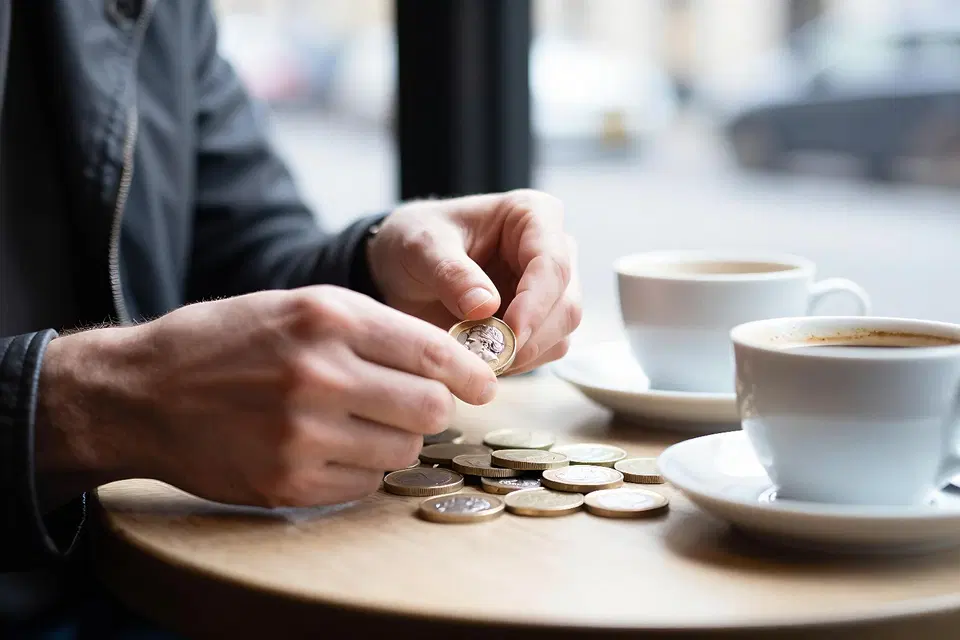
A coffee in central London costs about £3.80. If the pound is trading near $1.27, that coffee is roughly $4.83 before your bank or card provider adds anything. The sticker price is simple. The US dollar exchange rate in the United Kingdom rarely is.
Britain uses pound sterling, not the euro, and the dollar-pound rate is one of the most actively traded currency pairs in the world. That means you can find a quote in seconds on your phone. It also means the number you see can differ sharply from the number you get when you actually exchange money. The gap comes from spreads, commissions, card fees and the fact that banks and bureaux de change are running businesses, not public services.
How the dollar-pound rate is quoted in Britain
Walk past a bureau de change in Manchester or read a British bank's currency page and you will usually see something like “$1 = £0.79.” Financial markets often quote the pair the other way up, as GBP/USD at 1.27. Both describe the same relationship. One says how many pounds a dollar buys. The other says how many dollars a pound buys.
Two numbers, one exchange rate
For a US visitor, the useful figure is often pounds per dollar. If you have $500 and the mid-market rate is £0.79 per dollar, the raw value is £395. A kiosk offering £0.76 per dollar would give you £380. That £15 difference is the cost of convenience, rent and profit. It sounds small until you are changing $2,000 for a holiday.
Mid-market, interbank and tourist rates
The mid-market rate sits between the price at which dealers buy and sell dollars. It is the rate you see on Google, Reuters or XE, and it is useful as a benchmark. It is not a rate most consumers can walk in and get. Banks and currency desks add a margin. Some publish a “0% commission” offer and recover the cost in the rate instead. Why the rate you see isn't the rate you get is a useful reminder that the headline number is only the starting point.
What moves the US dollar exchange rate in the United Kingdom
Currency markets are forward-looking. They react to expectations about interest rates, inflation, growth and political risk. A change in the interest rate gap between the Federal Reserve and the Bank of England can move the dollar-pound rate before either central bank actually changes policy.
Interest rates and central banks
Higher interest rates tend to support a currency by making deposits in that currency more attractive. If markets expect the Fed to keep rates higher for longer than the Bank of England, the dollar often strengthens against the pound. If the Bank of England turns more hawkish, the pound can firm up. The language used by central bankers matters as much as the decision itself.
Inflation, jobs and growth
UK inflation, wage growth and GDP figures feed into expectations for the pound. So do US payrolls, CPI and retail sales. A surprisingly strong US inflation report can send the dollar higher within minutes. A weak UK retail sales number can do the opposite. For anyone planning a large exchange, these releases are worth watching, though trying to time them perfectly is a gamble.
Politics and market mood
Elections, budget announcements, trade disputes and global risk sentiment all leave marks. The pound is sensitive to UK political uncertainty. The dollar often attracts buyers during market stress because it is seen as a safe haven. That does not make the dollar invincible. It does mean the rate can move sharply when headlines change.
- Interest rate expectations for the Fed and the Bank of England
- US and UK inflation, jobs and growth data
- Political events, elections and budget announcements
- Global risk appetite and demand for safe-haven currencies
- Trade flows and major commodity prices, especially energy
Where to check the rate without getting fooled
A quick search gives you a mid-market quote, and that is fine for context. Before you exchange a meaningful sum, compare the actual rate being offered by your bank, a currency specialist and a couple of high-street providers. Look at the final amount you will receive after fees. A provider with a lower headline rate but no fee can beat one with a better rate and a 3% charge.
For a clearer picture of the gap between the advertised number and the value in your hand, read what the rate you see is really worth. It helps to write down the mid-market rate, then calculate the percentage difference for each offer. A 2% gap on £1,000 is £20. On £10,000 it is £200. That is the number that matters.
Changing dollars for pounds in Britain
Airport desks are convenient because they are open when you arrive. They are rarely cheap. High-street bureaux can be better, especially if you order online and collect in store. Banks are convenient for existing customers but often charge a spread plus a fee. ATMs can be useful, though the machine's operator may add a charge and your own bank may add another.
Cards, ATMs and dynamic currency conversion
Paying by card is common in the UK, even for small amounts. If a card terminal offers to charge you in dollars rather than pounds, decline it. That is dynamic currency conversion, and the rate is usually poor. Choose to pay in pounds and let your card provider handle the conversion. Use a card that does not add a foreign transaction fee if you have one.
The total cost test
Before changing money, ask one question: how many pounds will actually land in my account or hand? Compare that figure, not the sign outside the shop. What a dollar really buys you in Britain puts that into practical terms with everyday prices. A slightly worse rate can still win if the fee is lower and the process is quicker.
If you are in the UK and buying dollars
The same logic works in reverse. A British traveller heading to New York wants more dollars for each pound. The quote may be shown as USD/GBP or GBP/USD depending on the provider, so check the direction carefully. If the rate says £0.80 per dollar, £800 buys $1,000 before fees. If the provider offers £0.78 per dollar, the same £800 buys about $1,026 before fees, which is better for the buyer. Confusing the two can make a poor deal look attractive.
Sending money between the US and UK
Bank-to-bank transfers often look cheap until you see the exchange rate. Some banks advertise no transfer fee and then apply a margin of 2% to 4%. Specialist transfer firms usually show a clearer fee and a rate closer to mid-market. For regular payments, such as rent, tuition or supplier invoices, the difference adds up quickly. Compare the amount received, not just the fee line. What your dollars are really worth in Britain explains how the quoted rate and the settled amount can diverge.
Businesses with predictable dollar or pound needs sometimes use forward contracts to lock in a rate for a future payment. That is not about beating the market. It is about knowing your costs. A small importer buying stock from the US may prefer certainty to the chance of a better rate next month.
A five-minute check before you exchange
Start with the mid-market rate and note the time. Then get at least two live quotes for the amount you actually plan to change. Check whether the fee is included, whether the rate is fixed, and how long the quote lasts. For card payments, confirm the foreign transaction fee and always choose the local currency at the terminal.
For large amounts, ask about rate alerts or a limit order. Many providers will execute automatically when your target rate is hit, which removes the need to refresh a screen all day. Set a realistic target based on recent ranges, not a fantasy rate from five years ago. Keep a record of the final amount received so you can compare providers next time. The best exchange is usually the one with the smallest gap between the mid-market rate and the money that reaches you.