
Loading article...
Slot ID: blog-post-top
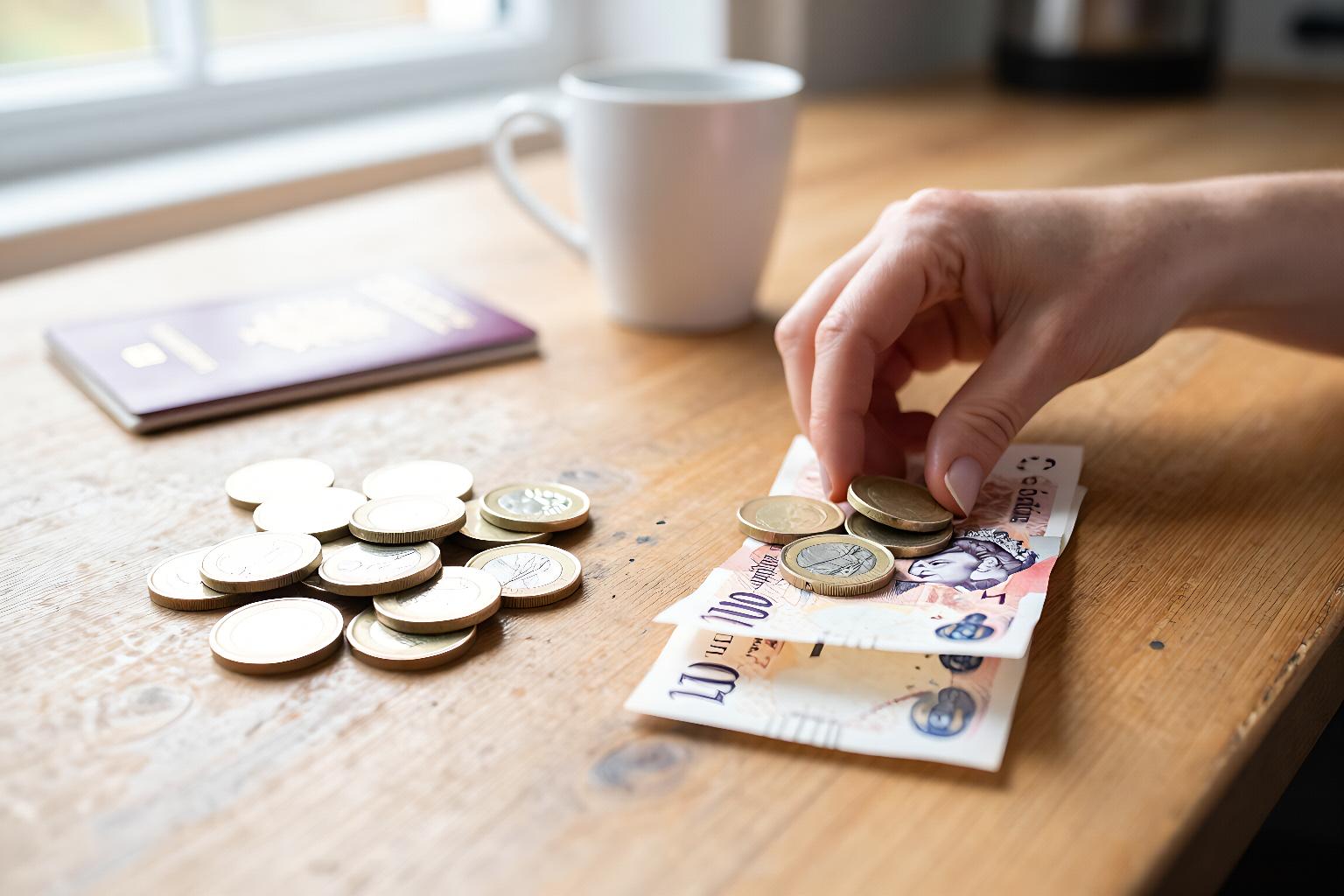
You check the rate a few days before flying to London and the screen says one US dollar buys about £0.79. Then you land, tap your card at a Pret on the Strand, and the coffee works out closer to £0.76 to the dollar. Nothing broke. That gap is the whole story of turning US dollars into British pounds, and once you know where it comes from, the numbers stop being mysterious.
Currency pairs are quoted in a direction, and the direction matters more than most people realise. Traders usually show GBP/USD, which tells you how many dollars one pound buys. If GBP/USD sits at 1.27, then £1 = $1.27 and, flipped around, $1 = £0.787.
That flip is where confusion starts. A rate of 0.787 and a rate of 1.27 describe the same market from opposite ends. Compare a quote from your bank with a quote from a search result without checking which way round each one is written, and you can convince yourself you are being charged double when you are not.
Using a USD/GBP rate, multiply: $500 × 0.787 = £393.50. Using GBP/USD, divide: $500 ÷ 1.27 = £393.70. Rounding aside, same answer. Pick one method and stick to it, because switching between the two mid-calculation is how people end up with a conversion that is out by 60%.
The number published by Google or the European Central Bank is the mid-market rate, the midpoint between what banks pay to buy a currency and what they charge to sell it. It is real, but it is a wholesale price. Retail customers get it plus a margin.
The gap between the advertised dollar-to-pound rate and the rate you actually get gets called a spread, a markup or a commission, depending on the provider. Whatever the label, it is revenue. A bank quoting 1.24 when the market is 1.27 is taking roughly 2.4% inside the exchange rate itself, and it may charge a separate fee on top.
Scale changes how much that stings. On a $2,000 transfer, 3% is £47. On a $200 transfer it is £4.70, which looks harmless until a £10 flat fee lands beside it. That is why smaller conversions often lose a surprisingly large slice to fixed fees, whichever pair you happen to be changing.
The mechanics do not change with the currency. The same percentage logic applies if you are comparing the quoted US dollar to euro rate with the one your provider hands you, and it applies to sterling. Providers do not invent fresh maths for each pair; they apply a margin.
Cable, as traders call GBP/USD after the transatlantic telegraph cable, moves for reasons that come down to relative economic strength and where capital wants to sit.
Higher rates make a currency more attractive to hold because deposits earn more. Through 2022 the Federal Reserve raised rates from near zero to 4.25%–4.5% in about nine months, faster than the Bank of England, and the dollar surged. GBP/USD fell from around 1.35 in January 2022 to $1.07 by late September.
US consumer price index figures and nonfarm payrolls are the two biggest scheduled movers for the dollar. UK CPI and wage data do the same job for sterling. On release mornings the pair can shift half a percent within minutes, which is why fixing a rate before a big data day sometimes beats waiting for a better one.
The dollar is the world's default safe haven. When equity markets sell off hard or a geopolitical shock lands, money runs to Treasuries and the dollar tends to firm up. Sterling is smaller and more cyclical, so it usually takes the other side of that trade.
Sterling is unusually sensitive to how credible a UK government looks to bond markets. The September 2022 mini-budget pushed GBP/USD to an all-time low near $1.035 within days. For a sense of how far this pair can travel: it hit $1.05 in 1985, $2.10 in 2007, and dropped from roughly $1.50 to $1.32 on the night of the 2016 referendum result.
Between one Tuesday and the next, GBP/USD might move 0.5%. The gap between a good provider and a poor one is often 6% to 10%. Choosing the right place to change money beats trying to time the market by a mile.
One habit beats all of that. When a card terminal or cash machine offers to charge you in dollars instead of pounds, decline it. That is dynamic currency conversion, and the rate attached usually carries a markup of 3%–7% for the convenience of seeing a familiar number.
A standard international wire between a US bank and a UK bank typically routes through one or two correspondent banks, costs $25–$45 at the sending end, and lands in one to three business days. Mid-size specialists use local payment rails instead, so a transfer can arrive the same day for a fraction of the cost.
On a large sum, the unit rate dwarfs the fee. A tenth of a percentage point on a $50,000 conversion is $50, and the same arithmetic shows why small rate differences matter so much on bigger transfers. For payments you know are coming, such as a house deposit or a tuition instalment, a forward contract lets you lock in today's rate for a date up to a year out. You give up the chance of a better rate in exchange for certainty.
Before committing to any conversion, do three things in this order.
Pull the mid-market rate and note which direction it is quoted in. Ask the provider for the exact number of pounds that will land in the account after every fee, not the headline rate they advertise. Then divide the pounds by the dollars you are handing over and compare that effective rate with the mid-market figure. The gap is what the conversion costs you, expressed as a percentage you can line up against three providers in about ten seconds.
That one habit, checking the effective rate rather than the advertised one, is the difference between knowing what your money cost and guessing at it. Exchange rates move daily and almost nobody calls the top with any consistency. Your costs sit entirely within your control, and for most people converting between dollars and pounds, they are the larger number by far.
Slot ID: blog-post-bottom