
Loading article...
Slot ID: blog-post-top
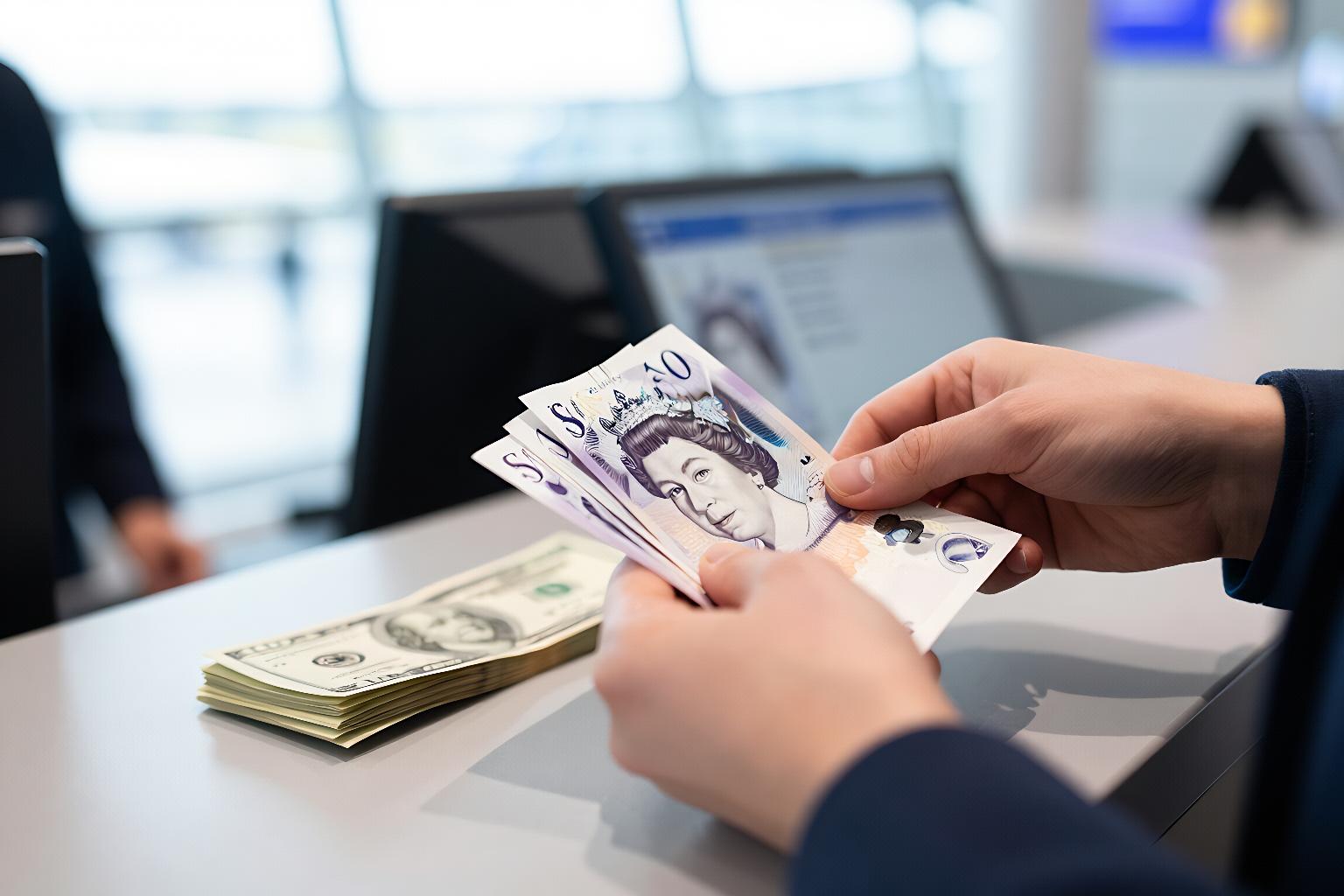
Converting dollars into pounds looks like a single step: check the rate, multiply, done. In practice there are three or four numbers in play at any given moment, and the one advertised on the high street is rarely the one that lands in your account. If you're paying a UK supplier, funding a British university term, sending money to family in Manchester, or standing in a departures hall with cash in your hand, the gap between those numbers is worth understanding before you press confirm.
A quote like 1 USD = 0.79 GBP answers one question: how many pounds does one dollar buy? Flip it and you get roughly 1.266, which is how many dollars one pound costs. Currency desks quote both directions depending on who they're talking to, and this is where a lot of confusion starts.
British banks and the UK press usually show GBP/USD, the pound's value in dollars, a pair traders still call "cable" from the days when the rate travelled by transatlantic telegraph. American sites tend to show USD/GBP. Same relationship, read from opposite ends. A headline saying the pound "slipped to 1.25" means the dollar strengthened, and your $500 now buys slightly more sterling than it did the week before.
Behind both numbers sits the mid-market rate: the midpoint between what buyers are bidding and what sellers are asking, with no retail markup applied. It's the figure on a Reuters terminal or a currency data feed. It's also a rate almost nobody transacts at.
Banks and transfer services build their margin into the exchange rate itself, which makes the fee look smaller than it is. A "zero commission" transfer priced at 0.765 when mid-market sits at 0.79 has effectively charged you just over 3%. On $10,000, that's around $300 gone with no line item to show for it. The reasons the quoted dollar-to-pound rate and the settled rate drift apart are mostly structural: spread width, weekend pricing, and settlement timing.
Cash makes it worse. Airport desks and hotel lobbies know you have no alternative at that moment, so the spread can run to double digits. It helps to know what a dollar in British pounds is really worth once those deductions are taken out, because the difference between a good and a bad conversion is often a full day's spending money.
Money flows toward higher yields. When the Federal Reserve is expected to hold rates above the Bank of England's, dollar assets look more attractive and the dollar tends to firm. The reverse happens when markets decide the Fed will cut faster than the BoE. Watch the gap between the two, not the absolute level of either.
UK CPI and US non-farm payrolls are the two releases most likely to jolt the pair. A hot inflation print in Britain can lift the pound within minutes as traders price in a tougher Bank of England. A strong US payrolls number often does the opposite to USD/GBP from the British side of the quote.
Sterling is a smaller, more liquid-sensitive currency than the dollar. In a global sell-off, capital runs to the dollar and the pound usually pays for it. UK fiscal announcements, election results, and even reshuffles at the Treasury can move the rate by a cent or more in a session.
Assume mid-market is 0.79 for all of these. Here's what $5,000 typically becomes:
The same mechanics apply whichever pair you're converting, which is why the gap between the USD/EUR rate you see quoted and the one you're offered tends to look eerily familiar.
Nobody consistently calls the top or bottom, and trying to is a good way to lose more than the spread ever cost you. What you can do is remove the guesswork. If you know a payment is due in three months, ask for a forward contract, which locks today's rate for a future settlement date. You give up the upside in exchange for certainty, and for a business budgeting in two currencies that trade is usually worth making.
For smaller amounts, limit orders do the job. Set a target, say 0.80, and let the provider execute automatically if the market touches it. Split large conversions into two or three tranches across a few weeks if you'd rather average out than bet on a single morning.
Clearing 0.79 one week and 0.81 the next is ordinary noise, not a signal. What you control is the cost of the transaction, the timing of your need, and whether you've compared at least two providers on the same day at the same hour. A 2% saving on a $20,000 transfer is $400, which is real money and doesn't depend on being right about the Fed.
Work out the pound figure you need, add a small buffer for movement, and check the all-in cost rather than the headline rate. If a provider's number sits within a fraction of a percent of mid-market, you're getting a fair deal. If it's three cents off, you're paying for someone's branch lease, whether you noticed or not.
Slot ID: blog-post-bottom