
Loading article...
Slot ID: blog-post-top
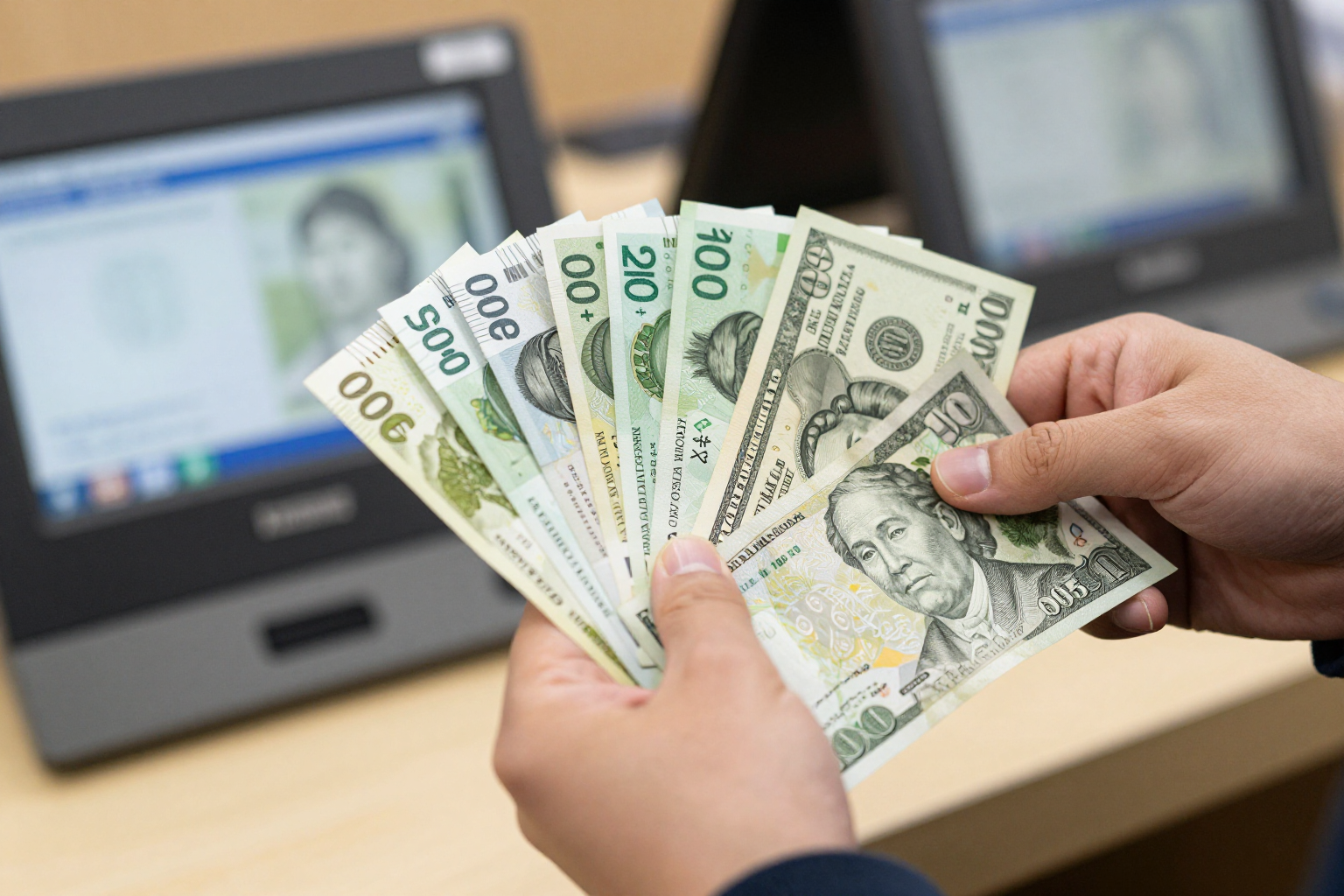
If you're holding Korean won and need to turn it into dollars, the number you see quoted is only half the story. The KRW to USD rate is one of the most closely watched pairs in Asia, partly because South Korea's economy sits near the centre of the global technology supply chain, and partly because the won has a habit of moving quickly when market sentiment shifts.
At a rate of 1,380, one US dollar buys 1,380 won. Flip it around and a single won is worth about $0.00072, which is why nobody quotes it that way. For a ₩1,000,000 hotel bill or a ₩50,000 lunch, though, the conversion stops being theoretical and starts showing up on your card statement.
Currency pairs confuse people because the order matters. When traders write "USD/KRW 1,380", they mean 1,380 won per dollar. Korean banks often display it the other way round, as KRW per USD, which is the same thing phrased for a local audience. Either way, a rising number means the won is weakening against the dollar, and a falling number means it's strengthening.
That direction trips up visitors constantly. A headline saying the won "rose" is ambiguous until you know which side of the pair is moving. If the won is strengthening, you get more dollars for your won. If it's weakening, your won buys less. The same logic applies when you're converting Thai baht into dollars or handling any other Asian currency.
Korea's central bank and the Federal Reserve do not move in lockstep. When the Fed holds rates high while the Bank of Korea cuts, capital tends to drift toward dollar-denominated assets and the won softens. The spread between the two policy rates is one of the most dependable drivers of this pair, which is why so much of the daily commentary on KRW to USD is really commentary on rate expectations.
Korea sells memory chips, vehicles, ships and displays around the world, and a large share of those invoices are written in dollars. Strong export months mean Korean firms are selling dollars for won, which supports the currency. Weak chip demand does the opposite. That export-heavy structure echoes how the dollar behaves against the Chinese yuan, except Korea's market is smaller and reacts faster.
The won is often treated as a proxy for Asia-wide sentiment. When investors feel confident, money flows into Korean equities and the currency firms up. When they don't, the dollar becomes the safe harbour and the won slides. This is also why the won and the yen frequently move together. If you want a read on dollar strength across the region, what the dollar actually buys in Japan is a useful comparison point.
Two people can convert the same amount on the same day and walk away with noticeably different sums. The difference is the spread and the fees stacked on top of the mid-market rate.
A 2% difference sounds trivial until you're moving ₩10,000,000. That's roughly $7,250 at 1,380, and the spread alone can quietly cost you $145 or more.
Quick mental maths helps more than any app on your phone. At about 1,380 won to the dollar:
Purchasing power is where this gets interesting. Korea is expensive by regional standards, so the dollar doesn't stretch far once you land. A $10 lunch in Seoul is a cheap lunch. Compare that with what a single dollar buys in India and the same money covers far more. Rates tell you the conversion. They say nothing about how far a dollar actually goes.
Check the mid-market rate before you commit to anything. Any provider offering a margin beyond about 1% deserves a second look, and a margin above 3% is worth walking away from unless you have no alternative.
Convert in fewer, larger transactions. Fees and spreads are largely fixed costs per transaction, so ten small conversions of ₩200,000 each will cost you more than one ₩2,000,000 conversion. If you're spending regularly in Korea, a card with no foreign transaction fee is usually the cheapest route, and a multi-currency account removes the conversion step altogether for everyday spending.
Businesses handling recurring KRW to USD payments have options individuals don't. Forward contracts let you lock in a rate for a future date, which turns an unpredictable cost into a budget line you can plan around. For a company paying Korean suppliers, that predictability is often worth more than chasing a slightly better spot rate.
The won has traded broadly between about 1,100 and 1,450 to the dollar over the past several years, and plenty of smart people have been wrong about where it goes next. Waiting for a specific number is a gamble, not a strategy.
A more reliable habit is to convert at regular intervals when you have ongoing needs. Spreading conversions over weeks smooths out the peaks and troughs and removes the temptation to hold out for a rate that may never arrive. If you have a large one-off transfer coming, compare two or three providers on the same day, check the total cost in dollars rather than the headline rate, and move. The hour you spend comparison shopping will almost always beat the money you'd make trying to call the top of the range.
Slot ID: blog-post-bottom