
Loading article...
Slot ID: blog-post-top
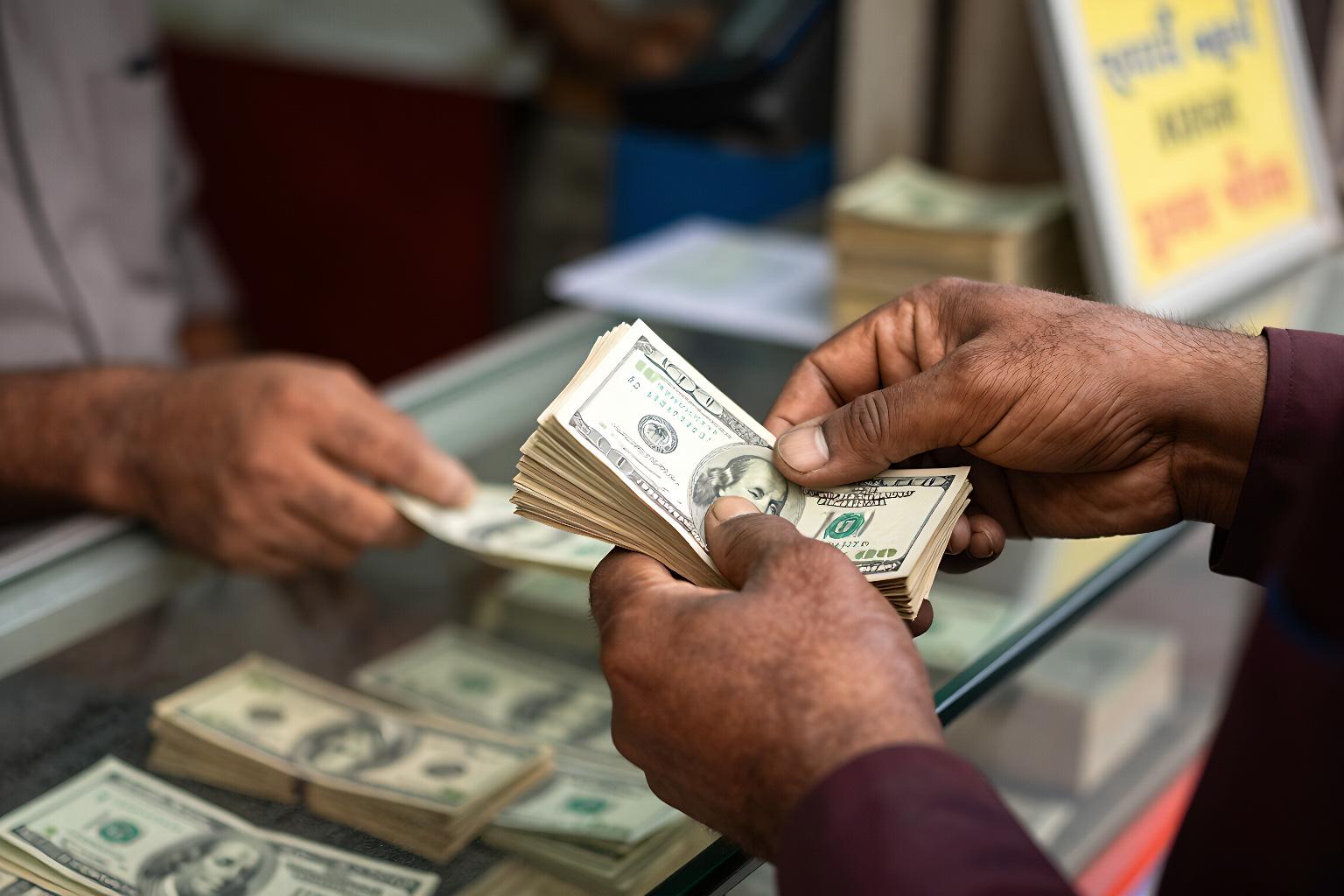
Walk past any money changer on Hall Road in Lahore or in Saddar, Karachi, and you'll see it: a board of flickering numbers where the dollar line moves more than anything else. A man ahead of you in the queue is buying $500 for a visa fee. Behind you, someone is cashing in money his brother sent from Dubai. Both are looking at the same board. Both will walk out with a slightly different deal than the number suggests.
That's the awkward truth about the dollar rate in Pakistan today. There isn't one rate. There are at least three running side by side at any given moment, and knowing which one applies to your situation matters far more than any forecast about where the rupee lands by December.
The interbank rate is what banks use with each other and with large corporate clients. When a news bulletin says the rupee closed at a certain level against the dollar, that is almost always interbank. It's the cleanest number, the one the State Bank of Pakistan watches, and the one you'll find on financial websites.
The open market rate is what you get at a currency exchange counter. It usually sits a little weaker for anyone buying dollars, because the dealer is pricing in his margin, his stock position, and the risk of holding a currency that can jump overnight if there's news out of the Finance Ministry. That gap explains why the board rate is only half the story when you're planning a real transaction rather than just checking the news.
Put numbers on it. Suppose interbank is 279.20 and your bank agrees to sell you dollars at 280.10. On $100, that difference is 90 rupees — a cup of chai and a samosa. Nobody loses sleep. On $5,000, it becomes 4,500 rupees, which is a month of somebody's electricity bill.
This is the part most people skip. They compare the headline rate they saw on TV with the amount of cash that leaves their account, and the mismatch feels like a scam. It usually isn't. It's the normal distance between the rate on the screen and the money in your hand, and once you know to look for it, you can ask for a quote in rupees and compare that instead.
Currency desks in Karachi don't move on vibes. A handful of forces do most of the work.
Five minutes of preparation can save you more than an hour of haggling.
The last point in that list is worth repeating. Plenty of people assume the board is the price. It's an advertised entry point, and there are small details the rate on the board doesn't tell you — things like whether they'll take large notes, whether old-series bills are accepted, and how much they'll shave off for worn currency.
If you're buying $200 for a visa application, the spread is noise. You'll spend maybe 200 rupees more than the perfect rate, and chasing a better number across three neighbourhoods costs more in fuel than it saves.
Once you're dealing with tuition fees, medical treatment abroad, or an Umrah trip for the whole family, the arithmetic changes completely. A 30-paisa difference on $8,000 is 2,400 rupees. That's worth a phone call. It's also worth understanding roughly what one dollar actually gets you in Pakistan right now, because it puts the daily swings in perspective — a five-rupee move sounds dramatic on the news and is often less than the cost of a plate of biryani on a small purchase.
The rupee doesn't move in isolation. When the dollar strengthens globally, it strengthens against most emerging-market currencies at once, including the Indian rupee. If you're travelling to India or sending money across the border, the same spread logic applies — the mechanics behind the USD to INR exchange rate today are close cousins of what happens here.
People lose money trying to time the market in small increments. Someone holds off buying dollars for a week because a friend said the rupee will recover. It drops 1.5 rupees instead, and the delay costs more than the original spread they were trying to avoid.
A more useful habit: decide the amount you need, check the rate on the day, and transact. If the amount is large, split it across two purchases a few days apart so you average out rather than betting everything on a single morning.
Watch the reserves number published weekly by the State Bank, and keep an eye on whether the open market and interbank rates are drifting apart. A widening gap is usually a sign of pressure building in the system — importers buying, supply tightening, dealers quoting defensively. When the two rates sit close together, the market is calm and you'll get a fairer deal at the counter.
One more practical habit: keep a note of what you paid last time. Your own record beats any forecast, because it tells you what your particular bank or changer actually charges a person like you, in your city, for your amount. That's the number that affects your household budget, and it's a better guide to the next transaction than anything scrolling past on the evening news.
Slot ID: blog-post-bottom