 Currencies
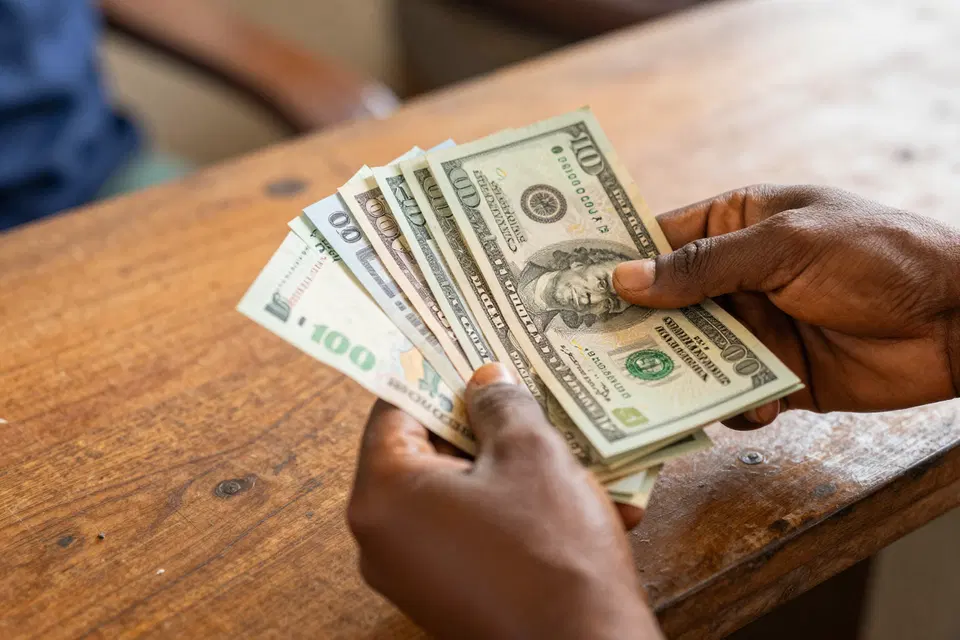
Open Google on a Tuesday morning, type "USD to NGN", and you get a number. Do the same thing Thursday and the number has shifted. The converter isn't broken. The naira moves, and it moves more in a single week than plenty of currencies manage in a year. The skill worth having isn't memorising today's figure. It's understanding what that figure represents, where it came from, and why the rate you're actually offered for a real transaction will almost never match it to the kobo.
What the Converter Is Actually Showing You
Most search results and currency apps pull the mid-market rate, sometimes called the interbank or spot rate. It's the midpoint between what large buyers and sellers of dollars are quoting each other in wholesale trades. It is real, but it's a wholesale price. Nobody hands it to you at a bureau de change counter, and your bank won't either.
Think of it as the sticker price before everything else is added: the provider's margin, settlement and processing costs, and the spread built into their buy and sell sides. The gap between mid-market and what actually lands in your account is your true cost, and it usually sits somewhere between 0.5% and 4% depending on where you convert.
That's why the same $500 can produce noticeably different naira totals across three apps on the same afternoon. Understanding why the rate you see isn't the rate you get is the single most useful thing you can learn about this pair.
Three Different Rates Are Hiding Behind One Currency Pair
When someone says "the dollar rate today", ask which one they mean. In Nigeria there are usually two or three running in parallel, and they don't agree.
The official window
This is the rate reported by the Central Bank of Nigeria and used by banks for formal transactions, investor flows and government business. It's the number most news sites quote, and it's the one that looks most official. It is not necessarily the one available to a student paying tuition in Manchester or a trader importing phone accessories from Guangzhou.
The parallel market
Bureau de change operators and street traders quote their own rate, driven by actual demand for physical dollars. It can run a few percent above or below the official figure, and the gap widens when there's pressure on supply. This is the rate many Nigerians actually transact at, whether they admit it or not.
The rate your bank or app gives you
Banks, fintechs and remittance apps split the difference and add their cut. You might see a headline like "₦1,505 per dollar" while mid-market sits at ₦1,530, with a flat fee on top. Neither number is a lie. One is the market, the other is the product.
A Two-Minute Sanity Check Before You Convert
You don't need a Bloomberg terminal to avoid a bad deal. Five checks catch most of the problems:
- Compare two independent sources. A search result plus your bank's posted rate gives you a range. If a provider's rate sits outside that range by more than about 3%, ask why.
- Check the date stamp. Some converters cache rates for hours. If the page was updated overnight and the market moved this morning, you're reading history.
- Multiply by your actual amount. A margin of ₦15 per dollar is ₦300 on $20 and ₦30,000 on $2,000. Always run your own figure, not the example.
- Ask what arrives, not what's quoted. Fees, correspondent bank charges and recipient bank charges can each shave off a slice.
- Look at the total, in naira, in your hand. That single number beats every comparison of headline rates.
Working Through a Real Example
Say the mid-market rate today is ₦1,530 to $1 and you want to send $200 to a supplier in Lagos.
At mid-market, $200 is worth ₦306,000. Your provider offers ₦1,505 per dollar, which gives ₦301,000, then charges a ₦2,000 transfer fee. You receive ₦299,000. The gap between the clean mid-market figure and what landed is ₦7,000, roughly 2.3% of the transfer.
On a small remittance that feels like nothing. Repeat it monthly for a year and you've left ₦84,000 on the table. That's the number worth caring about, and it's the one most people never calculate. If you're moving a round figure like $100, it's worth seeing exactly what your $100 really turns into after all the deductions.
Who Feels This Rate Most
The USD to NGN rate isn't an abstract market signal. It shows up in specific budgets.
Diaspora Nigerians sending money home every month watch the difference between a good week and a bad week translate into tens of thousands of naira for a parent's upkeep. Importers pricing container loads of goods need a rate assumption that survives a two-month shipping cycle, not today's spot print. Freelancers paid in dollars have the opposite problem, choosing when to convert earnings into naira. Travellers buying holiday cash or paying school fees abroad are on the other side of the same trade.
If you're converting in the other direction, the arithmetic changes and so does the margin. There's a separate set of traps around getting a fair rate when you convert naira to dollars, mostly because demand for physical dollars is often tighter than supply.
Why "Today" Matters More Than People Expect
Naira rates respond to things that happen on a schedule: end-of-month salary and import payments, central bank auctions, quarterly corporate tax settlements, and the occasional policy announcement that moves the market within an hour.
Liquidity also thins out at certain times of day. A quote at 9am and a quote at 4pm can differ by more than the week's average move. If you're converting a large amount, splitting it across two or three days reduces the risk of catching a bad print on a single transaction. If you're converting a small amount, don't overthink it. The fee usually costs you more than the timing.
One useful habit: note the rate on the day you last converted, not just today's. A personal benchmark tells you far more about whether now is a good moment than any single headline. The
Watch for rates locked for 24 hours, which protect the provider against movement far more than they protect you. Watch for rounding on large amounts, where a provider shaves fractions of a naira per dollar. And watch for the classic switcheroo where the quoted rate applies only below a threshold, with a worse tier above it. A little preparation goes a long way here. The principles in how to convert USD to NGN without losing money on the rate apply whether you're moving $50 or $5,000. Here's a habit that pays for itself within a month. Keep a simple note on your phone with three columns: date, mid-market rate, and the rate you were actually offered. After ten conversions you'll know your own typical spread, and you'll spot an unusually bad quote instantly instead of guessing. You'll also learn which providers are consistently tight and which ones rely on customers who never check. Most people stay with the first app they downloaded. The difference between the best and worst option on a $300 monthly transfer is often ₦9,000 or more, which is real money for a decision that takes about four extra minutes. And treat every converter result as a starting point rather than a fact. Today's number tells you roughly what your dollars are worth. The only figure that counts is the one sitting in your account after everything has been taken out, so check that one, write it down, and compare it next month.Building Your Own Reference Rate