
Loading article...
Slot ID: blog-post-top
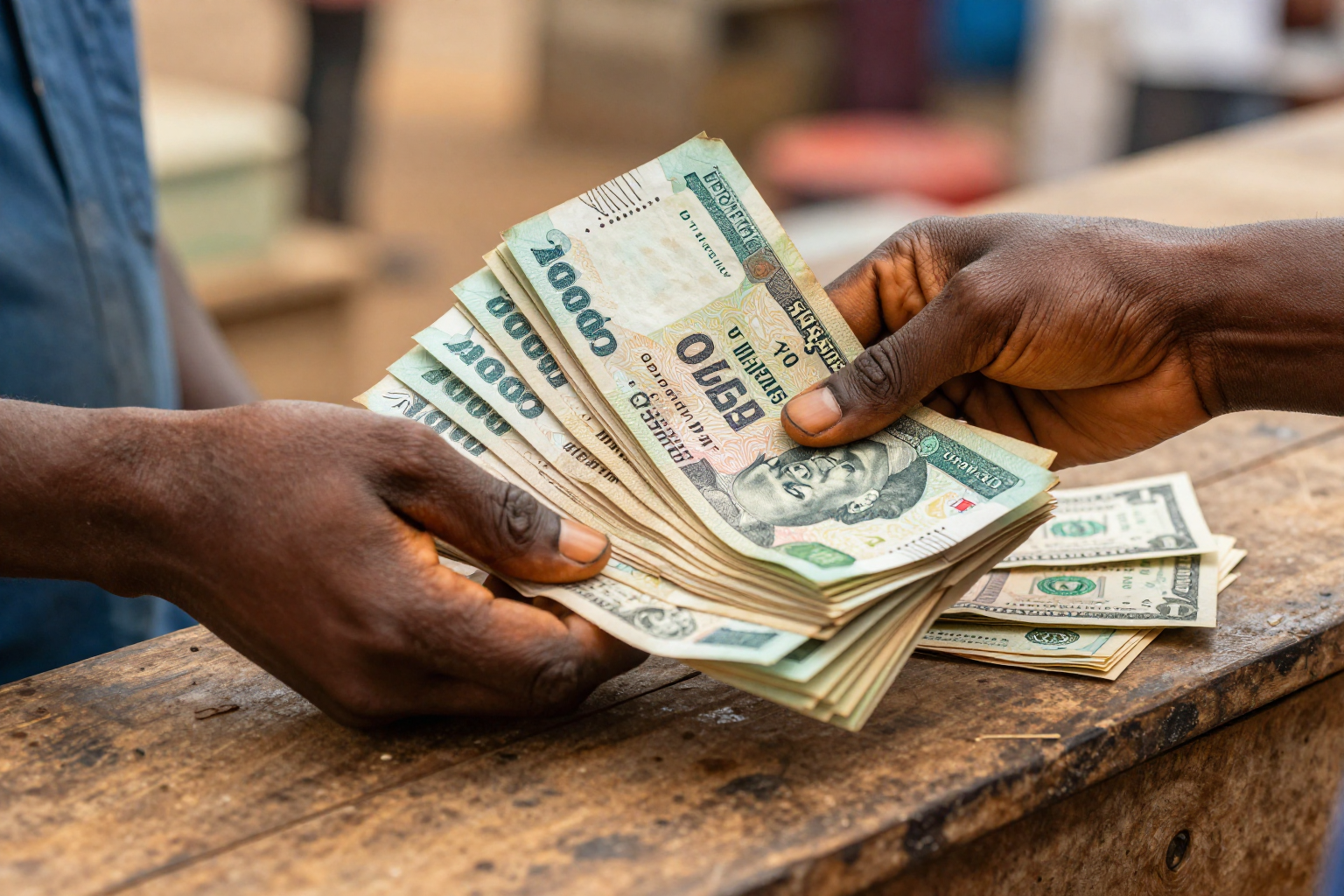
Type 500,000 into an NGN to USD currency converter and a dollar figure appears before your finger leaves the key. The interesting question isn't what that figure is. It's what the figure is built on, because the naira doesn't have one exchange rate, and the number on your screen often belongs to a market you will never get access to.
This isn't academic. If you're paying tuition in Manchester, settling an invoice with a supplier in Guangzhou, or working out how far a Lagos salary stretches in dollars, the gap between the rate you're shown and the rate you actually receive can run into six figures of naira on a single transaction.
Every converter, whether it's a bank app, a search result, or a bureau de change's website, runs identical arithmetic: naira divided by the rate equals dollars. All the variation sits in which rate gets plugged in, and how stale it is.
The mid-market rate, sometimes called the interbank rate, is the midpoint between what buyers and sellers are asking for dollars at a given moment. It's the number quoted on financial news sites and in economic reports. It is also a wholesale figure that essentially no private individual can walk in and transact at, in either direction.
That distinction matters more for the naira than for, say, the euro or the yen, because Nigeria runs a managed currency with several legitimate windows running in parallel.
The Central Bank of Nigeria publishes an official rate that feeds into government transactions, certain imports, and some formal remittance channels. Banks quote close to it. Getting access usually involves documentation, approved purpose codes, and sometimes a waiting list. Historically the official rate has been the stronger, cheaper number for buying dollars, which is precisely why access has been rationed.
Bureau de change operators, peer-to-peer platforms, and informal dealers quote a rate that reflects what people are genuinely willing to pay at that hour. It reacts within minutes to FX shortages, fuel subsidy news, policy announcements, and month-end demand. The spread between the official and street rate has been as wide as 30% at points during 2024 and considerably tighter since, but it has never vanished. When the gap widens, everyone holding cash gravitates toward the street number, which makes the official figure less relevant to your actual transaction.
Even when a converter picks the right market, three things still sit between the displayed rate and the money in your account: the timestamp, the provider's margin, and the moment the deal is confirmed.
A rate refreshed ten minutes ago is ancient in a week when the naira moves two percent in an afternoon. And a headline rate is rarely the all-in rate. This is the same trap described in why the naira figure on your screen isn't what you get, and it catches out even people who convert the same amount every month.
Providers earn on the spread, not the fee they advertise. A service promoting "zero commission" and quoting 1,520 when the market sits at 1,555 is charging you roughly 2.3%, dressed as generosity. That's the whole lesson behind the number on your screen not being the number you get: the fee line on the receipt is the smallest part of the story.
The arithmetic is simple enough to do in your head, and doing it once will recalibrate how you read every converter afterwards. Take ₦500,000 at a rate of ₦1,550 to the dollar: 500,000 ÷ 1,550 = $322.58. If the rate drifts to ₦1,600, the same naira buys $312.50. Fifty naira of movement costs you ten dollars on half a million, which is roughly ₦16,000 back in naira terms.
Now reverse it. You want $500. At ₦1,550 that's ₦775,000. A dealer selling dollars at ₦1,620, which sounds like a trivial difference, charges ₦810,000. Thirty-five thousand naira, gone, on a transaction that a flat converter made look identical.
Freelancers invoicing foreign clients feel it first, because platforms often quote one rate at the moment of payment and settle at another two days later. Parents paying school fees abroad deal with a bank's official-window rate plus a documentation queue. Travellers drawing on the Personal Travel Allowance discover that the approved amount is calculated at a rate that has already moved. Importers live or die by the gap between the rate they quoted a customer and the rate they pay the supplier six weeks later.
In each case, the converter was accurate. It just answered a question nobody was actually asking.
Airport kiosks and hotel desks are the classic trap: convenience priced at five to eight percent. Round-tripping is another, where someone converts naira to dollars and back within a month for no reason other than nerves, paying the spread twice. Using yesterday's rate to price a payment that settles next week is a third, and it's the most common among people who convert regularly.
Card spending deserves its own warning. A Nigerian debit card used abroad typically attracts a foreign exchange markup on top of the network rate, so the amount you see in a converter is not the amount that hits your statement. Anyone who has used a Philippines currency to USD converter before travelling will recognise the pattern: the displayed figure and the settled figure are related, but they are not the same animal.
Check two or three independent sources within the same few minutes and note how far apart they sit. If the spread between them is more than about two percent, something is being priced in that the screen isn't showing you.
Ask the provider for the all-in rate in writing before you initiate anything, and specify the exact amount that should arrive at the other end. Then send a small test transfer first if the sum is large; a ₦20,000 trial is cheap insurance against a six-figure mistake. Set a rate alert rather than refreshing a converter every morning, and if you have flexibility, move money when the gap between official and street rates narrows, since that's usually when providers compete hardest on price.
For budgeting, take whatever mid-market number you find and assume you'll get two to three percent worse than that. If the actual settlement comes in closer to the mid-market figure, you've had a good day. If it doesn't, you already planned for it, which is the entire point of checking the number instead of just reading it.
Slot ID: blog-post-bottom