
Loading article...
Slot ID: blog-post-top
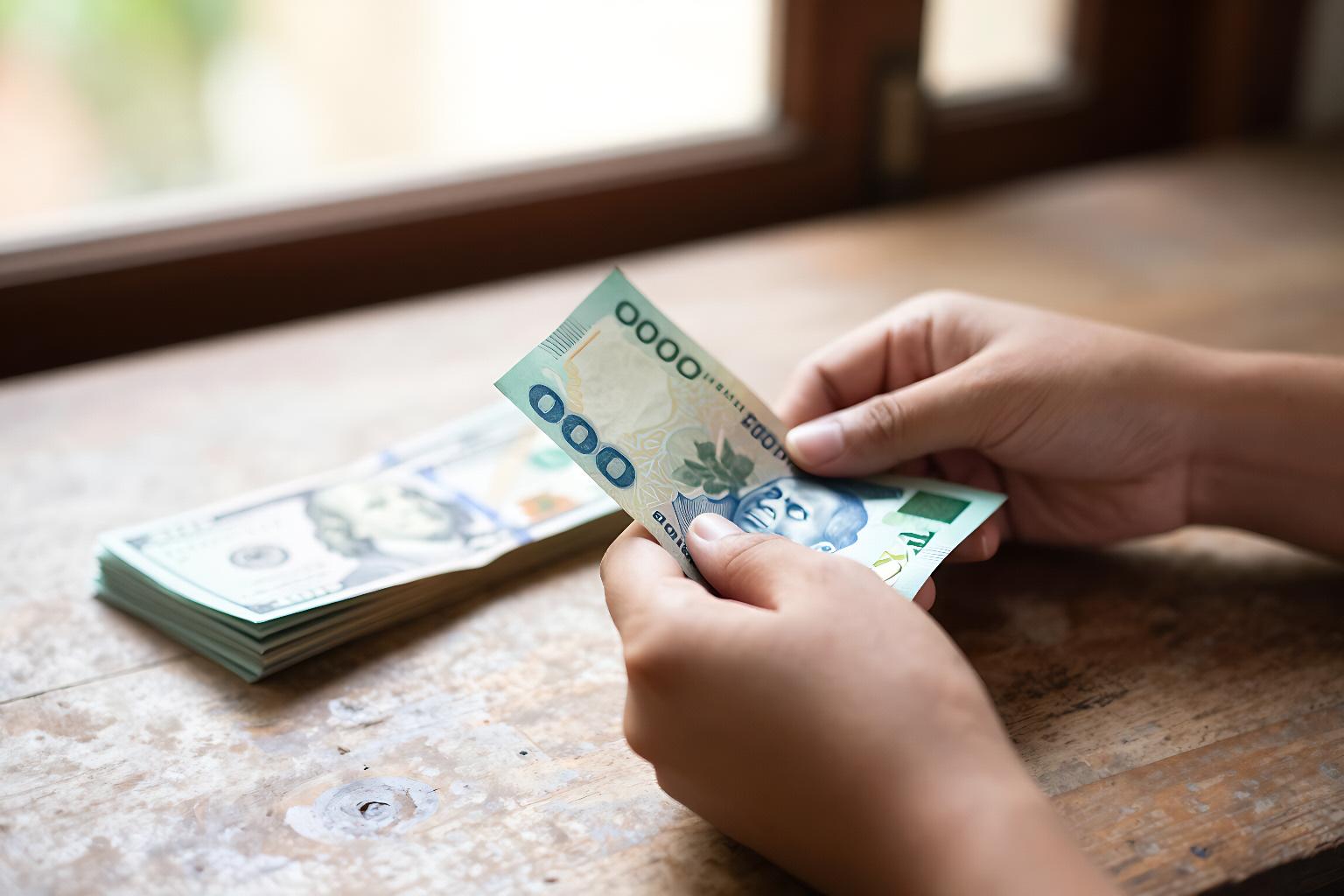
The number sitting next to USD/PHP on your banking app this morning is a quote, not a promise. It tells you roughly where the dollar is trading between large institutions in Manila and New York. It tells you almost nothing about what will land in your account once you actually hit convert. Those are two different numbers, and the gap between them is where most people quietly lose money.
So it's worth taking today's rate apart properly. Where it comes from, why it twitches by a few centavos a day, and how to turn the headline figure into the peso amount you'll realistically pocket.
When a news site or a search result shows you a USD/PHP rate, you're looking at the mid-market rate. That's the midpoint between the highest price buyers will pay for dollars and the lowest price sellers will accept, across large interbank trades. It's a wholesale number. Banks move millions of dollars at it. You and I don't get it, because we aren't moving millions.
The Bangko Sentral ng Pilipinas doesn't set the rate. It watches it, comments on it, and occasionally smooths out sharp moves, but the peso's value against the dollar comes from supply and demand in a managed float. Dollars flow in through remittances, export earnings, BPO payments and foreign investment. They flow out through imports, foreign debt servicing and capital leaving the country. The rate is simply the price that balances those flows on any given day.
A rate that moves from ₱57.18 to ₱57.34 overnight looks trivial. On a $5,000 transfer that's ₱800 either way, so it isn't trivial to anyone paying tuition or a hospital bill.
None of that is predictable enough to trade on. It is predictable enough to plan around.
Stand in front of a money changer's display and you'll see two columns: we buy, we sell. The gap between them is the spread, and it's the shop's revenue. Banks do exactly the same thing, just less visibly. A "no fee" international transfer at a bank is usually a fee wearing a worse rate as a disguise. There's a clear breakdown of why the number on the board is never the number you get if you want the mechanics in detail.
Then come the flat charges stacked on top: wire fees, correspondent bank deductions, card FX markups of 2 to 3 percent, and the receiving bank's handling charge on the Philippine end. A $20 wire fee on a $200 transfer is 10 percent before the exchange rate even enters the conversation.
Assume the mid-market rate today is ₱57.30. Ignore fees for one second and $1,000 should convert to ₱57,300.
Now add reality. A typical bank quotes a ₱56.75 buy rate, so you're at ₱56,750. Then a $25 sending fee (about ₱1,433) and a ₱200 receiving charge. Total received lands near ₱55,117 against the clean ₱57,300. That's ₱2,183 gone, roughly 3.8 percent of your money, and none of it appeared in the rate you checked that morning.
Switch to a specialist remittance provider quoting ₱57.15 with a $4 fee and you'd end up near ₱56,921. Same dollars, same day, roughly ₱1,800 more in hand. The takeaway isn't that banks are villains. It's that the only figure worth comparing is the final amount credited, never the rate advertised. Look at how a 2-peso gap between quotes costs you real money across a year of regular transfers and the argument makes itself.
For large sums, a bank is often perfectly fine if you're moving money between your own accounts at the same institution. For remittances into the Philippines, licensed remittance apps and digital banks generally beat counter rates by 0.3 to 1 peso, and they publish the rate before you commit. That transparency alone is worth something.
Cash is a separate market. Money changers in Makati, Cebu or Angeles can beat airport counters by a wide margin, since airport booths routinely shave 1 to 2 pesos off the rate because they have a captive audience. Bring clean, unmarked bills. Plenty of changers in Manila refuse torn or heavily folded notes, and some quietly apply a lower rate for small denominations.
Nobody reliably calls the peso's next move, and the people who claim to are usually selling something. What works instead is boring and repeatable:
If you're trying to work out how much a dollar actually gets you in the Philippines once fees are added, you'll find the fee structure matters far more than a 10-centavo swing on anything under a few thousand dollars.
A rising USD/PHP number means the peso is weakening, so you get more pesos per dollar. That's welcome news if you're receiving dollars and unwelcome if you're importing goods, travelling, or paying for anything priced in USD. A falling number means the reverse, and the effect lands on the opposite group.
Newcomers often assume a higher number is simply better. It depends entirely on which side of the transaction you sit, and on whether the move is a one-day blip or a genuine trend. Reading what a single dollar in pesos is telling you is a useful exercise, because the headline rate is a signal about the wider economy, not just about your transfer.
Check the live mid-market rate on two sources and note the difference between them. Get an all-in quote from your bank, your remittance app and one money changer, including every fee that will be deducted. Multiply out the final peso amount for the exact sum you're sending, not a round number. Then choose whichever credits the most pesos.
Do that consistently and you'll stop caring what the board says, because you'll already know what the number is worth to you. For a sense of scale on smaller sums, what $100 really converts to after fees is a decent calibration exercise, and the arithmetic works the same way at every size.
Slot ID: blog-post-bottom