
Loading article...
Slot ID: blog-post-top
Ask a money changer in Manila for the rate and you'll get a single figure, something like 58.20. That number means one thing: how many Philippine pesos it takes to buy a single US dollar. It's written as USD/PHP, and it always describes the dollar, never the peso. When the number climbs, the peso is weakening. When it falls, the peso is strengthening.
Most sites quote the mid-market rate, the midpoint between what banks are willing to buy and sell dollars for on the global market. Banks, apps, and news tickers pull that figure from interbank trading, and the Bangko Sentral ng Pilipinas publishes its own reference rate each day. If you want a plain explanation of how that daily figure gets calculated and what it signals about the wider economy, the daily dollar rate in the Philippines explained is worth a read.
The catch is that almost nobody transacts at the mid-market rate. Not banks, not pawnshops, not the app on your phone.
A sign advertising 58.00 is not an offer to hand you 58 pesos for every dollar. It's usually the selling rate, the price at which the counter will sell dollars to you. Their buying rate, the one that applies when you walk in holding a $100 bill, sits lower. Sometimes a full peso lower.
Run it with real numbers. Say the mid-market rate is 58.00 and a changer's buy rate is 57.20. Change $500 and you receive ₱28,600 instead of ₱29,000. That ₱400 gap is the spread, and it's how the business stays open. The gap between the headline figure and the applied figure gets covered properly in why the rate on the board is never the rate you get.
Plenty of people are startled by how far the rate has travelled within a single lifetime. In the early 1960s, one dollar bought around two pesos. The 1983 balance-of-payments crisis and the 1997 Asian financial crisis did most of the damage, dragging the rate from the ₱20s into the ₱40s within months. By 2000 it hovered near ₱50. It slid back to ₱43 in 2012, pushed past ₱53 during the 2018 sell-off, touched ₱59 in 2022, and has spent recent years swinging between roughly ₱55 and ₱59.
Every step up was a slow erosion of peso purchasing power against the dollar. A household receiving $200 a month in remittances in 2010 collected about ₱9,000. The same $200 today lands closer to ₱11,500. Nothing about the dollars changed. The peso did.
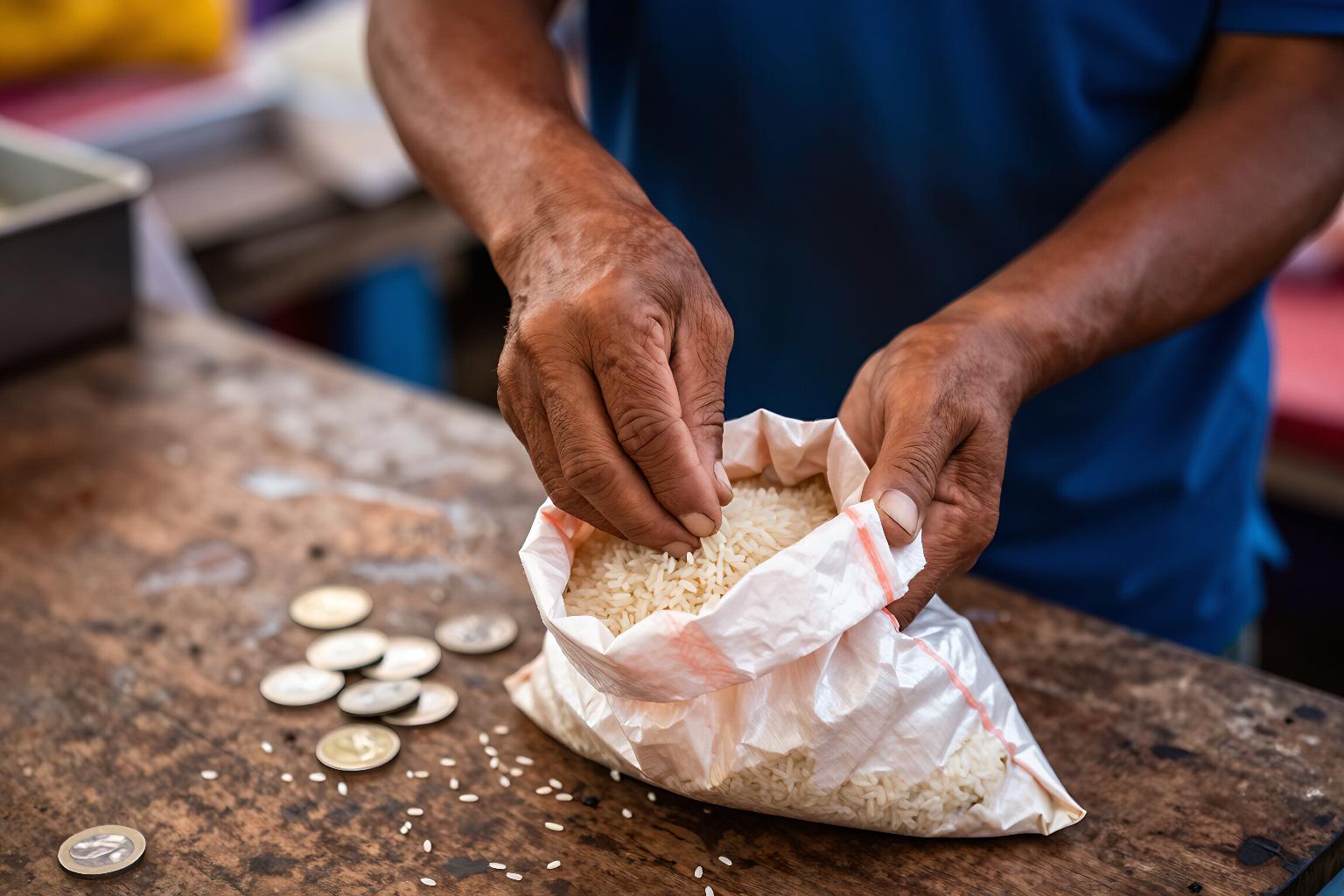
₱57 is not a throwaway amount here. It's roughly a kilo and a half of rice, two jeepney rides with change left over, a proper cup of barako coffee, a tricycle fare in a provincial town, or three bottles of water from a sari-sari store. A single dollar stretches further in Cebu or Davao than inside a BGC mall, and further still in a rural market where ₱20 still buys a full meal.
For the granular, item-by-item version, what one dollar actually buys you in the Philippines lays it out in detail.
The spread between the best and worst counter in the Philippines is wider than most visitors expect. On any given day, the gap between a bank branch and an airport desk can run past ₱2 per dollar.
Fees sting more than people budget for. On a $1,000 transfer, a mediocre rate stacked with a fixed fee can quietly cost ₱1,500 or more. What you'll really get after fees puts concrete numbers on those losses.
Freelancers billing US clients, remote staff paid through Upwork, and roughly two million overseas Filipino workers all convert dollars into pesos on a schedule. The rate matters far more to them than to a tourist changing $200 at the airport.
Every ₱1 move in the rate is worth ₱1,000 on a $1,000 monthly payout, or ₱12,000 across a year. That's real money, and it's why spreading conversions across a few days beats dumping the whole amount on the 15th of every month. Services like Wise, Remitly, and GCash's international transfer options usually beat a traditional bank wire once you total up the rate and the fee. If you're on the receiving end of regular transfers, the rate you see versus the money you actually get is the comparison that matters.
Divide by 58 and most people freeze. Use 60 instead and subtract a little. At a rate of 58, $40 is about ₱2,320. At 60 it would be ₱2,400, so knock off roughly 3%. That trick gets you within a few pesos of the real figure and takes about four seconds.
Going the other way, ₱5,000 at 58 is roughly $86. Round the rate to 60, then add back the difference. Cashiers at tourist-heavy restaurants in Boracay do this instinctively.
Four forces do most of the work. First, interest rates: when the US Federal Reserve keeps rates high and the BSP doesn't match, dollars flow out and the peso softens. Second, remittances, which run around $3 billion a month and spike every December, briefly propping up the peso. Third, the trade balance, since the Philippines imports most of its fuel and the oil bill is paid in dollars. Fourth, sentiment, meaning how investors feel about emerging markets that week, which is why a headline from Washington can move the rate more than anything happening in Makati.
Check two rates before you change anything. One from a rate-tracking site, one from the actual counter you plan to use. If the difference is under 1%, stop shopping and just transact.
Never change money at the airport beyond a taxi fare. Never accept a "no commission" offer without checking the rate, because the commission is baked in somewhere. Carry clean, unmarked bills, since many changers in the Philippines reject torn or heavily creased notes, and larger denominations like $100 typically earn a better rate than $20s.
And keep a small peso float. Roughly ₱2,000 covers a day of transport, meals, and a sari-sari run, so you're not hunting for an ATM at 10pm in a province where the nearest one closes at six. The dollar rate is a moving target you can't control. The margin you lose by changing money badly is entirely yours to fix.
Slot ID: blog-post-bottom