
Loading article...
Slot ID: blog-post-top
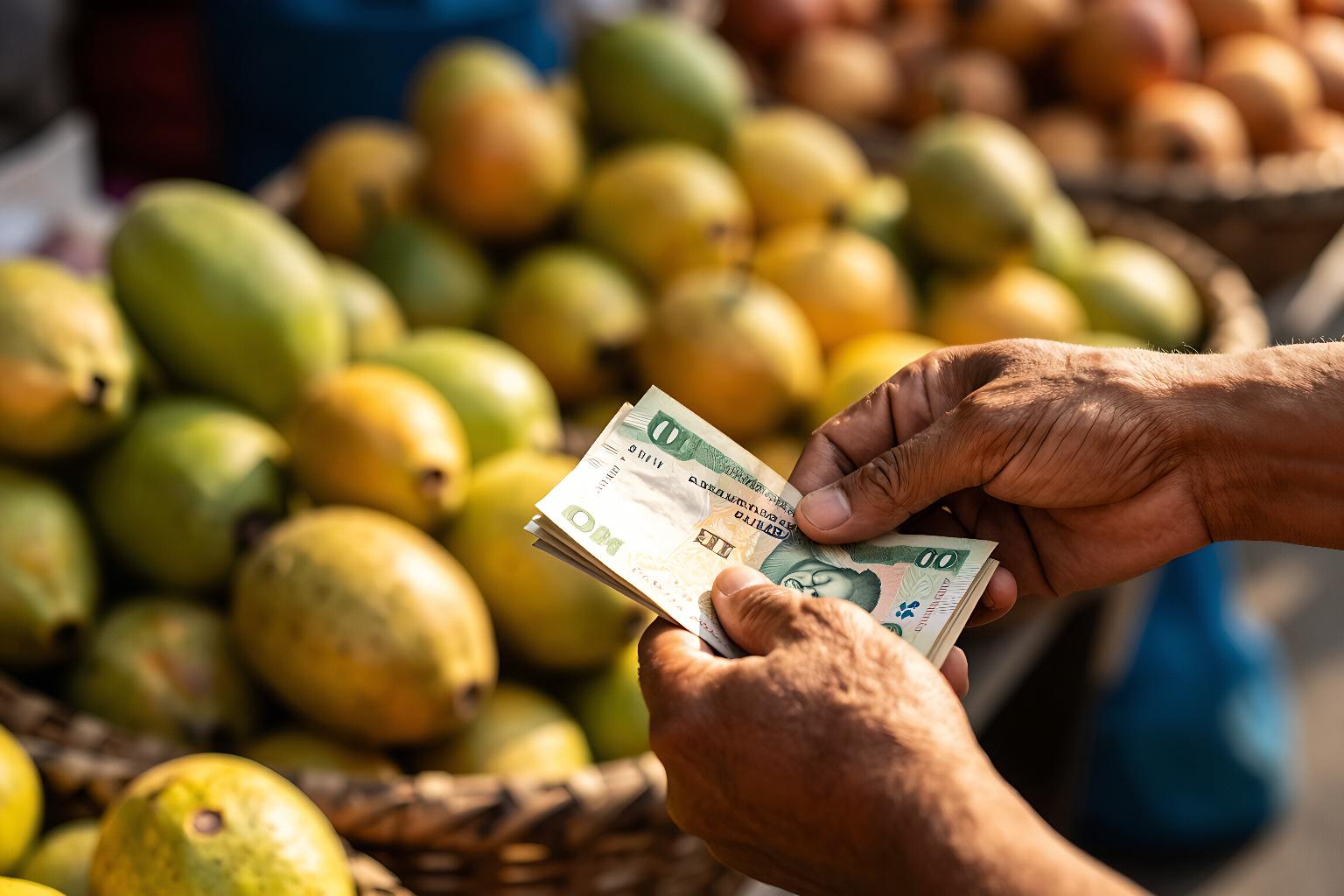
One dollar doesn't sound like much until you're standing in a Manila convenience store doing mental arithmetic. At a rate of 58.00, that single dollar is 58 pesos, which covers a bottle of water and a pack of crackers. At 55.00, it's 55 pesos, and suddenly you're short. The gap looks tiny on a screen and feels real in your hand.
That's the thing about the 1 USD to PHP rate. It's quoted everywhere, refreshed every few seconds, and almost never the number you actually transact at. Understanding where the difference goes is worth ten minutes of your time, especially if you send money home regularly or fly to the Philippines more than once.
The Philippine peso (code PHP, symbol ₱) is issued by the Bangko Sentral ng Pilipinas and floats against the US dollar. Asking "1 USD to PHP" simply means asking how many pesos one dollar buys right now. In practice the answer is a range rather than a single figure, because different participants in the market quote different prices.
The number on Google, Reuters, or your banking app is usually the mid-market rate. It sits roughly halfway between the best bid and the best offer among large institutions trading millions at a time. Nobody is obligated to give you that rate for a single dollar, and nobody will.
Every currency provider buys dollars from the market and sells them to you. The difference between those two prices is the spread, and it's how the business stays open. A money changer at the airport might post 55.20 when the mid-market rate is 58.00. That's 2.80 pesos per dollar, or about 4.8%.
On one dollar that's 2.80 pesos, which nobody is going to lose sleep over. On a thousand dollars it's 2,800 pesos, which is a decent dinner for four in Makati. The percentage is identical. The sting scales with the amount. The same mechanics play out in other markets too, and why the first rate you see is rarely the one you pay is a useful companion read on how board rates get set.
Plenty of providers split their margin into a "competitive" rate plus a visible fee. A bank might offer 57.85 and then charge a ₱200 wire fee. An app might show something close to mid-market and take 0.6% as a transfer cost. Both structures land in roughly the same place. The lesson is simple: never compare a rate without comparing the fee beside it, and never compare a fee without looking hard at the rate.
The peso isn't a bystander in global markets. A handful of forces push it around week to week.
Over the past five years the rate has wandered from around 50 to nearly 59 and back into the middle 50s. A swing of 3 pesos on a $500 transfer is 1,500 pesos, so timing isn't purely academic.
Not every channel is built the same, and the ranking doesn't change much from year to year.
Three costs can pile onto a single transfer: the exchange rate margin, an explicit commission, and a charge levied by the receiving bank or pickup agent. A sender might see 0.5% in an app and assume that's the whole story, then find out the recipient collects 200 pesos less than expected. Our breakdown of what you'll really get after fees runs through that arithmetic with real figures, and it's worth a few minutes before your next transfer.
It helps to separate two very different transactions. Converting a single dollar is a curiosity, something you do to have taxi fare in your pocket. Converting a few hundred or a few thousand is where the rate turns into a budget line.
At 58.00, $200 is 11,600 pesos. At 55.50, it's 11,100. That 500-peso gap is a week of lunches. Scale it to a $2,000 tuition payment and the same 2.5-peso difference becomes 5,000 pesos, which is real money by any measure. The mechanics don't change with size, but the consequences do, which is why a hundred dollars really converts to less than most people assume once every layer is counted.
Check the mid-market rate first. Pull it up before you shop around so you have a reference point. Then work out what percentage each offer deviates from it. Under 1% is strong for cash. Anything past 3% deserves a second look.
Convert in larger, less frequent batches. Fixed fees hurt small transfers disproportionately. Sending $50 weekly at a $5 fee costs 10%. Sending $200 monthly at the same fee costs 2.5%.
Pay in pesos at card terminals. "Convert to your home currency" sounds helpful and almost always costs more than letting your bank do the conversion.
Avoid weekends where you can. Rates quoted on Saturday and Sunday often carry a wider margin because liquidity thins out.
Filipinos who receive dollars regularly track the rate the way other people track fuel prices: casually, but with a feel for what's normal. If mid-market is 57.40 on a Tuesday and a remittance centre offers 56.90, that's a 0.9% margin and a reasonable deal. If the same counter offers 55.10, something is off and it's worth walking to the next one.
That instinct is the whole game. The 1 USD to PHP figure on your screen is a benchmark to measure offers against, not a promise about what will land in your wallet. Compare two or three providers, do the multiplication yourself, and factor the fee in before you commit. On a single dollar the difference is a few pesos. On the transfers that actually matter, it's a plane ticket, and learning to read the gap between the quoted rate and the real one is what separates a good exchange from an expensive habit.
Slot ID: blog-post-bottom