
Loading article...
Slot ID: blog-post-top
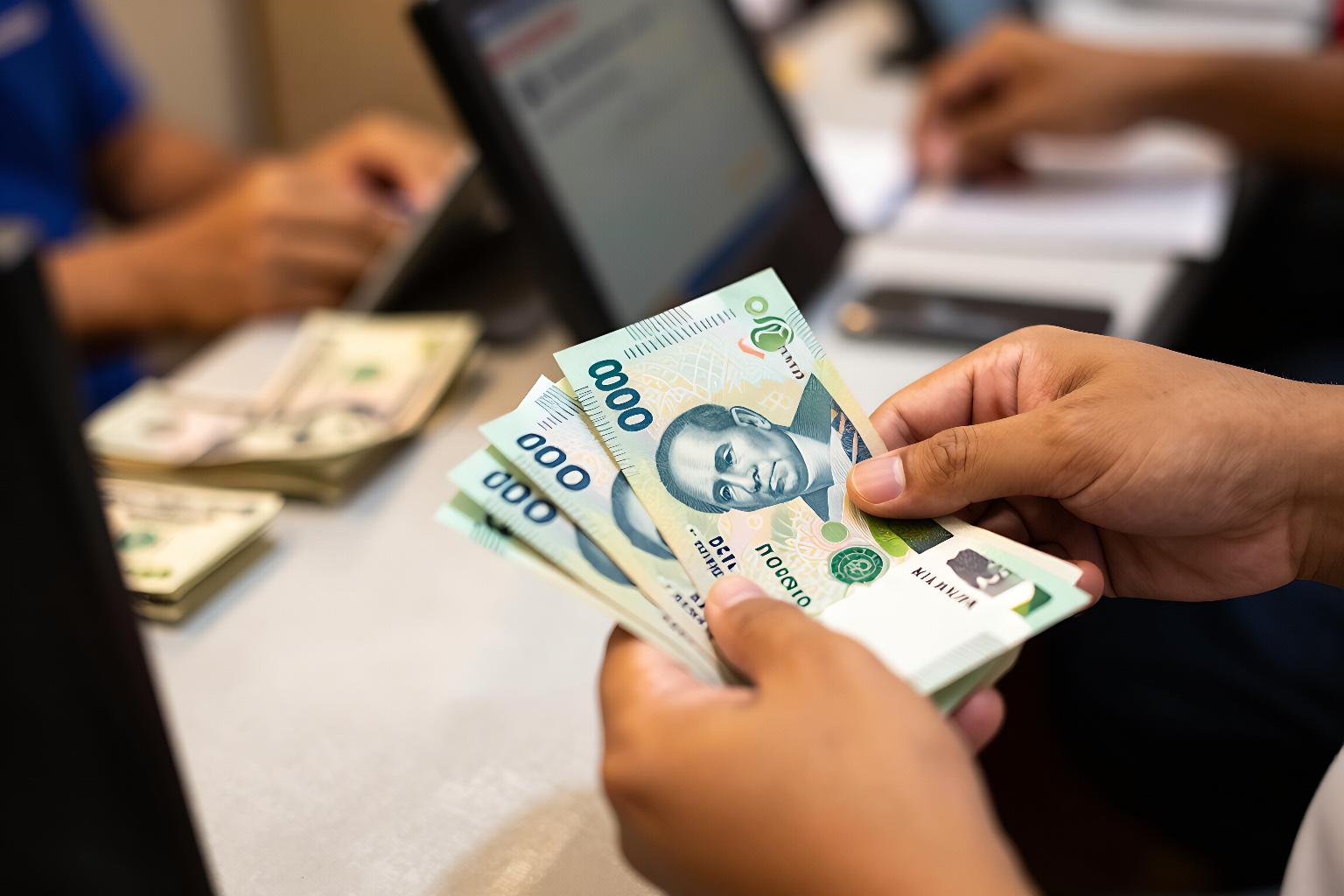
Converting 100 US dollars into Philippine pesos takes about five seconds of arithmetic. Getting the most pesos for that hundred takes a little more thought, because the number you see online and the number you walk away with are rarely the same figure.
Here's the conversion itself, what moves it, and where the money quietly leaks out along the way.
At a rate of ₱57 to the dollar, 100 USD equals about ₱5,700. Every peso the rate moves shifts your total by ₱100. That's the whole calculation: dollars multiplied by the rate gives you pesos.
Rates drift daily, sometimes hourly during bumpy weeks. A rate of ₱56.20 gives you ₱5,620. A rate of ₱58.10 gives you ₱5,810. On a hundred dollars, that spread is worth a decent meal. On ten thousand dollars, it's an international flight. Understanding what a single-dollar rate actually tells you makes even large conversions easy to sanity-check, because the same logic simply scales up.
Walk past any money changer in Metro Manila and you'll see two numbers for the US dollar. They buy your dollars at the lower one. That gap, the spread, is how the business earns its keep, and it usually sits between 0.30 and 1.50 pesos depending on where you are and how crowded the competition is on that street.
So the board might read ₱57.00 while your $100 turns into ₱5,600 instead of ₱5,700. Banks work the same way with a slightly different structure, and card networks layer their own markup on top. Worth knowing before you convert anything large: the number on the board is almost never the number you get.
A few costs stack up, and they're usually invisible until you do the subtraction:
Add those together and a $100 conversion advertised at ₱57 can land you closer to ₱5,450 once everything clears. The gap between the headline rate and your final balance is exactly what you'll really get after fees, and it's the only number that matters.
Numbers on a screen stay abstract until you map them to things. In the Philippines, 100 dollars is roughly:
Provincial cities stretch it further; tourist islands burn through it faster. If you want a sharper sense of scale, this breakdown of what one dollar actually buys you in the Philippines is a useful yardstick for pricing out an entire trip.
Location matters more than timing for small amounts. Here's how the usual options compare:
Remittance providers advertise low or zero fees, but they earn on the rate instead. Send $100 at ₱56.30 when the market sits at ₱57.00 and you've effectively paid ₱70, which is more than a "$0 fee" implies. On small transfers, a fee-free promo genuinely wins. On larger ones, the rate matters far more than the fee, so compare the peso amount landing in the account rather than the sticker price. Checking today's dollar rate in the Philippines before you hit send gives you a benchmark to judge the offer against.
Look up the mid-market rate before you leave the house. It's the number you'll see on Google or XE, and it's the honest baseline. Anything a counter offers below it is the cost of the service, which is fine as long as you know what you're paying.
Ask the question out loud before handing over cash: "How many pesos will I get for this $100, in total?" That one sentence forces the spread and any service charge into a single figure, and it makes comparing two counters across the hallway effortless.
Convert in bigger chunks when you can. The fixed fees on a $500 exchange are the same as on a $100 one, so the cost per dollar drops sharply. Keep receipts too, since changers are required to ask for ID on larger transactions and a paper trail settles any dispute quickly.
Finally, don't over-convert. Selling pesos back to dollars costs you the spread a second time, and on a round trip that's easily ₱300 to ₱500 gone for nothing. Change what you'll spend, keep a little for the airport, and leave the rest in the account you'll actually use.
Slot ID: blog-post-bottom