
Loading article...
Slot ID: blog-post-top
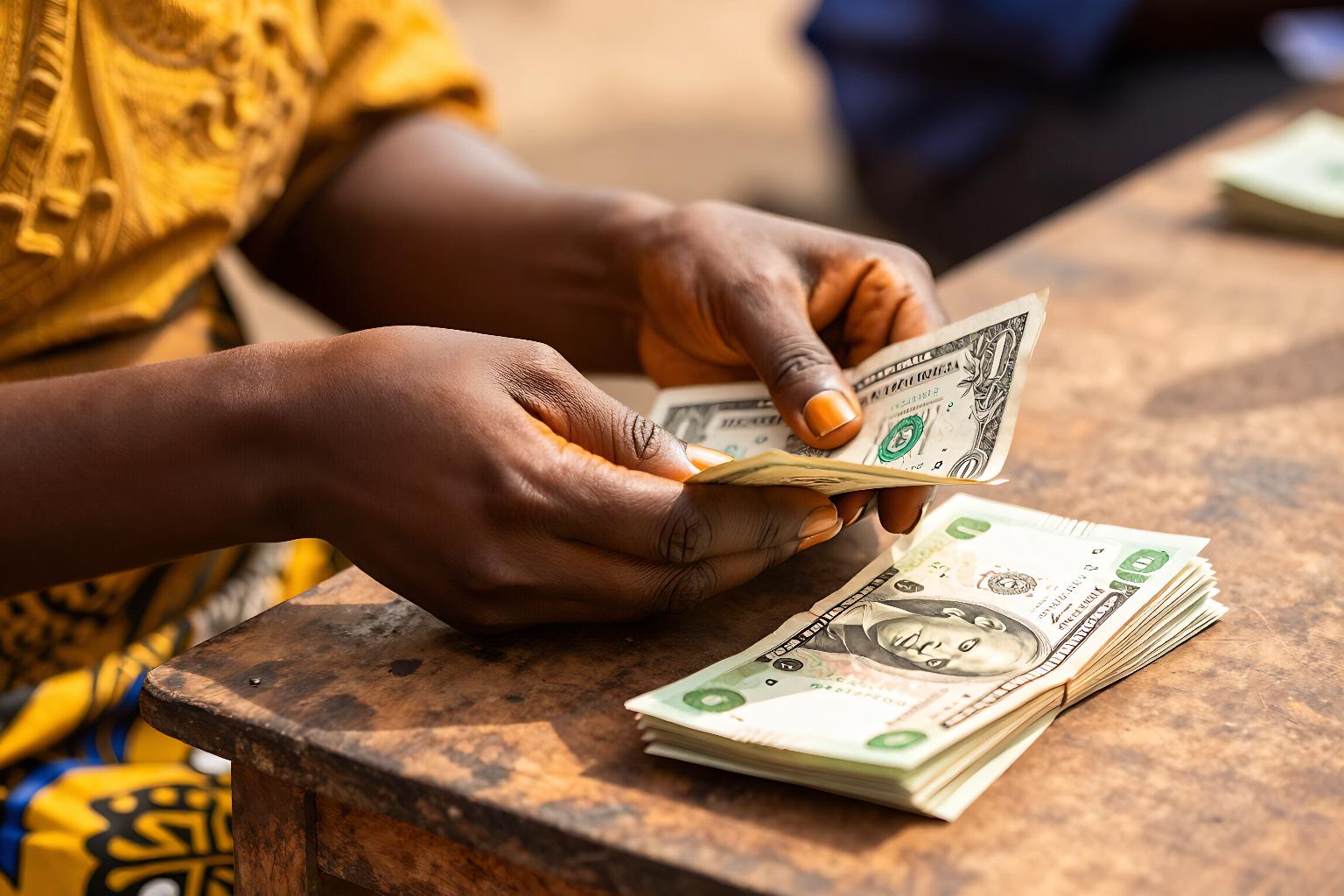
Five hundred dollars sent from London to Lagos can land as ₦780,000 or ₦745,000 on the same afternoon. Same amount, same recipient, same day. The difference comes down to which rate the sender used and what got shaved off along the way.
That gap is the whole story behind the USD to NGN conversion. The number you see on a search results page is a starting point, not a promise. Understanding what sits between that figure and the naira your family actually receives is worth more than any rate alert.
The rate tells you how many naira one US dollar buys at a given moment. At the time of writing that figure sits somewhere in the ₦1,500 to ₦1,600 range, up from roughly ₦460 in early 2023. If you last looked at the rate before the 2023 liberalisation, the number will feel almost unrecognisable.
The quoted figure is a reference rate. It reflects large wholesale transactions between banks and authorised dealers, not the price a bureau de change in Kano or a fintech app in Ikeja will hand you. An airline's advertised fare is real too, but nobody assumes it's the final price after bags and seat selection.
Nigeria has long carried a spread between the official window and the parallel market. Since the naira was allowed to float more freely, that gap has narrowed a lot. It has never closed entirely, and it widens whenever dollar supply tightens.
Bank transfers, card settlements, and anything routed through the Central Bank's authorised dealer system. If you're receiving a salary or paying an invoice through a Nigerian bank, this is the rate in play.
Cash exchanges at bureaux de change and informal traders. Rates here respond faster to demand, which is why they can look better on a quiet Tuesday and worse the week before Christmas when everyone is buying dollars for travel.
Every provider earns from the spread. A service advertising ₦1,590 might buy dollars from you at ₦1,560 while also charging a 1.5% handling fee. On a $1,000 transfer, that spread costs ₦30,000 and the fee adds roughly ₦23,850. You've lost about ₦54,000 against the headline number without a single error on your part.
This isn't unique to Nigeria. It's the same principle that makes a two-peso gap on the peso so expensive once you scale it to a full remittance. Margins are small in percentage terms and large in absolute terms.
Get into the habit of asking five questions before any conversion, whether it's $200 or $20,000:
If the arithmetic feels fiddly, there's a useful walkthrough on how to read the rate before you exchange that breaks the calculation into steps you can do on a phone calculator.
Safe and traceable, often the slowest. Bank spreads tend to be wider than fintech spreads, and intermediary charges can appear without warning. Good for large sums where documentation matters more than speed.
Fast and negotiable, especially for cash. Ask for the all-in rate rather than the buying rate, and count the notes before you leave the counter. Best for smaller amounts and for people who can visit in person.
Usually the cheapest route for regular transfers under a few thousand dollars. Rates are typically tighter and fees are transparent, though promotional rates often revert to standard ones after the first transfer.
Worth considering if you're paid in dollars and don't need naira immediately. It keeps you out of a weak-rate conversion, but it doesn't earn much and it exposes you to whatever the rate does next.
Oil earnings still shape Nigeria's dollar supply, so crude prices and production volumes matter more than most people realise. Central Bank policy decisions, foreign reserves, and the volume of diaspora remittances all push the rate around. Demand for dollars to pay for imports and school fees adds seasonal pressure at predictable points in the year.
None of this is forecastable with confidence. What you can do is understand the mechanics so a sudden move doesn't catch you mid-transfer. There's a longer explanation of what the dollar-to-naira rate really means if you want the mechanics in more depth.
Comparing headline rates is the most common one. Two providers can advertise ₦1,585 and ₦1,575 while the second delivers more naira because its fee structure is leaner. The gap between the advertised rate and the settled amount is where people lose money, and it's rarely visible until the receipt arrives.
Converting at an airport is another reliable loss. You're paying for convenience in a captive market, and the spread can be double what you'd get elsewhere. Sending small amounts repeatedly burns fees that would disappear on a single larger transfer. Assuming your recipient gets the full amount ignores the receiving bank's own charges, which is why it pays to look at the all-in cost including fees rather than the conversion alone.
Chasing yesterday's rate is the subtle one. If the naira strengthened overnight and you're now hesitating, remember that waiting has its own cost when you actually need the money moved.
Check the mid-market rate first so you know the baseline. Get a full quote from two or three providers, calculating the naira your recipient will receive rather than the rate on the banner. Compare that final figure against the mid-market number and treat the difference as your true cost. If it's under about 2%, you're doing well; if it's over 4%, keep looking.
For recurring transfers, such as monthly support for family, set a standing order and review the provider every few months. Rates shift, and loyalty is rarely rewarded with better pricing. For one-off large conversions, split the transaction across two days if the amount is big enough that a 1% swing would hurt. That won't beat the market, but it smooths the ride.
The naira will keep moving. What protects you isn't predicting it, it's knowing exactly what your dollars become after every spread and fee has been taken. Get that number in writing before you send, and the USD to NGN conversion stops being a gamble.
Slot ID: blog-post-bottom