
Loading article...
Slot ID: blog-post-top
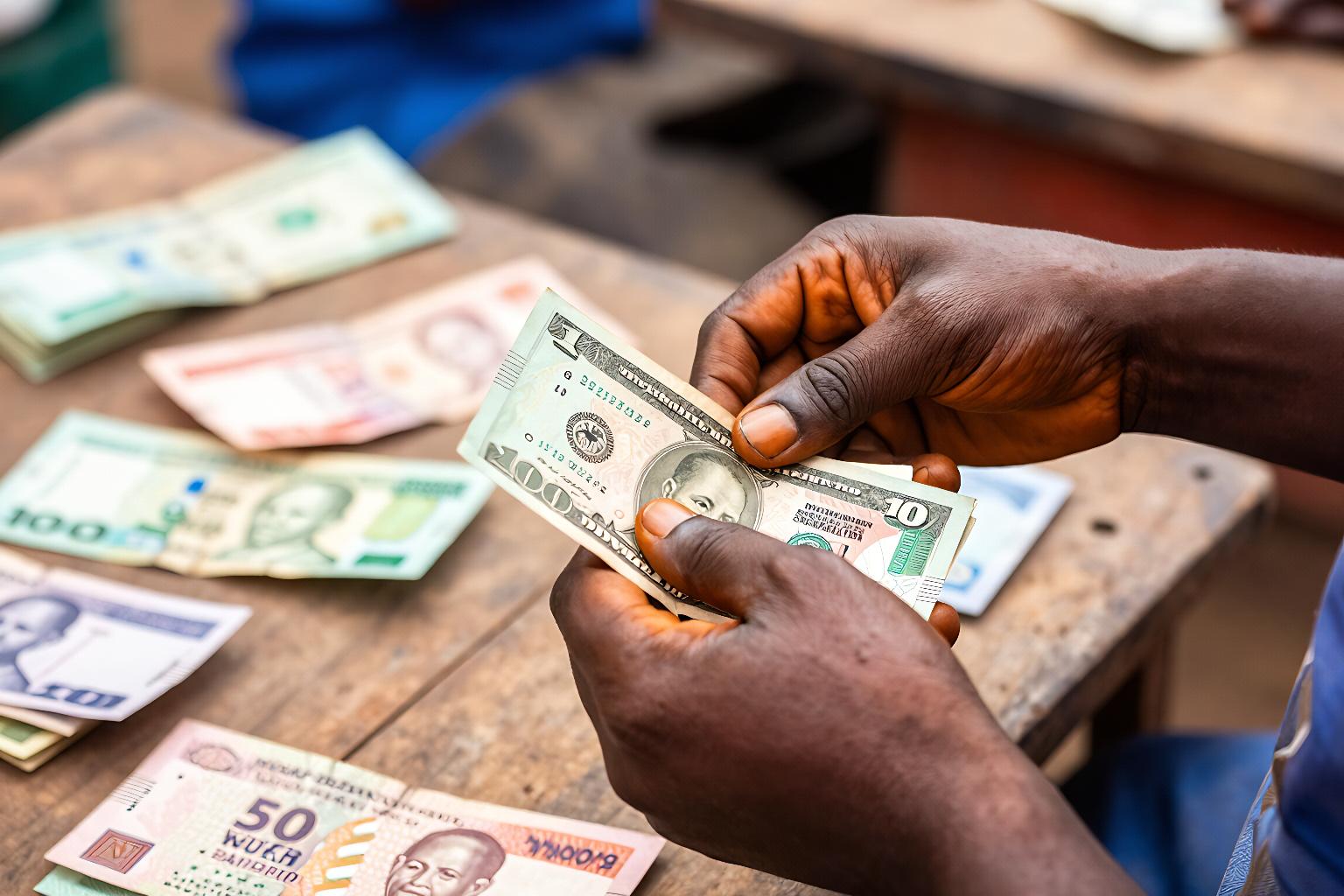
Check the dollar rate in Nigeria on a Monday morning, then look again on Friday. There is a real chance you will see two different numbers. On a rough week, you might see two different numbers before lunch.
The US dollar in Nigerian naira is one of the more restless currency pairs you can follow, and that restlessness is why plenty of people end up with a worse deal than they planned for. The figure on the screen is a starting point. What actually matters is the rate you personally get when you exchange, send, or receive money.
Most of the numbers you see on Google, in news reports, or on a bank's homepage come from the official market, where authorised dealers and banks trade dollars with each other. It is a wholesale price. It tells you roughly what a dollar costs in bulk, not what a bureau de change in Surulere will hand you for a $100 note.
In practice, three numbers exist at the same time: the official rate, the street or parallel rate, and the effective rate you walk away with after fees and margins. Those three can differ by 1% or by 8%, depending on the week and the channel you use. Knowing which one you are looking at is half the battle.
Nigeria's supply of dollars leans heavily on two things: oil revenue and money sent home by Nigerians abroad. When oil receipts slow or exporters hold back, dollars become scarce and the naira weakens. When inflows pick up, it firms.
Since mid-2023, the Central Bank of Nigeria has allowed the naira to trade with far more freedom than before. That unlocked a long-overdue adjustment, and the currency lost a large chunk of its value in stages. One side effect was welcome: the gap between the official and street rates, which had stretched to absurd levels, narrowed considerably.
September brings foreign school fees. December brings travel and weddings. Importers front-load orders ahead of customs deadlines. Each of those moments pushes demand for dollars higher, and the rate usually reflects it within days. If you have flexibility on timing, avoiding the peak of a demand spike can save you real money.
People routinely compare the first number to the third and feel cheated. They are not being cheated, exactly. They are comparing a wholesale price to a retail one without accounting for the middle.
Start by checking the mid-market rate from two independent sources, then look at what your bank or app is offering. The difference between the two is your cost. Anything above roughly 2% deserves a second look, and anything above 4% is worth walking away from.
It also helps to understand what each number is telling you rather than just the headline figure. This guide on reading the dollar-to-naira rate before you exchange walks through the anatomy of a quote, and the same logic applies far beyond West Africa, which is why the traps in today's USD to PHP rate look so familiar.
Say you need to convert $1,000. At ₦1,540 to the dollar, you get ₦1,540,000. At ₦1,585, you get ₦1,585,000. That ₦45 gap looks tiny written down, yet it is ₦45,000 in your pocket, close to 3% of the transaction. On a $10,000 transfer, the same gap becomes ₦450,000. Scale turns small rate differences into serious money.
A provider can advertise "zero commission" and still make 3% by giving you a weaker rate than the market. A bank might post ₦1,550 on its board but apply ₦1,520 to your transaction, and that 30-kobo gap is the actual fee. Nobody puts it in a bold font.
The pattern repeats across currencies with almost mechanical predictability, and it is the reason a two-peso gap costs you real money in peso conversions too. The currency changes; the mechanics do not.
The practical habit is simple. Ask one question before every exchange: how much naira will land in my account, after everything? If a provider cannot answer that in a single figure, treat it as a warning sign.
If you are abroad sending money home, the headline rate is almost irrelevant. What matters is the naira your recipient receives. International money transfer operators often quote close to the official rate but charge a percentage, while some apps advertise no fee and shave the rate instead. Run both numbers and compare the final cedi-free naira figure.
If you are in Nigeria buying dollars, cash from a licensed bureau de change is usually the fastest route for small amounts, while banks make more sense for larger sums that need documentation and a paper trail. Either way, ask for the rate in writing before you hand anything over.
One last thing worth internalising: nobody consistently times the naira. People who try usually lose more to spreads than they save on timing. People who focus on getting a fair rate, checking the effective number, and avoiding panic conversions in December tend to come out ahead without any forecasting skill at all.
Watch the dollar in naira long enough and you stop seeing a single figure. You start seeing three: the price of money, the price of convenience, and the price of not asking questions. Pay attention to the third one and the first two become much easier to manage.
Slot ID: blog-post-bottom