
Loading article...
Slot ID: blog-post-top
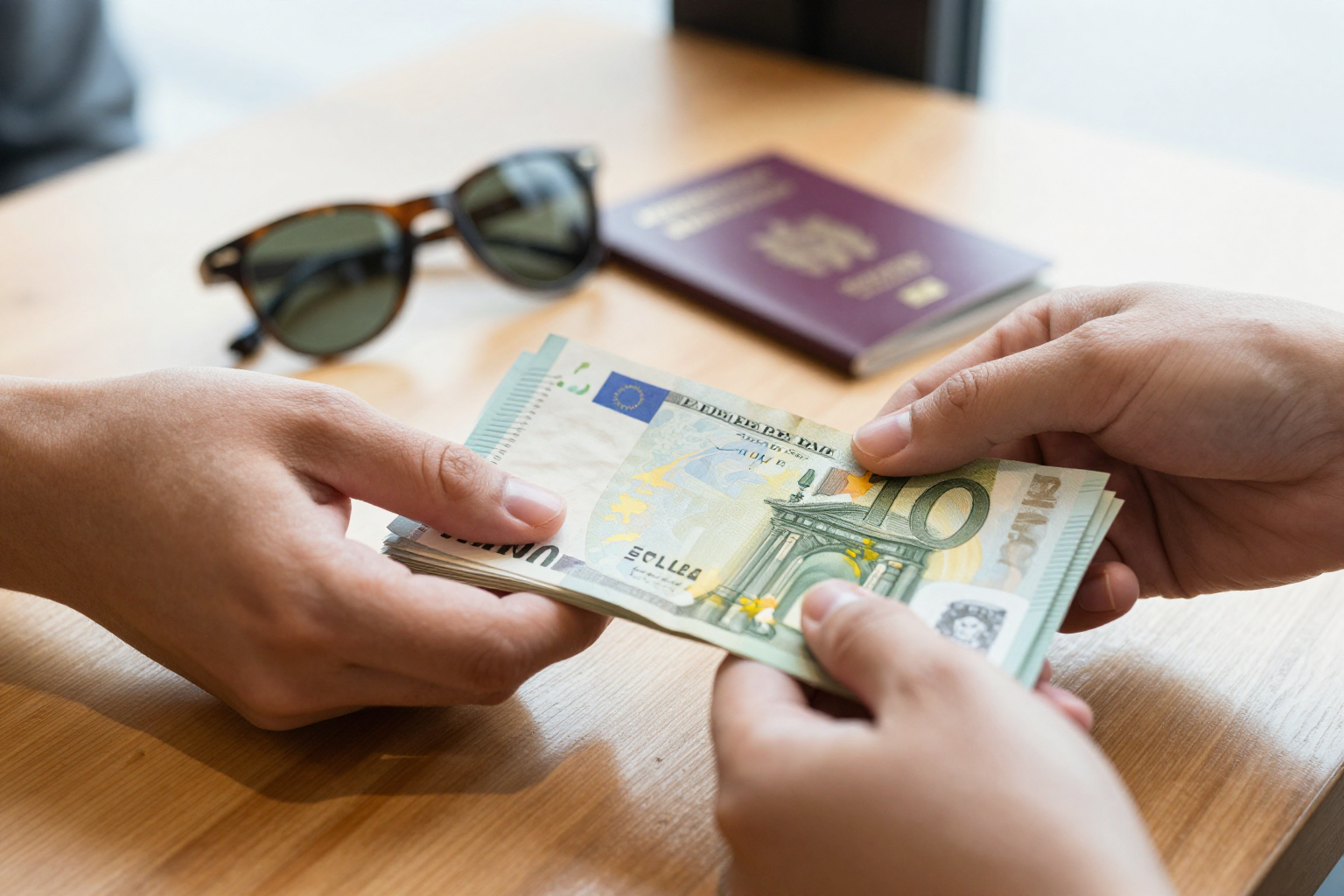
You've probably checked the USD to EUR rate before sending money to Europe, planning a trip, or accepting a dollar contract from a client. The number Google shows at the top looks pure and fair. But when your bank settles the transfer, the real figure you get is usually lower. That difference is profit for the provider, and avoiding it is easier than you think.
The dollar-euro exchange rate is the most actively traded currency pair in the world. Almost every minute of the day, banks, funds, corporations and central banks are buying and selling these two currencies in huge volumes. The number you can find online is the mid-market rate, a reference level that changes thousands of times a day based on actual supply and demand.
No one controls the rate from any single government. It's a free-floating exchange rate, largely decided on electronic currency exchanges. If EUR/USD rises from 1.12 to 1.13, the USD/EUR rate moves from about 0.8850 to 0.8930. The margins shown to individual consumers are layered on top of this reference rate and can cost two or three times as much as the rate movement itself.
Retail currency exchange works similarly to cars and airline tickets: the headline is there to bring you in. When you ask for the USD to EUR rate, the bank will quote you an offer price. That price often includes a 1–4% spread, plus a possible flat commission. Let's look at a real calculation.
Assume the live mid-market rate is 0.92 euros per dollar. You want to exchange $5,000. At mid-market, you'd get €4,600. A retail bank might offer 0.9040, giving you €4,520. Then a service charge of €5 brings you to €4,515. You lost €85 with no extra card fee and no hidden correspondent bank charge. That's a loss of 1.8% for a transaction you thought was nearly free.
In other words, the largest cost in an international transfer is usually not the visible fee, but the exchange rate margin built into the conversion. This applies to cash and online transfers alike.
Googling the reference rate of another currency can demonstrate the problem clearly. Enter 1 US dollar in Indian rupees and you'll see a reference value that almost no retail customer can actually get. The same discrepancy is normal for USD to EUR, although major pairs like this one tend to have slimmer margins than higher-volatility emerging markets.
Each component may look small on its own, but they stack up quickly. Online money transfer specialists generally beat banks by a full percentage point or more because they use the mid-market rate and add a transparent fee.
You can be far more strategic about your conversion expenses. Follow these principles and you'll be close to paying the wholesale rate plus a fair fee.
Instead of comparing two providers' headline rates and separate fees, compare only the amount of euros your recipient will receive. In 2025, you can do this on each service's website before even opening an account. Look at the difference for the exact scale of your transfer: a provider that looks good at $2,000 may be terrible at $20,000.
Use a reliable reference, like the ECB euro reference rate or a peer-to-peer currency data site, to see what the fair wholesale midpoint is at that moment. Then compare that to the rate your provider has quoted. If the gap is more than 1%, you're overpaying. Many digital banks in Europe keep margins under 0.5%.
When you're paying by card or withdrawing cash from an ATM in Europe, the machine will often ask whether you want to pay in EUR or USD. Always choose EUR. Choosing USD triggers dynamic currency conversion, which quietly applies a poor exchange rate and often a separate fee. You'll see that practice at airport currency desks too, whether you're in Berlin or Bangkok. This guide to baht to US dollar rate quality shows the same trap in action on the other side of the world.
Banks often route foreign currency payments through a chain of correspondent banks, each of which can deduct a fee. A dedicated money transfer service sends the funds directly to a local EUR account, cutting out most middlemen. If you send money to family in India, you've probably been told to always use a specialist: there is an excellent explanation in this Indian rupees to USD exchange rate guide. The same logic applies for US-to-Europe payments.
For anyone who regularly converts EUR back into USD, remember that the markup goes both ways. Before you buy a travel cash card or use a broker's swap, you should also understand how euro to dollar conversion fees are structured on the return journey. A fair margin in one direction doesn't guarantee a fair margin in the other.
The honest transfer service publishes its pricing openly and uses the live market rate as its foundation. If you need euros abroad for a month, skip the cash advance and send a EUR transfer directly to a European bank account. That avoids layers of intermediary wire costs and ATM withdrawal fees.
Contrary to what many sellers imply, there is no such thing as a truly zero-fee currency exchange. Every EUR conversion carries a cost. Depending on the provider, it may be labelled as a margin, fee, or simply built into the rate. For USD to EUR, a fair total cost for an online transfer is typically under 0.6%. Above 1.5%, you're paying too much. You decide where that line sits.
Check final amounts, ask for a rate guarantee, and never accept dynamic currency conversion. Combine that with your own mid-market comparison, and you'll do more for your budget than trying to time the market. Before your next transfer, look at the exchange rate on the receipt and compare it with the mid-market level from the same day. If you routinely see large gaps, switch providers. The next conversion will instantly tell you whether you're still paying the 'Google rate tax'.
Slot ID: blog-post-bottom