
Loading article...
Slot ID: blog-post-top
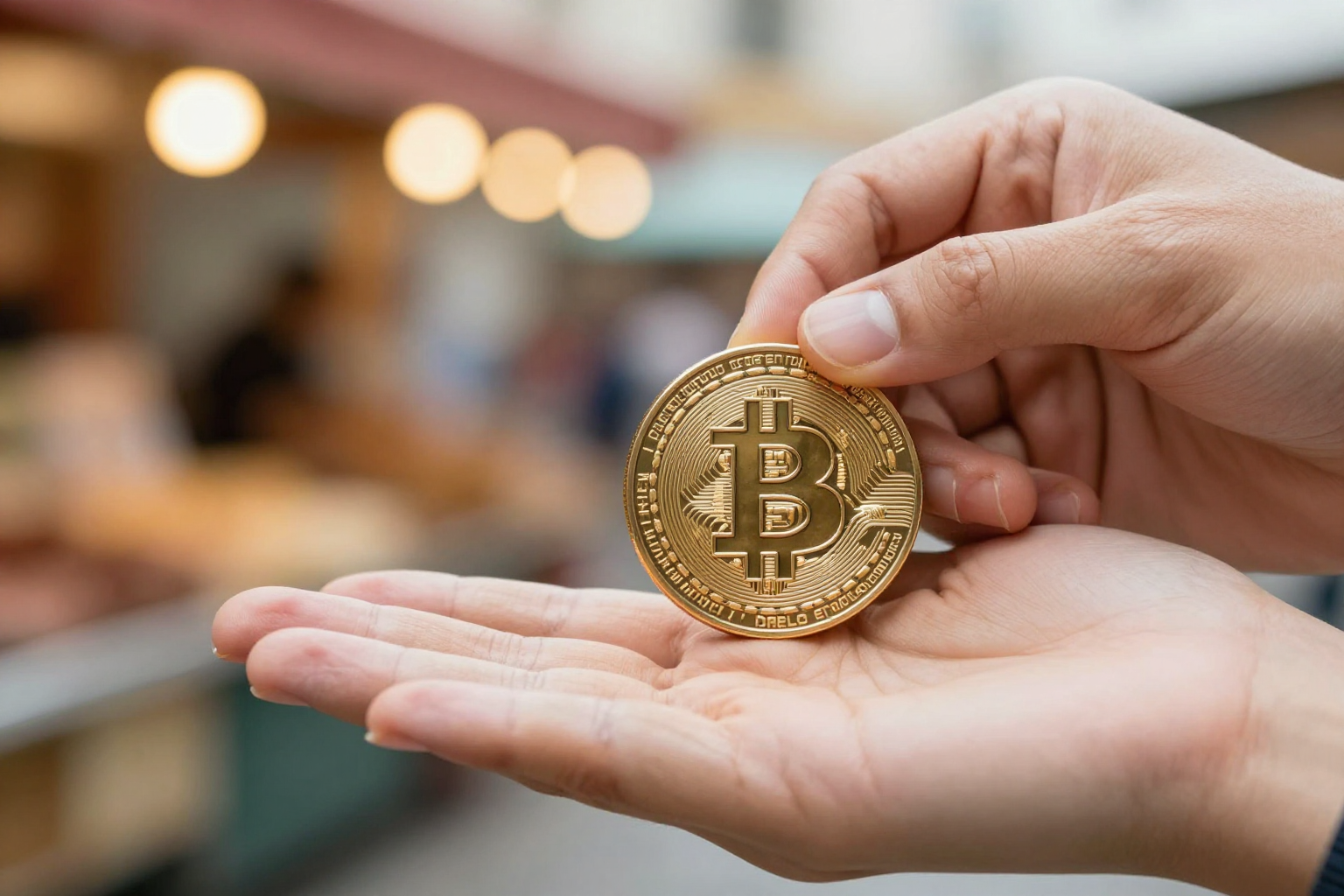
Every few months, the bit coin price grabs headlines. It hits a record high or suddenly drops 20% in a week. If you've never bought bitcoin, watching that chart can feel like trying to read a storm. Something moves, people get excited or panic, and you're left wondering: what actually drives that number?
This guide is for the absolute beginner. We'll strip away the jargon and build a mental model from scratch: what bitcoin price really represents, why it moves, and how to think about it without falling for common traps.
Here's a surprise: there is no single official price for bitcoin. It's not announced like a central bank exchange rate. Instead, bitcoin trades on hundreds of different exchanges around the world — from giants like Binance and Coinbase to smaller platforms you've never heard of. On each exchange, buyers and sellers are making deals with their own money, and each deal creates a price.
What you see on Google, Yahoo Finance, or a news website is usually an index. It's an average of the prices on several major exchanges, weighted in some way. That's a handy number to glance at, but it's important to remember that it's a composite, not a quote you can actually trade at. If you're trying to get a more precise picture of which number actually matters for your trade, our guide to which price number you can actually trust is a good next step.
At its core, the bitcoin price is a product of supply and demand. In that respect, it's like onions, oil, or vintage guitars. When more people want to buy than sell, the price goes up. When more people want to sell than buy, it drops. Simple enough.
But bitcoin has a quirk that almost nothing else in finance has: its supply is fixed.
Bitcoin's code sets a hard ceiling: there will only ever be 21 million bitcoin. No government can print more. No company can issue additional shares. Even if the world collectively decides it wants a trillion dollars' worth of bitcoin, the supply cannot grow beyond that cap.
New bitcoin does enter circulation through a process called mining, where computers solve complex puzzles and earn a block reward. But the rate of issuance is predetermined and slows down roughly every four years in an event known as "the halving". In 2024, the reward dropped from 6.25 to 3.125 bitcoin per block. This means the flow of new supply is not just capped; it's measured and decreasing. That scarcity is a big part of why many holders believe the price tends to trend upward over the long run.
Now for the part that confuses most beginners. If supply is so predictable, why does the price swing like a monkey on coffee? The short answer: because demand isn't predictable at all.
Compared to stocks, bonds, or gold, bitcoin's entire market cap is still relatively small. A single major investor or institution selling a large amount of bitcoin can move the price meaningfully. In the stock market, a firm selling $1 billion of Apple shares might not even register. A similar sale in bitcoin, on certain exchanges, can cause a noticeable dent.
Another major driver of volatility is leverage. Many crypto exchanges let traders borrow money to open positions much larger than their actual deposit. When the price moves against them, the exchange automatically sells their position to cover the loss. These are called liquidations. A cascade of forced selling can fuel a sharp drop in minutes. The same thing can happen in reverse during rallies, forcing short sellers to buy back, which adds fuel to the fire. So a 10% swing can happen with no obvious news at all.
When you look at the order book on an exchange, you'll see two sides. For example, at a bitcoin price of $60,000, there might be a stack of bids (people willing to buy) from $59,500 to $60,000. Meanwhile, there are asks (people willing to sell) above $60,000. The highest bid and the lowest ask form the current price, and the gap between them is the "spread".
When you place a "market order", you accept whatever is available on the other side right now. If you're buying, you match the lowest sell order. If you're selling, you match the highest buy order. If you place a really large market sell order, you might eat through several layers of bids, pushing the price down as you go. That's called slippage.
This is exactly why the price you see on a chart is not always the price you'll receive when you trade. That catch can cost you real money, and a few traps trip up nearly every newcomer. You can read the most common ones in our earlier piece on bitcoin price traps and getting better rates.
Let's make this concrete. Suppose an exchange shows bitcoin trading at $60,000, but the actual spread might be $59,980 bid and $60,020 ask. If you place a market buy, you're paying $60,020, not $60,000. Add a trading fee of 0.1%, and your true entry price is already above $60,000. On a small trade the difference is tiny; on a large trade or a series of trades, it adds up quickly.
For a step-by-step walkthrough of how exchanges calculate your final rate, and how to avoid overpaying, check this guide on getting the rate you'll actually receive. It's a much better use of your time than watching the ticker every five minutes.
Short-term price is driven by emotion and leverage. Long-term, there are a handful of big forces at play:
None of these guarantees a certain price. But they provide a framework. If you're trying to decide whether to hold bitcoin as a long-term investment or use a stablecoin for everyday value storage, this comparison of the major cryptocurrencies can help you think through it.
Here's the most useful mental model I know: think of bitcoin price like the weather, not like a thermostat you can control. It fluctuates, it's partly predictable based on season, but it will always surprise you. The smart play is to dress for the climate, not the forecast.
What that means in practice:
That last point is more important than most people realise. A lot of beginners lose money not because bitcoin dropped, but because of avoidable errors: sending coins to the wrong address, falling for phishing scams, or selling at the exact bottom. It's much cheaper to learn from someone else's experience than to pay for it with your own savings.
Slot ID: blog-post-bottom