
Loading article...
Slot ID: blog-post-top
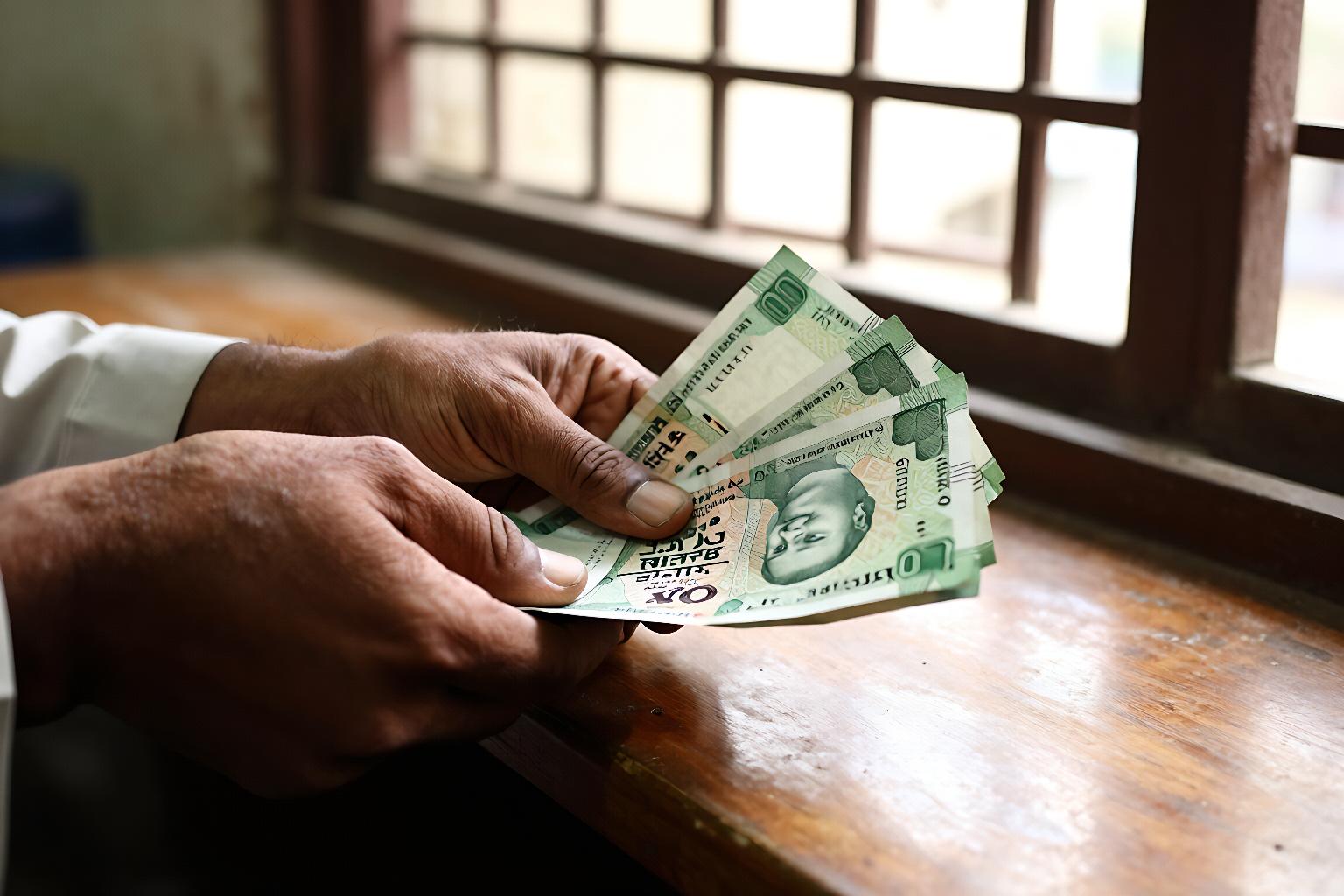
You type 100 usd to pkr converter into a search bar, press enter, and get a number. Something near 27,900. It looks precise, it has decimals, and it arrives with a timestamp that makes it feel official. Then you walk into a bank branch in Rawalpindi or open a transfer app, and the amount you're actually offered is smaller. Sometimes a little, sometimes enough to notice.
That gap isn't a scam. It's how currency exchange works, and once you can see where the missing rupees go, the converter becomes a much more useful tool.
Behind the box you typed into is one multiplication. Take the exchange rate and multiply by 100. At a rate of 279.00 you get 27,900 rupees. At 278.25 you get 27,825. The entire tool is that single line of arithmetic, dressed up with a currency dropdown and a refresh button.
The rate itself comes from the interbank market, where banks and licensed dealers trade dollars against rupees. Pakistan's market is managed, and the State Bank publishes a reference rate each working day. Currency websites pull from that pool, usually with a lag of minutes, occasionally hours. So the number on your screen is a snapshot of where the market sits, not an offer anyone has made you.
Hundreds of thousands of people search for this exact conversion every month, and the reason is practical. It's the round amount a tourist pulls from an ATM, the pocket money a parent sends a student in Lahore, the invoice a freelance developer in Karachi raises for a small overseas client. It's small enough to be casual and big enough that a bad rate stings.
It's also the easiest unit to scale from. If you know the rate for a hundred, you can multiply by five for a flight, divide by ten for a coffee, and roughly guess any figure in between. A dollar-level breakdown of the same maths is covered in what one dollar really buys you in rupees, which is handy when the numbers are too small for a percentage to feel real.
Your converter shows the mid-market rate, the midpoint between what buyers pay and sellers ask. Nobody actually trades at the midpoint for retail-sized amounts. A bank selling dollars to you charges above it, and a bank buying your dollars pays below it. That gap is the spread, and it's the first deduction on your $100.
Say the mid-market sits at 279.00. A bank might buy your dollars at 277.20, which turns your $100 into 27,720 rupees. That 1.80 rupee gap per dollar is 180 rupees in total, or roughly 0.65%. On top of that comes a flat counter fee if you're changing cash, or a wire fee plus a receiving charge if the money arrives by transfer.
This is why the quoted figure and the final figure rarely match. The article on how the quoted rate compares to the rupees you actually get walks through the same gap with a bigger transaction, where the numbers are easier to see.
Assume a mid-market rate of 279.00, which puts your reference figure at 27,900 rupees. Here's what the mainstream routes typically deliver:
A $5 fee on $100 is 5%. The same $5 fee on $2,000 is 0.25%. That single sentence explains most of the frustration around small transfers. If you're sending a hundred dollars a month to family, the fee structure matters far more than a tenth of a rupee on the rate.
Some services quietly solve this by burying the fee in the rate instead, quoting 274.50 when the market is at 279.00. The total cost is similar, but it's harder to spot. Compare the all-in rupee figure you'd receive, not the headline rate and the fee separately.
Plenty of people arrive at a 100 USD to PKR converter from the opposite direction. They hold rupees and want to know what a dollar will cost them, whether for a visa fee, an online subscription, or a trip. The spread bites again here, because you're now the buyer of dollars, and the bank's selling rate is the higher one.
At a mid-market of 279.00, buying $100 might cost you 28,090 rupees at a 280.90 selling rate. The direction of the trade changes which side of the spread you land on, a point covered in more detail in the guide to converting PKR to USD and why the screen rate isn't the rate you get. If you're converting back and forth repeatedly, you pay that spread twice, which is why holding a small dollar balance often beats round-tripping.
Less than the internet suggests. The rupee can move half a rupee to two rupees against the dollar over a normal week. On $100, a one rupee shift is 100 rupees, roughly the price of two cups of tea in Islamabad. A single flat fee usually costs more than a good day's rate.
Watch the trend if you're moving thousands. For a hundred, pick the route with the lowest total cost and get on with your day. Chasing a rate is only worth it when the amount is large enough that a 0.3% difference clears your lunch bill.
This is the one habit that makes the converter genuinely valuable. Before you accept any quote, find the mid-market rate and compare. The formula is simple: subtract the offered rate from the mid-market rate, divide by the mid-market rate, and multiply by 100. That's your percentage cost.
An offer of 277.20 against a mid-market of 279.00 works out to 0.65%. On $100, that's 180 rupees. If the same deal also carries a 500 rupee counter fee, your true cost climbs to about 2.4%, and the effective rate you're really getting drops to roughly 272.20. Suddenly the headline number looks a lot less appealing.
Do that arithmetic once for each provider you're considering and the rankings become obvious. The breakdown of what the USD to PKR rate actually means is useful background if you want to understand how providers set their margins in the first place.
One last thing worth doing: write down the rate you were quoted, the rate you actually received, and the fee you paid, every time you convert. After three or four transactions you'll know your own real cost of moving money between dollars and rupees. That personal number is far more useful than any live ticker, because it reflects your bank, your route, and your amounts, and it tells you within seconds whether a new offer is genuinely better or just dressed up with a prettier headline.
Slot ID: blog-post-bottom