
Loading article...
Slot ID: blog-post-top
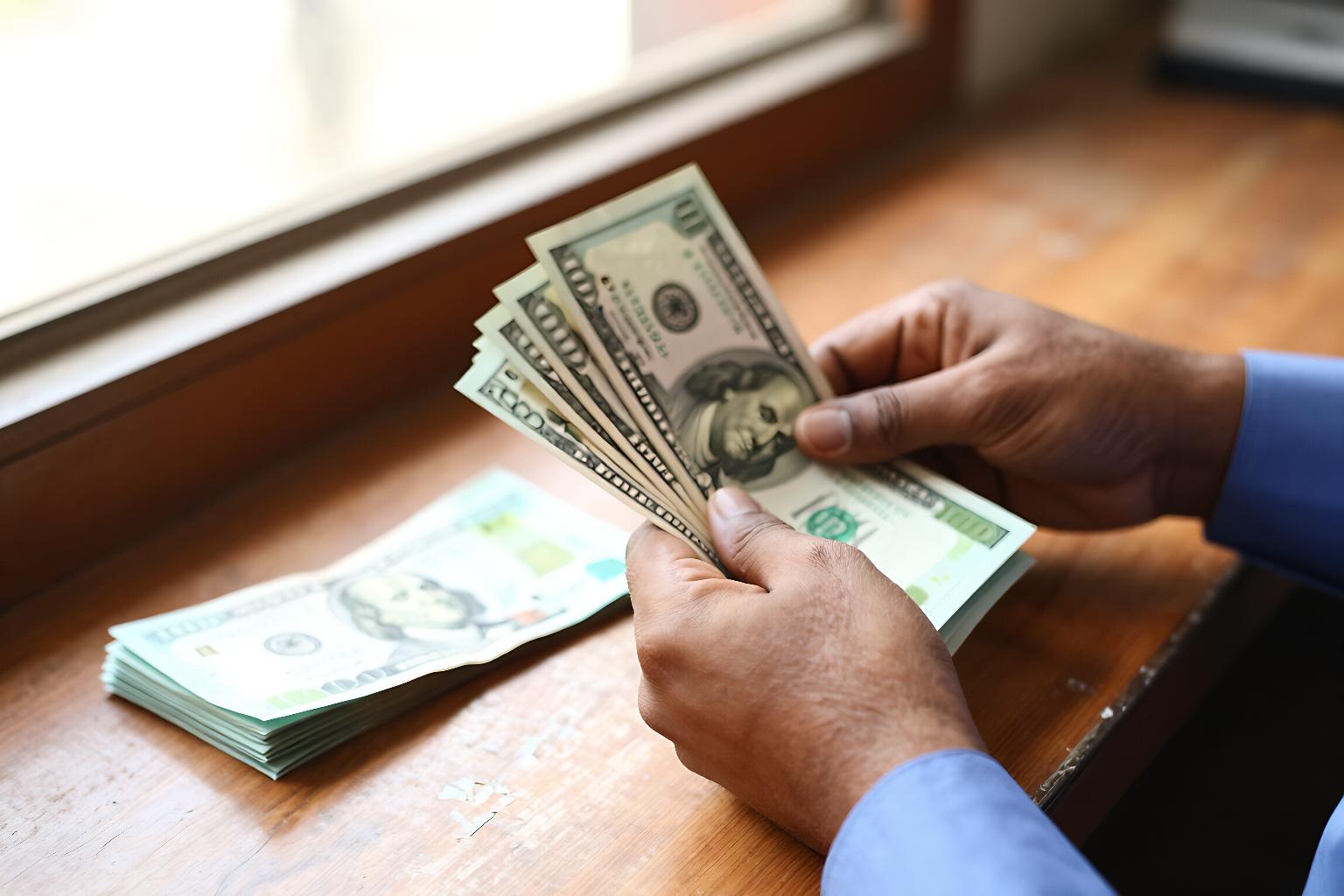
You have 250,000 rupees sitting in a Pakistani bank account and a plan that involves US dollars. Maybe it's a university deposit, a supplier invoice, or simply moving savings somewhere steadier. You type convert pkr to usd into your phone and get a tidy number: 278.50. Somewhere between that search result and the money actually leaving your account, the tidiness disappears.
That gap is what this guide is about. Not exchange-rate theory, but the practical distance between the rate you're shown and the dollars you end up holding.
Three separate things decide how many dollars you get, and only one of them is the number advertised on the front page of a converter.
Two people can convert the same 250,000 rupees on the same afternoon and walk away with noticeably different dollar amounts. Nothing shady has to happen for that to be true.
Most confusion starts with direction rather than arithmetic. A quote of 278.50 PKR per USD means one dollar costs 278.50 rupees. To turn rupees into dollars, you divide. To go the other way, you multiply.
So 50,000 PKR ÷ 278.50 comes to about $179.53. Multiply $179.53 by 278.50 and you're back at 50,000. Obvious once it's written down, yet people routinely multiply when they should divide and end up with a figure off by a factor of roughly 77,000. If you want a fuller walkthrough of how quotes are formatted across different platforms and where the direction trips people up, this piece on reading a PKR to USD rate without getting shortchanged goes through it carefully.
Concrete numbers make the gap easier to see. Assume the interbank mid-rate is 278.50 and you have 250,000 PKR to convert.
The spread across those three routes is roughly $7, or about 0.8%. On a 2.5 million rupee property payment the same 0.8% becomes $72. On 25 million rupees it's $720. The percentage never changes. The stakes do.
A money changer quoting 279.40 for a clean bundle of 250,000 rupees may quote 276.00 if you hand over 40,000 in mixed, slightly worn notes. Smaller amounts mean more handling for the same margin, so the rate gets worse. If you have a choice, convert in fewer, larger transactions.
No provider works for free. When a counter advertises 0% commission, the cost has moved into the buy-sell gap. Compare the all-in figure, never the headline. Ask a direct question: if I hand you 100,000 rupees right now, how many dollars do I walk out with? That single number settles arguments faster than any rate board.
International transfers usually pass through a correspondent bank, which may deduct $15 to $30 before the funds land. Your sender might see the full amount leave their account while you receive less. Check whether the transfer is sent as SHA (shared costs) or OUR (sender pays all).
Buying physical dollars at a counter and wiring money to a US account are different products with different pricing. Cash carries handling and security costs; wires carry correspondent bank charges and a two to five day wait. The cheaper option depends entirely on what you need the dollars for.
One quirk worth knowing: in Pakistan the open market rate often sits slightly above the interbank rate, especially when demand for physical notes spikes before Hajj season, Ramadan, or the school-fee rush. That's why the board at a currency counter and the rate in your banking app don't match. The reverse direction has its own set of traps, which this explainer on the USD to PKR rate versus the rupees you actually receive unpacks in detail.
Receiving $1,500 from an overseas client is the same problem in reverse, and the conversion usually happens without you choosing it. Your bank applies its own rate on the day the funds clear, typically two to four days after the client sends them. That rate is rarely the one you saw when you invoiced.
Some platforms let you hold dollars and convert on demand. Others convert automatically the moment funds arrive. Knowing which applies to you is worth more than any rate alert, and this breakdown of why the converter rate isn't the rate in your account explains the mechanics behind that delay.
Honest answer: mostly no. The rupee moves on oil prices, import bills, IMF reviews, and remittance flows, and none of those are predictable on a two-week horizon. A 1% swing on $1,000 is $10. Freelancers who sit on rupees for six weeks chasing a better number routinely lose more in delay than they gain in rate, especially when inflation is quietly eroding the balance anyway.
What you can control is the 0.8% to 2% you lose to spreads and fees. That's a five-minute phone call to two providers, and it's a bigger, more reliable win than timing.
Line up three providers and convert each quote into one figure: rupees spent per dollar received, fees included. That's the only apples-to-apples comparison. A provider offering 280.00 with a 2,000 rupee fee beats one offering 279.50 with a 500 rupee fee on a 250,000 conversion, but most people pick the second because the rate looks tighter.
The same spread-plus-fee structure appears across the region. Anyone juggling several currencies will recognise it in this look at why India's currency-to-USD conversions work the same way.
Do those six things and the number you saw in your search result stops being a promise and becomes something closer to a receipt. The rate will still move. Your exposure to it won't.
Slot ID: blog-post-bottom