
Loading article...
Slot ID: blog-post-top
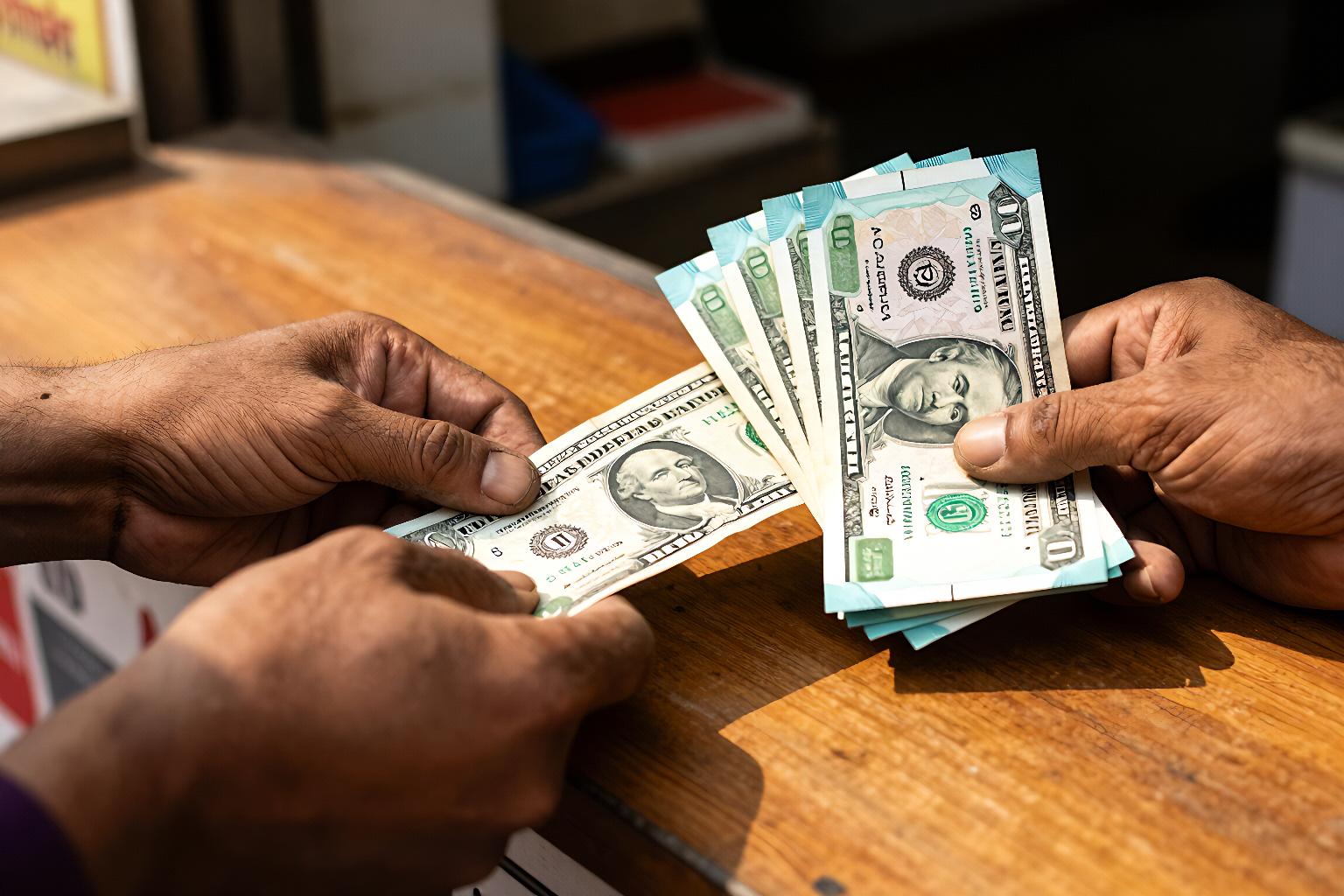
Type “1 usd to pkr calculator” into a search box and you get an answer before you've finished typing: somewhere around 279, maybe 280. The maths is simple. Multiplying one dollar by any exchange rate is about as easy as arithmetic gets. The part that trips people up is that the number the calculator shows and the number the money changer in your neighbourhood applies are rarely the same.
That gap matters. It matters on a $40 remittance and it matters enormously on a $4,000 property payment. Here's how to use one of these calculators properly, and how to tell the difference between a useful figure and a decorative one.
Converting a single dollar strips away volume and leaves you with the raw price of the dollar in rupees. Whatever number comes back is the rate itself. That's genuinely handy: it lets you check every day and watch the trend without recalculating $500 each time.
The complication is that Pakistan doesn't have one dollar rate. It has several, published by different parties, for different purposes, at different moments.
This is the rate banks use with each other and with the State Bank of Pakistan for large official transactions, including most formal remittances. It's the figure quoted in news reports, and it moves in small, tightly controlled increments.
This is what exchange companies and money changers quote. It reflects local demand for physical dollars, so it drifts a rupee or three either side of the interbank rate depending on the week. When people ask about the dollar rate in Pakistan they usually mean this one, because it's the price they can actually transact at.
A calculator pulling the interbank figure might show 278.60 while the counter down the road quotes 280.20 for the same minute. On one dollar, that's sixty paisa. On a thousand dollars it's Rs 1,600, which is a decent week's grocery bill. If you want a fuller picture of what the USD to PKR rate actually means for your rupees, that gap is the thing worth understanding.
Every quote has two sides. If the board reads 279.80 bid and 280.40 ask, the dealer buys dollars from you at 279.80 and sells them to you at 280.40. The 60 paisa in between is the spread, and it functions as a fee, just one that never appears on a receipt.
Most online calculators default to the mid-market rate, the midpoint between those two sides. It's a fair reference point and broadly useless for planning, because no counter will give it to you. When you're checking a rate before a real transaction, ask the provider for the buy rate, not the mid-market rate.
A headline rate of 280 sounds better than 279 until you notice the flat Rs 1,000 transfer fee. On $200, 280 gives you Rs 56,000, and the fee takes it down to Rs 55,000. Your effective rate just dropped to 275. The calculator never mentioned that.
Card payments add another layer, usually a foreign exchange markup of two to three per cent on top of the network rate. Wire transfers can cost a fixed fee plus a slice of the amount. Cash at a counter usually costs you only the spread, which is why small amounts often convert better in cash than through a bank.
Items worth checking before you press send:
There's a solid breakdown of the rate you're quoted versus the rupees you actually get that goes deeper into where these costs hide.
Suppose you want to send $250 to family in Karachi. The calculator on your phone says 279.50, which works out to Rs 69,875. Here's how three different routes might land:
Same request, three outcomes separated by more than Rs 2,000. None of them matches the calculator exactly, and that's normal. The calculator's job is to give you a baseline so you can spot when a quote is bad.
Reverse conversions catch people out because the spread flips direction. When you're selling rupees to buy dollars, the dealer's sell rate applies, which sits above the mid-market figure. Multiply your rupees by a mid-market rate and you'll consistently overestimate how many dollars you can buy.
The other trap is the double conversion. Routing PKR through a second currency before it reaches USD means paying two spreads instead of one, and the second one is usually invisible. If you do this regularly, read up on why the rate you see isn't the rate you get before you rely on any single screen.
The State Bank of Pakistan publishes the official interbank rate daily. Exchange companies publish open market rates, and ECAP posts a daily snapshot that's a reasonable proxy for what the better counters are offering. For a quick sanity check, any decent calculator drawing on those sources is fine.
For an actual transaction, the only rate that matters is the one written on your quote. Pull two or three quotes within the same hour and compare. If one provider sits half a rupee off the others, ask why before you hand over anything. Learning to read the number properly is the whole skill, and it's covered well in this guide to reading a PKR to USD quote without getting shortchanged.
Rates move during the day. Friday afternoons and the days around Eid tend to see sharper moves as demand for dollars rises. A rate checked at 10am may not hold at 4pm, and a wire initiated today might settle at a different rate on Thursday.
If you're converting a large amount, ask your provider whether they'll lock the rate, and for how long. Many will hold a quote for a few hours on request. If you're converting a small amount, don't overthink it: the difference between 279 and 280 on $50 is Rs 50, which is not worth a second trip across town.
One habit that pays off: check the 1 USD to PKR calculator every Monday morning for four weeks and write the numbers down. You'll quickly see the normal range for your area and start recognising when a quote is unusually good or unusually bad. That instinct is worth more than any single rate you'll find online.
Slot ID: blog-post-bottom