 Currencies
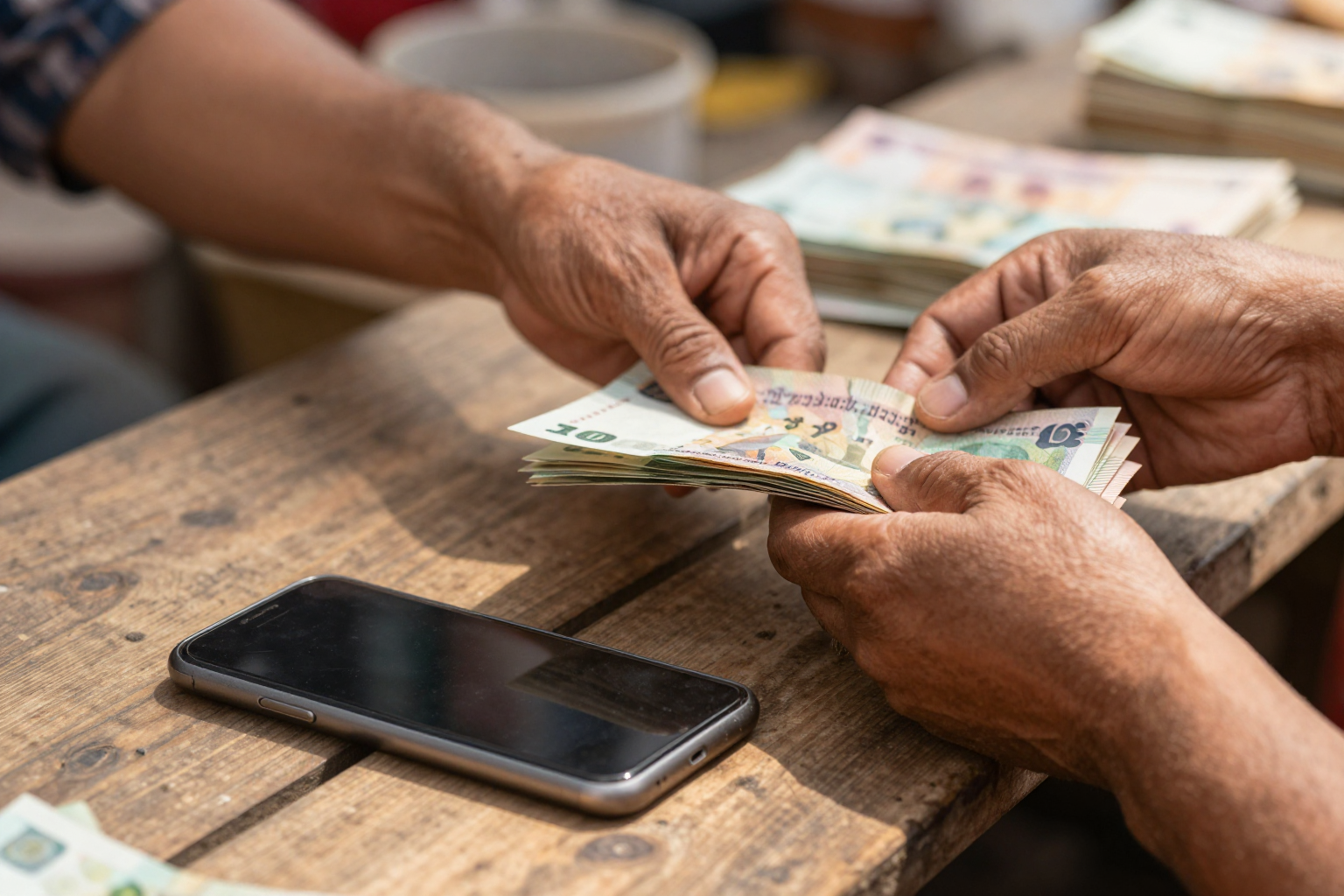
A freelance designer in Buenos Aires finishes a project for a client in Berlin and gets paid in dollars. The money doesn't land in a local bank account where it would be converted to pesos at whatever rate the government allows that week. It lands in a digital token on her phone that holds its value, spends like cash, and can be sent to her sister in Madrid for a few cents. That token is a stablecoin.
Same story in Lagos, Istanbul, Karachi and Kyiv. Somewhere between 200 and 300 million people are estimated to hold one, and the numbers keep getting revised upward every time a research firm publishes new data.
So what is a stablecoin, exactly?
A stablecoin is a cryptocurrency built to hold a steady value, almost always pegged one-to-one to a traditional currency such as the US dollar. One USDT is meant to be worth one dollar — today, next month, and next year. That's the whole design brief, and it's the opposite of what most crypto assets do. Bitcoin fell from roughly $69,000 in November 2021 to about $16,000 twelve months later. Nobody prices a coffee in something that behaves like that.
Two things make the peg hold. First, an issuer promises to redeem tokens at face value and holds assets — bank deposits, Treasury bills, or other crypto — to back that promise. Second, the token itself is just an entry on a blockchain, usually Ethereum, Tron or Solana, which means it settles in seconds, moves across borders without a correspondent bank, and operates on weekends and public holidays.
The scale is bigger than most people assume. The total stablecoin market sat somewhere around $250–300 billion in mid-2025, with Tether's USDT accounting for well over half of it and Circle's USDC taking most of the rest. Annual transfer volume now runs into the trillions of dollars, more than some national payment systems.
Why anyone bothers with a pegged token
The honest answer is that stablecoins solve a problem most people in the US or Western Europe don't have: access to a currency that doesn't melt. Argentina's inflation rate crossed 200% in 2023. Turkey's lira lost more than 80% of its value against the dollar over five years. Lebanon's banking system froze depositors out entirely.
For households in those places, a dollar-denominated token you can hold on a phone is a savings account. For traders, it's a parking spot — somewhere to sit between trades without converting back to a bank account and triggering a taxable event or a three-day settlement delay. For businesses paying overseas contractors, it's a payment rail that clears in minutes instead of days.
The four ways a stablecoin holds its peg
Fiat-backed
The most common model. The issuer holds dollars, government bonds, or short-term cash equivalents in reserve accounts and issues one token per dollar. USDT, USDC, PayPal's PYUSD and the euro-denominated EURC all work this way. It's simple and easy to understand, and it puts a lot of trust in one company.
Crypto-backed
Instead of holding dollars, the protocol holds other crypto assets and locks up more than it issues — typically $1.50 to $2 of ether for every $1 of stablecoin. If the collateral falls in price, the position gets liquidated automatically. MakerDAO's DAI (now largely branded USDS) and Liquity's LUSD are the long-running examples. These are more transparent because reserves sit on-chain, but they inherit crypto's volatility.
Commodity-backed
Tokens backed by gold bars in a vault, such as PAXG or XAUT. Each token represents a defined fraction of a physical bar. They track gold, not the dollar, so they're really a different product wearing the same label.
Algorithmic — and why that model broke
Some designs tried to hold the peg with code rather than collateral, using a second token and trading incentives to push the price back to $1. TerraUSD was the biggest of these. In May 2022, it lost its peg, the incentive mechanism inverted, and roughly $40 billion of value evaporated in about a week. Almost nobody builds pure algorithmic stablecoins at scale anymore. The lesson stuck: a peg without real assets behind it is a promise with nothing behind it.
What people actually do with them
• Savings in hard currency — holding dollars outside a fragile local banking system.
• Cross-border payments — sending money internationally for a fraction of typical remittance fees, which the World Bank puts around 6% globally.
• Trading collateral — parking funds between positions on exchanges without leaving the crypto ecosystem.
• Lending markets — supplying stablecoins to protocols like Aave for yield, at the cost of taking on smart contract risk.
• Merchant settlement — businesses accepting stablecoin payments and converting to local currency at the end of the day.
Reserves, audits and the trust question
A stablecoin is only as good as what sits behind it, and this is where the industry has spent years arguing with itself.
Tether, the largest issuer, settled with the New York Attorney General in 2021 for $18.5 million over claims about its reserves and now publishes quarterly attestations from BDO Italia. An attestation is not a full audit — it's a snapshot of balances at a point in time, without testing controls. Circle publishes monthly attestations from Grant Thornton and has been regulated as an e-money issuer in the EU since mid-2024.
The lesson came in March 2023, when Circle disclosed that $3.3 billion of USDC reserves sat at Silicon Valley Bank as the bank collapsed. USDC traded down to about $0.87 over a weekend before the FDIC backstopped deposits and the peg restored. A fiat-backed stablecoin is a claim on a bank, and banks fail.
Where the risks actually hide
Depegs happen more often than the marketing suggests — usually briefly, sometimes permanently. Beyond that, holders carry issuer risk (the company could freeze your tokens, and most reserve the right to do so), smart contract risk if the token sits in a lending protocol, and regulatory risk, since rules are still being written in most jurisdictions. On-ramps and off-ramps matter too: a stablecoin is only useful if you can convert it to local currency at a fair rate, and in some countries you can't.
Regulation finally showed up
The EU's MiCA framework put stablecoin issuers under e-money rules from June 2024, with reserve, disclosure and governance requirements and a cap on non-euro stablecoins used as a means of payment. The US followed in July 2025 with the GENIUS Act, which sets reserve standards and disclosure obligations for payment stablecoins and creates a federal path for issuers alongside state regimes.
Big money has noticed. Stripe bought stablecoin infrastructure firm Bridge for $1.1 billion in 2024. PayPal issues its own. Visa and Mastercard both settle some transactions in USDC. Banks that spent five years calling this a fad are now running pilot programs.
Five things to check before you hold one
If you're going to use a stablecoin as a place to keep money rather than a way to move it, look at the reserve composition and ask whether the issuer publishes anything regular. Check who audits or attests to those reserves, and read the last report. Find out whether the token has ever broken its peg and why. Confirm the issuer can't arbitrarily freeze your balance, or accept that it can. And test the off-ramp with a small amount before you need it, because the exit is the part that fails when things get stressed.
None of that requires expertise. It requires about twenty minutes and a willingness to read the terms that most holders scroll past.