 Currencies
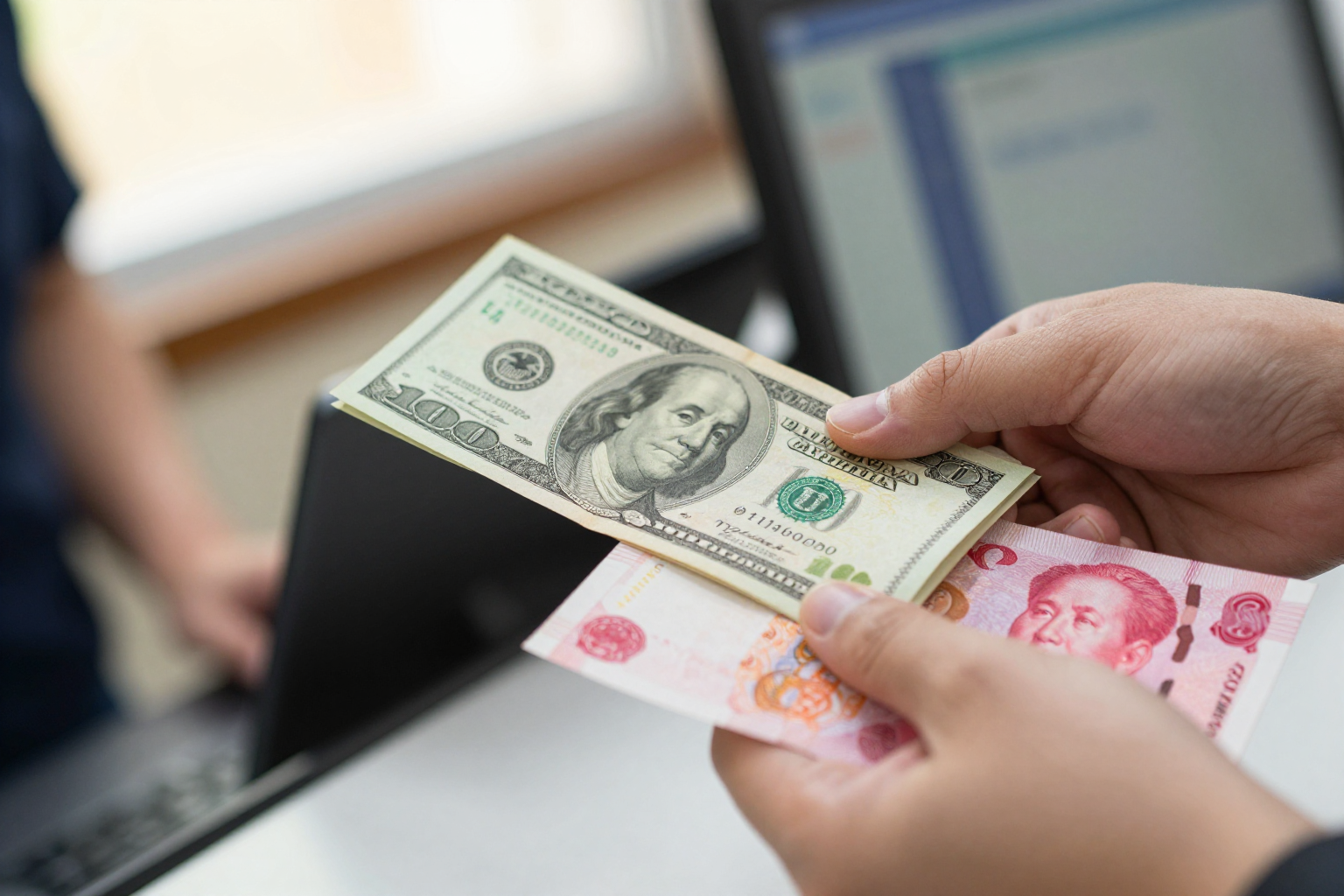
You type the pair into a search bar, and a number appears: something around 7.1, 7.2, maybe 7.3. It looks simple enough. But that single figure hides two different markets, a daily government announcement, and a spread that quietly eats into your money every time you actually convert. If you are checking the USD CNY exchange rate today because you are sending money, pricing an import, or planning a trip, a little context goes a long way.
Here is what that quote actually represents, what pushes it around, and how to get a fair deal rather than the first rate you see.
Two rates, one currency pair
The first thing worth knowing: there is no single yuan rate. There are two, and they behave slightly differently.
• CNY is the onshore yuan, traded inside mainland China. It is managed, meaning it can only move within a band (currently 2%) either side of a daily reference rate set by the People's Bank of China.
• CNH is the offshore yuan, traded freely in Hong Kong and other financial centres. No band, no daily fix, just supply and demand.
Most websites quote USD/CNY, but if you are converting through an international bank or a fintech app, you are often getting something closer to the offshore CNH rate. The two usually sit within a few hundredths of each other. When they diverge sharply, that gap is telling you something about stress in the market.
Which way is the rate moving?
This trips people up constantly. In the USD/CNY pair, the dollar is the base currency. So if the number rises, from say 7.10 to 7.25, the dollar has strengthened and the yuan has weakened. One dollar now buys more yuan. If the number falls, the opposite is true.
For anyone holding dollars and buying yuan, a higher number is good news. For a Chinese exporter being paid in dollars, a higher number means more yuan for the same invoice. Same rate, opposite feelings.
A worked example
Suppose the rate today is 7.12. Converting $1,000 gets you 7,120 yuan. If the rate drifts to 7.28 over the next month, that same $1,000 now buys 7,280 yuan, a difference of 160 yuan, roughly 2.2%. On a $50,000 property payment or a supplier invoice, that same 2% becomes a four-figure swing. This is why timing matters more than most people expect.
What moves the USD CNY exchange rate
The daily fix
Each morning in Beijing, the central bank publishes a midpoint rate, the so-called fix. It is derived from a basket of currencies plus a counter-cyclical adjustment, which is a polite way of saying the authorities retain meaningful influence. Traders read the fix like a weather report: a fix noticeably stronger or weaker than the market expected often sets the tone for the whole session.
Interest rate differentials
This is the big structural driver. When US Treasury yields sit well above Chinese government bond yields, capital tends to flow toward dollar assets, and the dollar firms against the yuan. When the gap narrows, that pressure eases. Watch the US Federal Reserve and the PBOC in parallel rather than in isolation; it is the space between them that moves this pair.
Trade flows
China runs large trade surpluses, which generate steady demand for yuan from exporters converting foreign earnings. Those flows act as a natural cushion under the currency. Exporters also hoard dollars when they expect the yuan to fall, then release them when they expect it to rise, which amplifies swings in both directions.
Policy and sentiment
Capital controls, reserve requirement tweaks, and verbal guidance from officials all matter. So does sentiment: headlines about tariffs, property sector stress, or stimulus announcements can move the offshore rate within minutes, long before any policy actually changes.
Where to check, and where the spread bites
Google, XE, Reuters, and most banking apps will all show you a mid-market rate. That is the rate banks use when trading with each other, and it is not a rate you can actually get. The moment you transact, a markup appears.
That markup varies enormously. Airport kiosks are the worst offenders, often 4% to 6% worse than mid-market. High street banks might charge 2% to 3% plus a flat fee. Specialist transfer services and multi-currency accounts frequently sit under 1%. On a $10,000 transfer, the difference between a 5% markup and a 0.5% markup is $450, real money for nothing more than choosing a different counter.
Always compare the final amount you receive, not the headline rate. A "zero commission" offer with a poor rate is usually worse than a small fee with a fair rate.
Practical notes for different situations
• Travelling to China: card acceptance has improved but cash and mobile payments still dominate. Withdrawing from an ATM can beat kiosk rates, though watch out for the ATM operator's own conversion offer. Always choose to be charged in local currency.
• Sending money to family: compare two or three providers on the day, and check whether they use the onshore or offshore rate. A Tuesday morning transfer in China can settle noticeably differently from a Friday evening one.
• Importers and exporters: if an invoice is due in 90 days, a forward contract locks in today's rate and removes the guesswork. Many businesses skip this and then spend the quarter worrying about the chart.
• Large one-off conversions: splitting a big transfer across two or three tranches smooths out the impact of a bad day, at the cost of a little extra admin.
Reading the chart like someone who has done it before
Zoom out before you zoom in. A 0.3% daily move looks dramatic on a one-week chart and almost invisible on a five-year one. The yuan has traded in a broad range against the dollar for years, and the intraday noise rarely matters to anyone except traders.
Two signals are worth your attention. First, the gap between CNY and CNH: when offshore yuan trades meaningfully weaker than onshore, it usually reflects offshore selling pressure and expectations of further depreciation. Second, unusual divergence between the published fix and where the market is trading. Persistently stronger-than-expected fixes suggest the authorities are leaning against depreciation, which historically has meant the floor is not far away.
None of this tells you exactly where the rate goes tomorrow. Anyone who claims otherwise is guessing with extra confidence. What it does give you is a sense of which direction the wind is blowing, so that when you check the USD CNY exchange rate today before making a decision, you know whether the number in front of you looks ordinary or unusual. That, plus a quick comparison of two or three providers, is most of what you need.