
Loading article...
Slot ID: blog-post-top
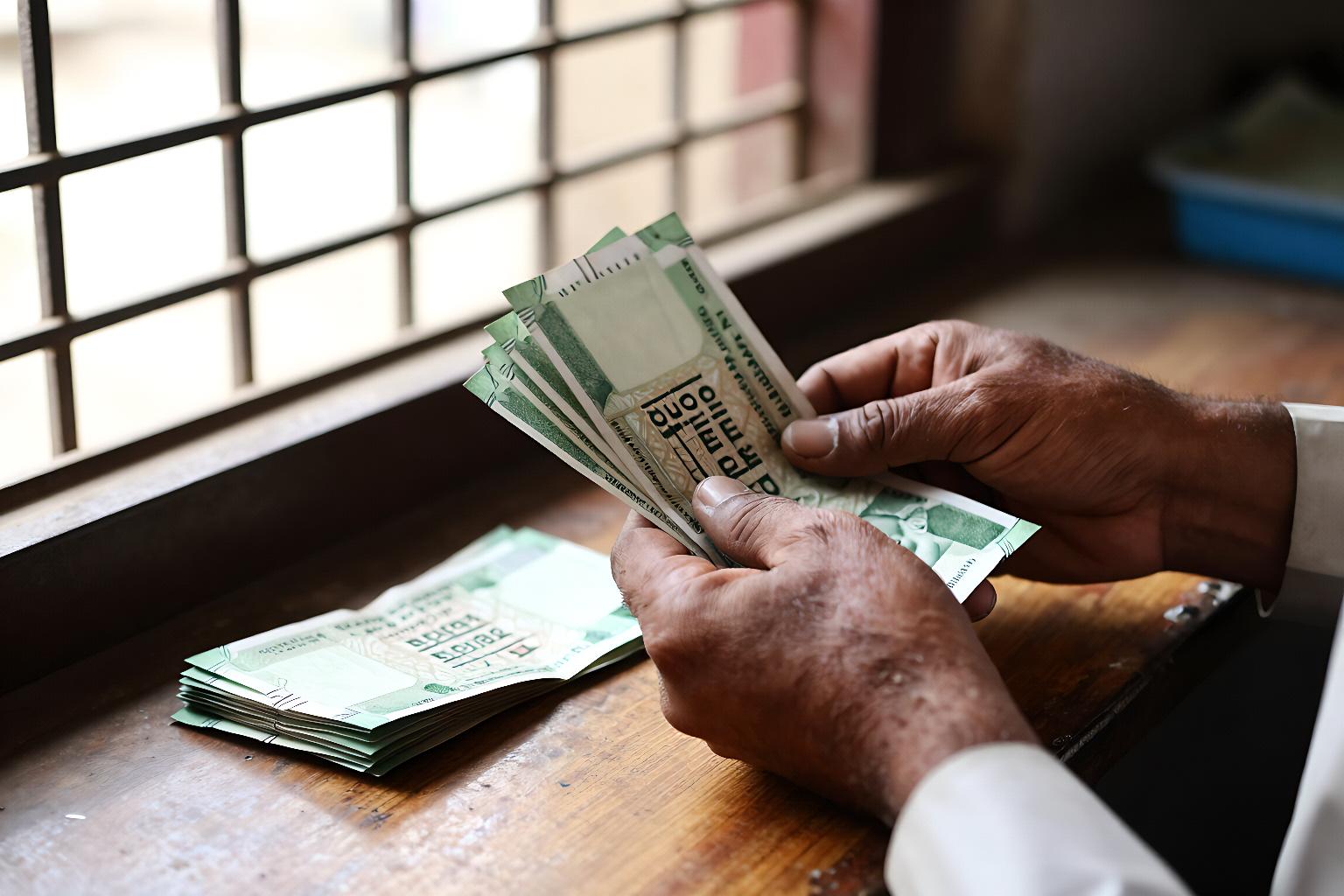
You check the rate on your phone and it says one US dollar buys about 280 Pakistani rupees. You send $500. When the confirmation lands, Rs 137,000 has arrived, not the Rs 140,000 you worked out on the back of an envelope. Nothing has gone wrong. You've just met the difference between the number that gets quoted and the number that actually gets paid.
That gap is small enough to ignore once and large enough to care about every month. For anyone sending wages home from Dubai, invoicing a client in California, paying tuition in Lahore, or carrying dollars into Karachi, understanding how the dollar-to-rupee conversion really works is worth a few hundred rupees per transaction, and often more.
Pakistan runs a managed float. The State Bank of Pakistan publishes an official interbank rate on each working day, and that's the figure news channels report and banks use to settle trade payments between companies. In recent months it has hovered in the high 270s to low 280s, though it has moved several rupees in a single week more than once.
Then there's the open market, where licensed money changers in Karachi's Saddar, Lahore's Gurumandir or a mall counter in Islamabad buy and sell physical notes. The open market rate usually sits a little above interbank, because changers carry inventory, handle risk, and serve people who want cash in hand rather than a bank credit.
How wide is the gap? It depends on how much pressure the system is under. For long stretches in 2022 and 2023 it stretched past Rs 20 to the dollar, which was an open invitation to smuggling and informal transfers. After a crackdown on currency movement across the Afghan border in late 2023, the spread collapsed to a rupee or two, and regulators now watch it closely. A quote that looks dramatically better than the published rate is usually a signal of something other than generosity.
A currency's price is just supply and demand for dollars, wearing a formal suit.
Remittances are the big one: roughly $3 billion a month, most of it from Saudi Arabia, the UAE, the UK and the US. Add textile and rice exports, IT services billed from Lahore and Karachi, IMF tranches, and deposits from Gulf governments. When those flows are strong, the rupee firms up.
Fuel, palm oil, machinery and medicine imports dominate. Then debt servicing, which has been heavy, plus students studying abroad and families travelling for Hajj and Umrah. A month of high oil prices can undo a good quarter of export growth.
Here's the part that catches people out: a flat rate is not the same as a stable rate. In 2022 the central bank held the rupee artificially steady for months while reserves drained. When the policy was abandoned in January 2023, the currency lost around 12% against the dollar in a single day. Neighbouring India lets its rupee float and has its own rhythm, but the forces behind what moves the dollar exchange rate there rhyme closely with Pakistan's.
Every conversion involves two prices: the rate at which a dealer buys your dollars and the rate at which they sell. The difference, the spread, is their revenue. Add a commission or a flat fee and the headline number drifts a little further.
A typical money changer might quote 279.75 to buy and 281.30 to sell. On $1,000, that spread alone costs you Rs 1,550 before anyone charges a fee. It's the same arithmetic that explains why the rate you see and the amount you pay never quite match, in any currency pair.
Run the same $100 breakdown in Indian rupees and the pattern repeats almost line for line. Different currency, identical mechanics.
Numbers on a screen hide the point of the exercise. Rs 28,000, roughly $100 at the current rate, is about a month of petrol for a 1,000cc car with a little left over. It's a punishing summer electricity bill for a household running two air conditioners, or three weeks of groceries for a small family in a mid-tier Karachi neighbourhood if they shop carefully. For someone earning in dollars and spending in rupees, that purchasing power is the entire reason the conversion matters.
Compare it to what a single dollar buys in India and you get a useful reminder: the headline rate tells you the exchange value, not the value you feel at the till.
For anything above a few hundred dollars, a bank or licensed exchange company transfer is the sensible route. You'll need a CNIC for the receiving account, the sender's details will be recorded, and the money moves through a documented channel that the State Bank can see. That documentation matters: Pakistan has spent years trying to pull remittances out of informal hundi and hawala networks, and licensed channels now generally price close enough to the open market that the old incentive to go informal has shrunk.
Overseas Pakistanis have an extra option in the Roshan Digital Account, which lets non-resident account holders convert and hold funds with fewer hoops than a standard transfer. If you're carrying physical cash instead, keep the amount modest, keep the receipt from the changer, and check the current customs declaration threshold before you fly. Undeclared cash is where small savings turn into large problems.
People spend a lot of energy trying to guess the rupee's next move. Look at the long run and the direction has been obvious: a decade ago a dollar bought around Rs 100, five years ago about Rs 160, and the trend has not reversed. Every pause in that climb has ended. If you hold rupees and need dollars, waiting has historically been expensive. If you hold dollars and need rupees, waiting has usually paid, but you can't schedule a tuition payment or a wedding around a forecast that might be wrong for six months.
So skip the forecasting and fix what you can control. Before any conversion, compare the landed amount rather than the rate: divide the rupees that actually arrive by the dollars that actually left. If that figure comes within about 1% of the interbank rate, you've done well. If it's 3% off, you've paid for someone else's new office furniture. Two minutes with a calculator, every time, is the most reliable return in currency exchange.
Slot ID: blog-post-bottom