
Loading article...
Slot ID: blog-post-top
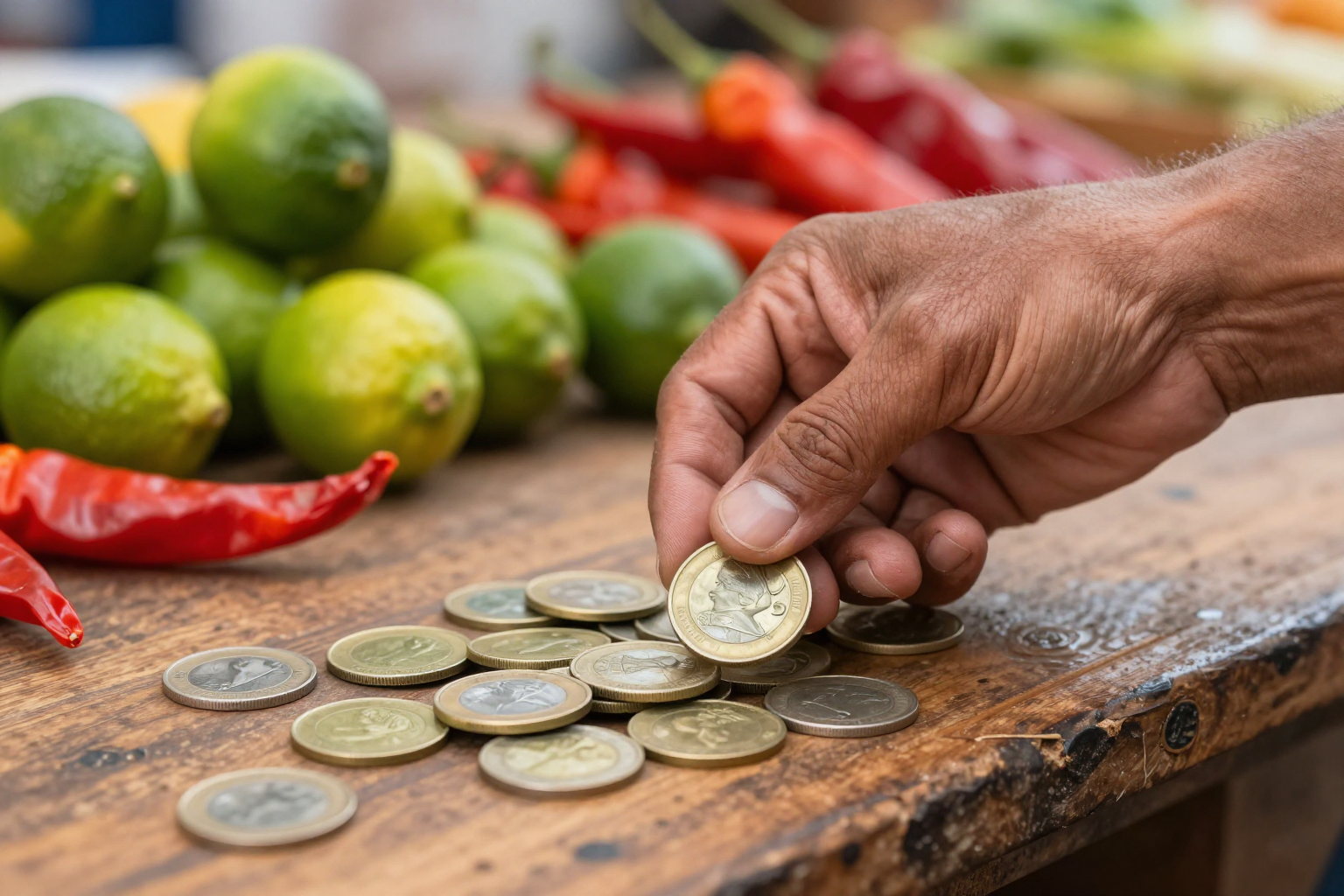
If you’ve ever searched for us dollar to mexican peso a few hours before booking a flight, you probably saw one clean number. That number, however, is not the rate you will get when you exchange cash or send a transfer. The difference between what banks quote each other and what they offer you is called the spread, and it can quietly add up to hundreds of dollars.
Maybe you’re planning a beach vacation in Tulum, paying a supplier in Monterrey, or sending a monthly amount to family in Michoacán. Every dollar crossing into Mexico gets squeezed through a conversion margin. Some providers charge 0.5%. Others charge 4%. Knowing how to tell the difference is the easiest way to keep more money out of the middleman’s pocket and in yours.
USD/MXN is the number of Mexican pesos needed to buy one US dollar. If the quote is 17.10, one dollar buys 17.10 pesos. When the number rises, the dollar has strengthened and your money goes further in Mexico. When it falls, the peso has strengthened and each dollar buys fewer pesos.
The peso is one of the most traded emerging-market currencies, and it reacts to several forces at once:
These are not slow, academic movements. In 2020, one US dollar bought more than 25 pesos during the worst of the pandemic. By 2023, the rate had fallen well below 17 pesos per dollar. Just a few years apart, a $1,000 transfer from the US bought roughly 8,000 more pesos at the weakest moment than it did when the peso strengthened. Exchange rates matter, and they change fast.
Most search results display the mid-market rate, which is the average price used between big financial institutions. It is a reference point, not the actual retail price for people sending $200 or $5,000. Banks and exchange houses buy at one price and sell at another. That spread is how they make a profit.
Suppose the mid-market rate is 17.00 pesos per dollar. Your bank might quote you 16.80 when converting dollars to pesos for a transfer. That may not look like much, but on $1,000 it removes 200 pesos from the recipient’s total before any separate fee is even charged.
The gap is not exclusive to US dollars and Mexican pesos. People who convert dollars to Indian rupees often read about why the rate you see isn’t the rate you get, and the exact same logic applies to MXN. Always verify the effective rate, not the headline number.
The first trap is an unlabeled markup. A provider may advertise no transfer fee, then price the peso at 16.50 pesos per dollar when the mid-market rate is 17.00. That is a hidden 2.9% cost. You are paying for the transfer through the worsened exchange rate instead of through a visible fee.
This pattern appears in many cross-border corridors. Sending money to India has become famous for it: banks hide fees and you get fewer rupees than the quote on your screen suggests. Don’t think Mexico is immune just because the peso is a popular tourist currency.
The same trick also shows up at the point of sale. When you pay with a card in Mexico, the terminal may ask if you want to be charged in US dollars or Mexican pesos. Always pick Mexican pesos. If you choose USD, the merchant or payment processor sets its own exchange rate, often 3% to 7% worse than your bank’s rate. That’s dynamic currency conversion, and it can turn a cheap meal into a surprisingly expensive one.
Ask any provider two questions: how many pesos will the recipient receive, and what is the effective exchange rate after every cost? Deduct any transfer fee from the sending amount, then divide the pesos by the dollars actually being converted. That gives you the real rate.
Traditional US bank wires into Mexico can carry fees at both ends, plus a wide spread. Currency transfer specialists often offer narrower margins. If you were sending money from the US to Japan, you’d look for a way to get more yen for your dollar without hidden fees. Treat your pesos the same way.
If you plan to spend money while travelling in Mexico, a credit or debit card with no foreign transaction fee is worth its weight in pesos. Many standard US cards charge 3% on every overseas purchase. Add that to the card network’s conversion margin, and your trip becomes unnecessarily expensive.
Heading to an ATM in Mexico will still involve some fee, but the overall cost can be lower than an airport kiosk’s markup. The key is to decline the ATM’s own currency conversion. When the screen offers to convert the withdrawal to US dollars, choose to be charged in Mexican pesos instead. Your home bank will do the conversion, usually at a fairer rate.
Assume the mid-market rate is 17.00 pesos per dollar. Here is what a few different quotes would mean for the same $1,000 worth of pesos:
The gap between the airport counter and the specialist is 750 pesos on just $1,000, roughly $44 at the same mid-market rate. That can buy you a solid meal for two in Mexico. On a $50,000 payment, the same type of gap turns into thousands of dollars. These numbers are illustrative, not live quotes, but the lesson is always the same: the effective rate is what you must compare.
You don’t need to become a currency trader. Take two minutes and do this:
On a $300 monthly remittance, a 2% margin costs $6 a month. Over a year, that’s $72. On a $20,000 property payment, the same 2% margin costs $400. Spending twenty minutes comparing quotes is almost always worth it, especially when the amount is large. The rate you accept should be a choice you make after seeing the real cost, not the number your bank quietly decides for you.
Slot ID: blog-post-bottom