
Loading article...
Slot ID: blog-post-top
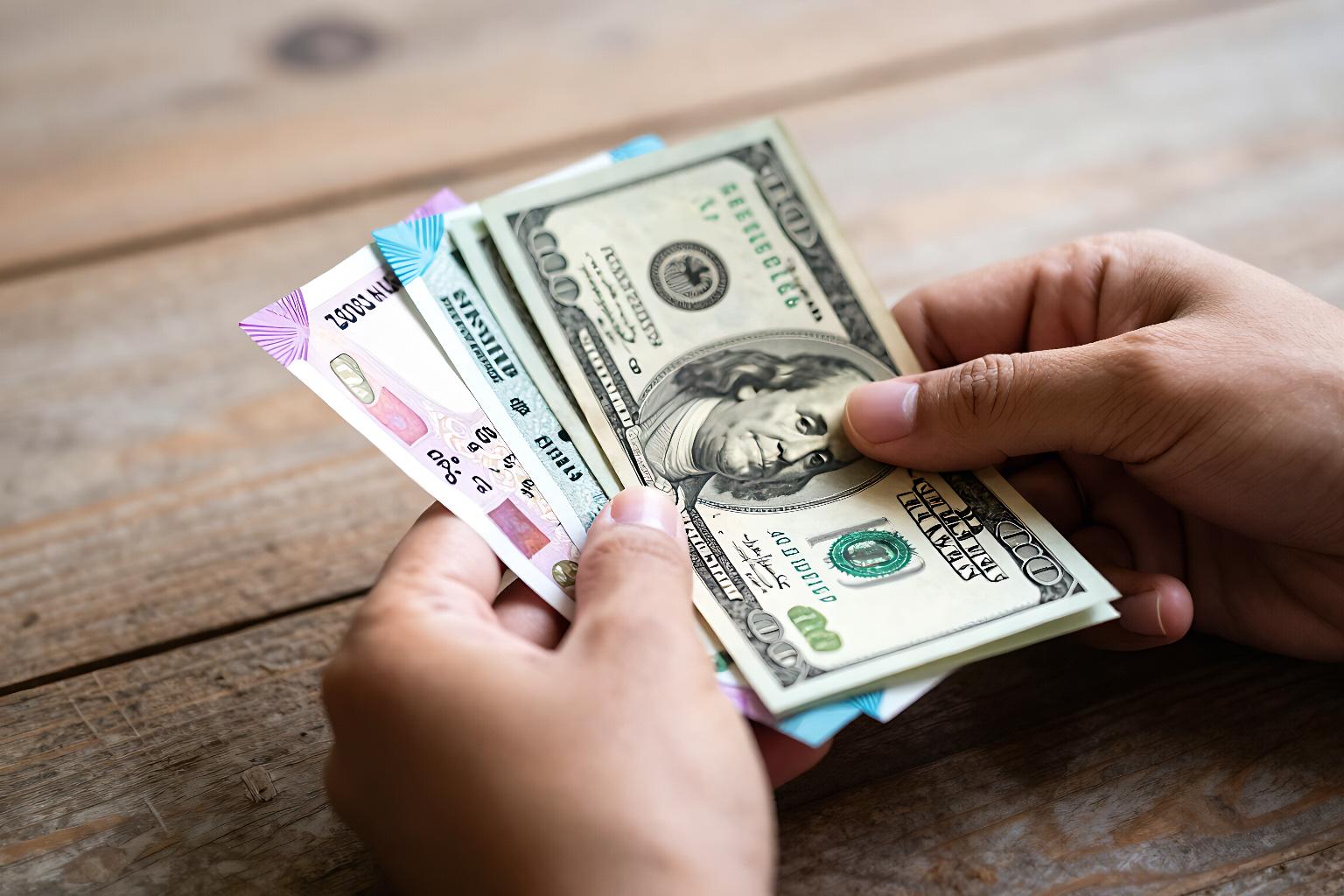
Every time the dollar rate moves, someone somewhere in India does a quick mental calculation. Maybe you're a freelancer billing in dollars, a student paying tuition fees, or a family member sending money home. The number you see when you Google "us dollar in indian rupees" looks simple enough, but the rate you actually get when you exchange money is often quite different. Understanding why can save you a surprising amount.
The exchange rate between the US dollar and the Indian rupee is not set by any single authority. It moves every second based on global markets. People and institutions buy and sell currencies all day, and the price they agree on becomes the rate you see online.
But several deeper forces move the needle over days, months, and years. If you want to predict where the rate might head, you need to watch these factors.
When Indian importers buy oil, machinery, or electronics, they need dollars to pay foreign sellers. When foreign investors buy Indian stocks or bonds, they bring dollars into the country. The balance between these flows sets the pressure on the rupee. More demand for dollars pushes the rupee down. More dollars flowing in pushes it up.
The RBI does not fix the rate, but it can smooth out wild swings. It buys dollars when the rupee is strengthening too fast and sells dollars when the rupee is sliding. These interventions are frequent and can make a big difference in short-term movement. Understanding the central bank's style helps you read market reactions.
For a deeper look at the forces that move the pair, read this guide on what drives the dollar-rupee rate. It covers the same ground with more detail on each factor.
India imports most of its crude oil, so when oil prices spike, the country needs to buy more dollars. That weakens the rupee. Similarly, when a global crisis hits, investors rush to the US dollar as a safe haven. The rupee often suffers in those moments.
If you search for "us dollar in indian rupees" right now, you'll see a mid-market rate. This is the rate at which banks trade currencies among themselves. It is the fairest possible rate, but it's not the rate available to you as an individual.
Banks and exchange services add a margin on top of the mid-market rate. They may also charge a flat fee. That's how they make money. For a $300 transfer, the difference between the mid-market rate and the commercial rate could easily be 2% to 5%. On a $10,000 transfer, that becomes real money.
So when you see "83.2" on your phone, the bank might offer you 81.8. The gap is their profit. This is why comparing rates is so important. A guide on how to convert dollars to rupees and get a fair rate walks you through the exact numbers and how to spot a bad deal.
You don't need to become a currency expert to avoid oversized fees. You just need a few simple habits.
A site that compares transfer providers will save you hours and a notable portion of your money. But don't stop at the first offer. A short review of the market takes ten minutes and can change the amount your family receives by thousands of rupees.
For a practical checklist that works no matter how much you're sending, the article on getting the best exchange rate every time is a reliable reference.
Imagine you are sending $2,000 to a relative in India. If the rate is 82, they receive ₹164,000. If the rate is 83, they receive ₹166,000. A single rupee difference changes the final amount by ₹2,000. That's enough for a month of groceries for a small household.
Now look at the margin from the mid-market rate. If the mid-market rate is 82.5 and the bank gives you 81.0, you lose exactly 1.5 rupees per dollar. On $2,000, that is ₹3,000. Most people would not hand over ₹3,000 without a second thought, but that's exactly what happens with bad exchange rates.
When you check the rate on your phone, always convert the full amount at the quoted rate. Small differences in big transfers are not small.
If you are earning in dollars, a weaker rupee is actually good news. Your dollars convert into more rupees. But if you are a student in the US or a business importing goods, a weaker rupee hurts. Tuition fees, laptop prices, and raw materials all become more expensive.
This is why people follow the "us dollar in indian rupees" rate so closely. The same pair of currencies can feel completely different depending on which side you sit on. A rate that cheers an exporter worries an importer.
If you're moving to India or plan to invest, then understanding the rate is only half the battle. You also need to know how fees pile up across multiple transfers. The other side of the coin is thinking about the converter itself, not just the number.
Even when the headline rate looks decent, fees can quietly eat into your transfer. Banks commonly charge a flat outgoing transfer fee, an intermediary bank fee, and then the recipient's bank in India may apply a credit fee. These three can add up to a lot more than the advertised “1% margin”.
Digital transfer services often advertise zero fees, but they make up for it with a wider spread on the exchange rate. If you send money with a 0% fee at 80.5 when the mid-market rate is 82.5, you are effectively paying a 2.4% fee. It's just hidden inside the rate.
The smartest approach is to treat every transfer independently. Ask the provider for the exact rate and the exact fee. Then do the math yourself. You don't need a degree in finance to decide whether to accept an offer. If you know the mid-market rate and the total cost, you can make the right choice.
And if you're moving money from the UK to India, you may also cross paths with the dollar somewhere along the way. A plain-English explanation of the dollar-rupee rate, like this plain-English guide to the dollar-rupee exchange rate, will tell you how to cut costs without taking on unnecessary risk.
The next time someone mentions the us dollar in indian rupees, don’t just repeat what Google says. Look at the whole cost. Look at the fee. Look at the time of day you are transferring. A few minutes of attention is all it takes to make sure more of your money reaches its destination.
Slot ID: blog-post-bottom