
Loading article...
Slot ID: blog-post-top
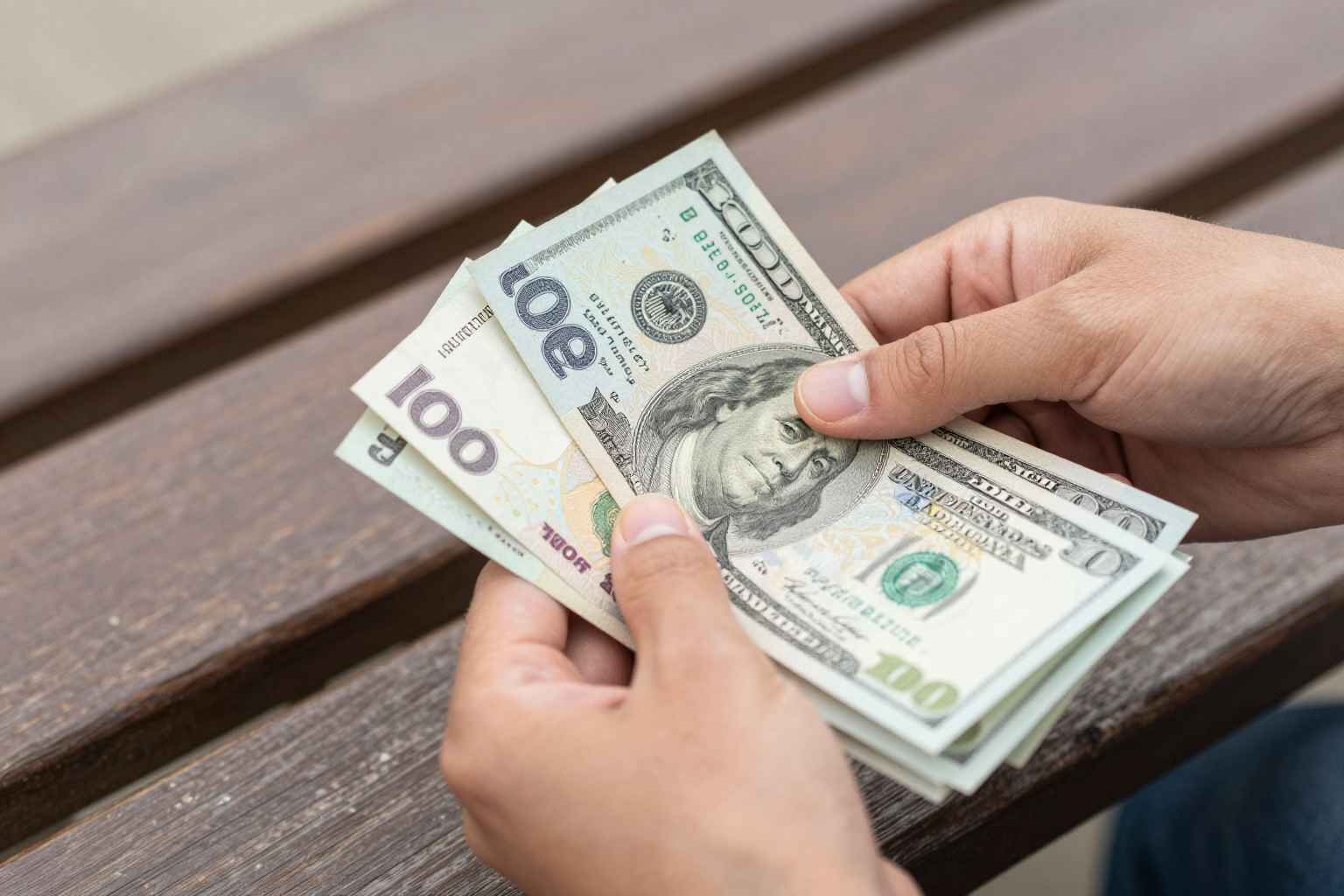
You’ve just landed back from Mexico, and there are 2,000 pesos still sitting in your wallet. You check the exchange rate on your phone: 17.85 pesos to the dollar. At the airport kiosk, they offer you 18.60. That means you’ll receive only about $107.50 instead of the $112 you saw online. Not a huge deal on that amount, but if you’re converting a bigger figure, or you’re sending money regularly, the gap hurts.
That difference exists because almost nobody offers you the “real” exchange rate. The rate you find on Google or Bloomberg is the mid-market rate – the wholesale price for currency. Whoever sells you dollars adds a margin on top. Your job is to understand that margin and minimise it.
If you’re converting Mexican pesos (MXN) to US dollars (USD), the formula is straightforward: take your amount in pesos and divide it by the USD/MXN rate. For example, if USD/MXN is 17.85, then 10,000 pesos ÷ 17.85 = $560.22.
But what do you do when you see a quote like “1 MXN = 0.0560 USD”? That’s the inverse. Multiply your pesos by that number. Both quotes say the same thing. The key is to recognise which one you’re looking at before making any calculations.
Banks, exchange bureaus and online platforms make money by selling you currency at a slightly worse rate. That spread – the gap between the mid-market rate and what you actually get – is their fee. On a peso-to-dollar conversion, you might see a markup of anywhere from 1% to 5%. At an airport kiosk, markups can stretch even higher. This isn’t unique to pesos. Anyone converting pounds to dollars sees the same thing, and this guide to converting GBP to USD without losing money breaks down exactly how that padding works.
You’ll often see USD/MXN quoted as 17.85. That means 1 US dollar buys 17.85 Mexican pesos. If you’re turning pesos into dollars, you’re on the left side of that trade: selling MXN and buying USD. The provider will give you a rate that requires more pesos per dollar, say 18.30. At that rate, 10,000 pesos gets you $546.45.
That’s $13.77 less than the mid-market value. On a modest trip, that might be dinner for two. On a larger transfer, say 100,000 pesos, the same markup costs you $137.70. Now you can see why it pays to shop around.
Not every option treats you the same way. Here’s how the main choices stack up.
The same issue exists when you’re moving money in other cross-border pairs. If you often deal with US and Canadian dollars, you’ve probably noticed the same spread, and how to get a fair rate for your USD to CAD conversion gives you a way to apply the same logic.
While most people searching for “pesos to dollars” mean the Mexican peso, several countries use the same name. Argentina, Chile, Colombia, and the Philippines all call their currency the peso. Each trades at completely different values. The Argentine peso, for example, has a notorious gap between official and parallel market rates. The Chilean peso is far stronger than the Argentine one, and the Philippine peso is a separate beast entirely.
Make sure you know which peso you’re holding before you check rates. If you’re converting Argentine pesos, the rates you’ll find in one place may not match another by a huge margin. If you’re travelling through Europe as well, you’ll find that the same markup patterns appear across the Atlantic. Learning how to read EUR/USD and find a fair euro rate will help you spot the identical tricks.
A few fundamentals drive the USD/MXN rate:
Remittances: Money sent from the US to Mexico is a major source of demand for pesos. More remittances typically soften the dollar’s momentum.
Interest rates: When the US Federal Reserve raises rates, dollars become more attractive, and the peso often weakens. When Mexico’s central bank raises rates, the peso can strengthen.
Oil prices: Mexico is a major oil exporter. When crude climbs, the peso usually strengthens against the dollar.
Political and economic confidence: Elections, trade policy, inflation and public debt all move the currency. The peso has been surprisingly resilient in many recent periods, but don’t assume it’s immune.
You don’t need to be a finance expert to avoid paying too much. Here’s a practical plan:
First, check the current mid-market rate on a site like Google or XE. Write it down. Second, ask the provider for their final quote, including all fees. Convert that into an effective exchange rate and compare it to the mid-market. The difference is your cost.
Consider an online platform for anything above a few hundred dollars. The savings can be substantial. On a $1,000 conversion, a 2% markup costs you $20. A 5% markup costs $50. That’s the difference between a free meal and not.
Set a target rate if you have time to wait. Many services let you set alerts or auto-transfer with a threshold. If you’re converting pesos to dollars at a specific future point, that flexibility can save you a meaningful amount. This applies to any currency pair you’re handling, whether it’s the Australian dollar or the Indian rupee. For those planning money moves around the Asia-Pacific region, this look at reading the AUD to USD rate shows how the same timing principle works on another pair.
Before you convert that leftover peso pile, ask yourself whether you actually need dollars in your hand. If you’re heading back to the US, you can often pay for things with a card and keep your cash for emergencies. Credit cards generally give you a better exchange rate than cash kiosks, provided your card doesn’t charge foreign transaction fees.
If you do end up with cash to exchange, don’t do it in a rush. Airport kiosks rely on your haste, lack of alternatives, and unfamiliarity. A quick search on your phone for the current rate and a peek at a comparison website will show you what fair looks like.
If you’re sending money to someone back home, think of it as a conversion you can time. Sending on a Monday versus a Friday can make a difference if there’s short-term volatility. And always look at the total cost, not just the conversion fee. You might see one provider charge no fee but give a terrible rate, while another charges $3 and beats the first by a mile.
Avoid exchanging twice if you can. Some travellers convert to dollars before flying to Mexico, then convert those dollars to pesos locally. That’s two spreads instead of one. If you start with pesos and end with dollars, you only pay one margin.
Slot ID: blog-post-bottom