 Currencies
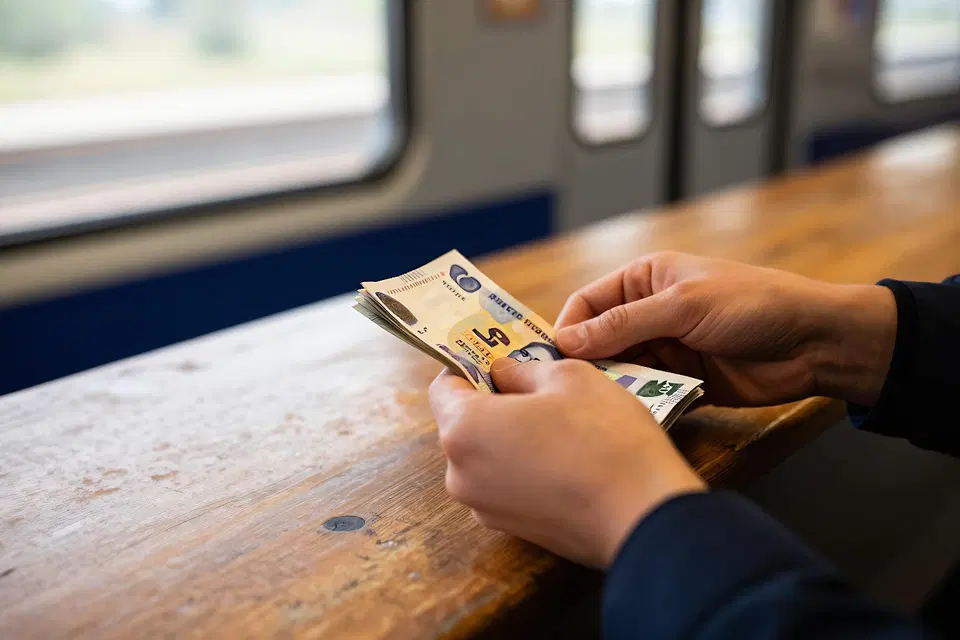
You're standing at a card terminal in Lisbon and it asks whether you'd like to be charged in US dollars instead. Or a client in Berlin has just paid you in euros and you want to know what actually arrived. Either way you're looking at a Europe currency to USD converter, and the number on it looks simple enough. It almost never is.
What follows is a practical tour of what these converters calculate, where the gap between the quoted rate and the real cost hides, and how to get a fair deal whether you're changing €50 or €50,000.
Europe Doesn't Have One Currency, and That Changes the Maths
Twenty of the EU's 27 member states use the euro, which is why most people searching for a Europe currency to USD converter actually mean EUR to USD. Croatia joined the eurozone in 2023, Bulgaria is scheduled for 2026, and the direction of travel has been one-way for twenty years.
That still leaves a long list of European currencies quoted separately against the dollar:
- Swiss franc (CHF), a safe-haven currency that strengthens when markets get frightened
- Polish zloty (PLN) and Czech koruna (CZK), both liquid enough but noticeably jumpier than the euro
- Hungarian forint (HUF), quoted in the hundreds to the euro, which makes mental arithmetic painful
- Swedish krona (SEK) and Danish krone (DKK), the latter pegged tightly to the euro by the Danish central bank
- Romanian leu (RON), Norwegian krone (NOK) and the British pound (GBP)
Convert from any of these and the same rules apply, except that thinner liquidity widens the gap between the mid-market rate and whatever a bank or kiosk will offer you.
What the Converter Is Actually Doing
Behind nearly every converter sits the mid-market rate: the midpoint between the price banks buy euros at and the price they sell at. It's the figure on Reuters and Google, and it's the fairest single number available. Almost nobody trades at it unless they're moving millions.
Take EUR/USD at 1.0840. One euro buys $1.0840. Converting €250 gives $271.00. Converting €4,000 gives $4,336. The arithmetic is just multiplication, and any tool that makes it look more complicated is hiding something in the margin.
Reading the quote the other way round
Flip the pair and USD/EUR becomes 1 ÷ 1.0840, or roughly 0.9225. One dollar buys about €0.92. Here's the trap: a 2% rise in EUR/USD is not the same as a 2% fall in USD/EUR, because each is the reciprocal of the other. If you want to understand what a single USD to EUR number is really telling you, check which currency is the base before comparing anything.
Why two converters disagree
Free tools pull from slightly different feeds and refresh at different intervals. A discrepancy of a tenth of a percent is normal. A gap of 2% means one of them isn't showing you a mid-market rate at all. It's a retail rate with the provider's margin already folded in.
The Gap Between the Screen and Your Bank Balance
Run a live check and you'll see EUR/USD at, say, 1.0840. Ring your bank and they offer 1.0550. On €2,000 that's $2,110 instead of $2,168. Fifty-eight dollars gone, and no fee line anywhere on the statement. That's the spread doing its quiet work, and it's the single biggest reason the rate on your screen isn't the rate you get.
On top of the spread you'll usually find at least one of these:
- A flat transfer or wire fee, often charged at both ends
- A percentage FX fee on cards, commonly 2.5% to 3%
- A markup built into the rate itself, which is the sneakiest of the three
- Dynamic currency conversion at terminals and ATMs, typically adding 3% to 7%
That last one deserves its own warning. When a terminal in Spain or Italy offers to charge your card in dollars, it isn't being helpful. It's applying its own exchange rate, which is worse than your bank's. Always choose the local currency and let your card issuer handle the conversion. The guide to converting EUR to USD without losing 3% in the spread walks through the mechanics of avoiding that markup.
A Checklist Before You Press Convert
Five minutes of checking beats a week of regret on a large transfer:
- Compare all-in amounts, not rates. Ask "how many dollars will land in my account?" and compare that figure across providers.
- Check the rate against two independent sources. Google plus one bank quote is not enough.
- Find out who pays the receiving fee. Incoming wire charges of $15 to $30 are standard at US banks.
- Know the weekend rule. Rates freeze from Friday evening to Sunday, and some providers lock in a worse rate for the gap.
- Ask about rate alerts. If you're flexible on timing, a target-rate notification beats guessing.
Converting the Other Direction
Plenty of people need the reverse: a US freelancer invoicing a French client, or a traveller working out whether a €90 dinner is reasonable. In those cases the useful question shifts from "what's the rate?" to "what does this amount actually buy?" A straight conversion of what $100 actually buys you in euros is a better gut check than a raw rate, because it forces you to compare like with like across cities and price levels.
Getting a Rate Worth Accepting
Airport kiosks are the worst deal in Europe, with spreads that regularly hit 8% to 12%. The same €500 changed at a city-centre bank costs noticeably less, and a multi-currency account charging the mid-market rate plus a transparent 0.4% fee usually beats both.
For anything above about $10,000, the difference between a mediocre rate and a good one is real money. A 0.5% improvement on a €100,000 transfer saves €500. At that size it's worth calling a specialist broker, asking for a firm quote, and testing it against the number that reading the live rate before you commit would suggest you should get. Anything more than 1% off the mid-market rate on a large sum deserves a pushback.
Mental Maths That's Close Enough
You won't always have a converter open. Pick an anchor number and adjust as the rate drifts. If one euro is worth roughly $1.08, then €10 is about $11, €50 is about $54, and €200 is about $216. Rounding the rate to 1.1 makes the sums trivial and costs you about 2% accuracy, which is fine for deciding whether a museum ticket is worth it.
For the smaller currencies, cheat by anchoring to the euro first. If EUR/HUF is 400 and EUR/USD is 1.08, then $1 is roughly 370 forint. That single step of arithmetic will keep you from overpaying on a taxi in Budapest, where the zeros on the notes do strange things to your judgement.
One last habit worth building: check the rate you were actually given against the mid-market rate the same day, once the transaction settles. Do it three or four times and you'll have a clear picture of what your bank truly charges you. That number is the one that matters, and no converter on the internet can tell you it.