
Loading article...
Slot ID: blog-post-top
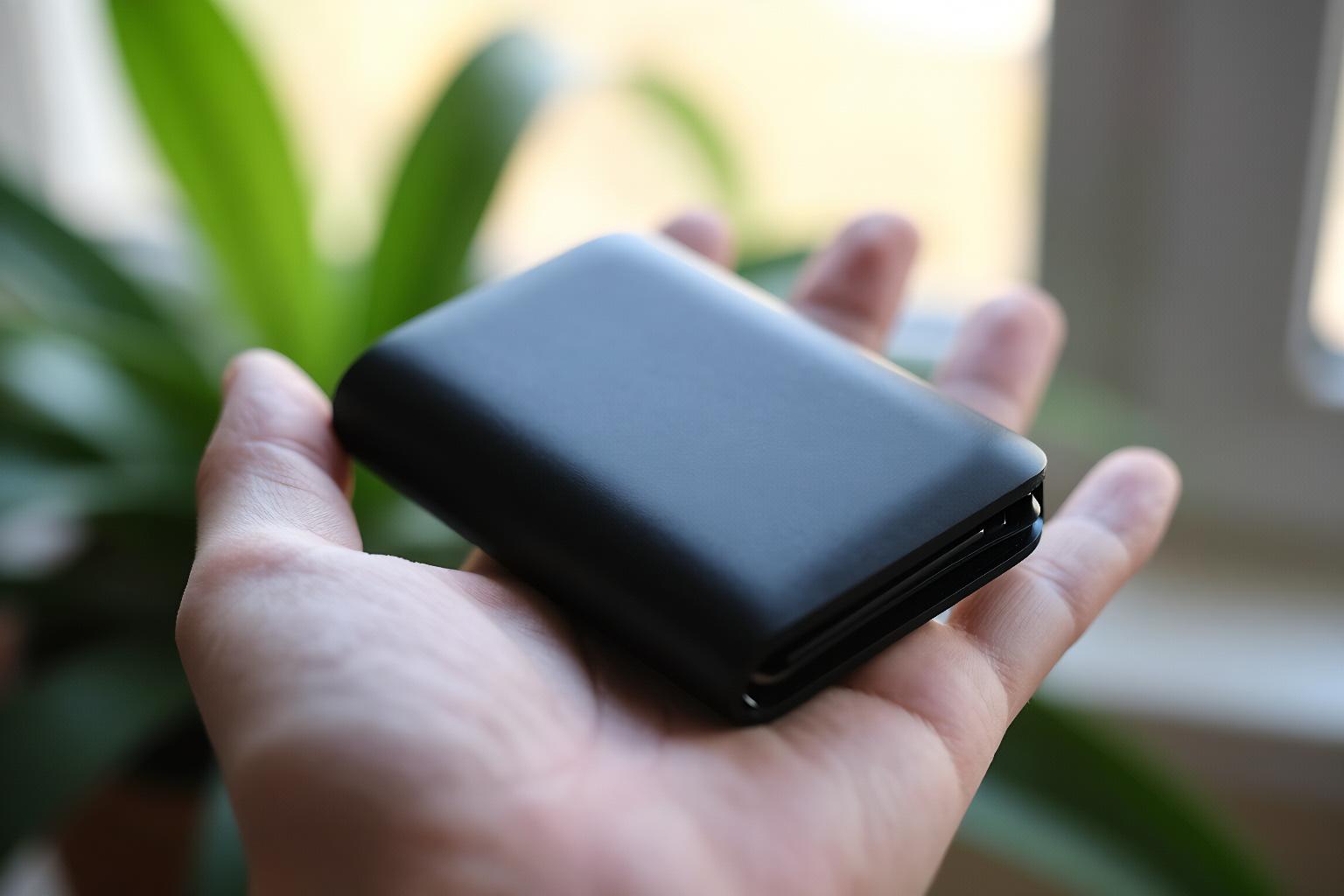
The first time someone loses a phone with a wallet on it, they learn the lesson fast. The ether never lived on the phone. It sat on the Ethereum blockchain the whole time, untouched, waiting for whoever could produce twelve words in the right order. Everything else — the app icon, the pretty balance, the swap button — is just a window onto that chain.
Understanding that one fact changes how you pick a wallet, how you back it up, and how much risk you're actually carrying.
An Ethereum wallet holds two things: a private key and the public address derived from it. The address is the part you share. It's 42 characters long, starts with 0x, and looks like 0x71C7656EC7ab88b098defB751B7401B5f6d8976F. Anyone can send ETH there. Nobody can pull ETH out of it without the private key.
That private key is a 256-bit number, which is too long to write down reliably. So wallets encode it as a seed phrase: 12 or 24 ordinary words drawn from a fixed list of 2,048, in a specific order. Twelve words carry 128 bits of entropy. Twenty-four carry 256. There is no password reset, no support ticket, no recovery email. The words are the wallet.
MetaMask is the default for a reason: it works with nearly every decentralized app. Rabby is the better-behaved alternative, mainly because it simulates transactions before you sign and warns you when a signature would drain your tokens. Both run inside Chrome or Firefox and take about two minutes to set up. The trade-off is that a malicious extension or a phishing site in a neighbouring tab can reach the same browser.
Rainbow, Trust Wallet, and Coinbase Wallet live on your phone, which means the key sits in the device's secure enclave and Face ID or a fingerprint gates every signature. Handy for daily use and QR-code payments. Less handy if the phone ends up in a taxi.
A Ledger or Trezor costs somewhere between $60 and $200. The key never leaves the device, and every transaction has to be physically confirmed with a button press. If your laptop is riddled with malware, the attacker can see your address but cannot move a single wei. For anyone holding more than a few hundred dollars of ETH, this is the cheapest insurance in crypto.
Coinbase, Kraken, and Binance give you an ETH balance, but you don't hold a key. You hold an IOU from a company. That's fine for buying and selling. It is not a wallet, and treating it as one is how people end up in headlines about frozen withdrawals.
Almost every loss in self-custody traces back to a seed phrase handling mistake. Not sophisticated hacks — screenshots, cloud notes, and emails to yourself.
For larger balances, split the risk. A 2-of-3 multisig, or a wallet with social recovery built in, means no single lost phrase or stolen laptop is fatal.
Ethereum charges for computation, and the price swings hard. A plain ETH transfer costs 21,000 gas. A Uniswap swap or an NFT mint can burn 150,000 to 300,000. Multiply by the base fee at that moment and you get anything from forty cents to forty dollars for functionally identical actions. Sunday mornings are cheap. A hyped token launch on a Tuesday afternoon is not.
Wallets show you a fee estimate before you sign, but they don't always explain it. If you've ever wondered why the same transaction cost wildly different amounts a day apart, the mechanics behind Ethereum gas fees are worth twenty minutes of your time. Setting a sensible max fee and avoiding peak hours can easily save you triple digits over a year.
Most people buy their first ETH on an exchange and withdraw it. Withdrawal fees vary more than people expect: some platforms charge a flat 0.001 ETH, others 0.005, and a few subsidise it entirely. If you're buying a small amount, the withdrawal fee can quietly eat 4% of your position.
There's also timing. Buying during a Sunday morning lull typically means a cheaper on-chain transfer than buying during a US market open. The practical mechanics of how to buy Ethereum without getting wrecked by fees or bad timing cover a lot of ground that a wallet interface won't tell you.
Once you're holding ETH in your own wallet, staking is a few clicks. Liquid staking protocols like Lido or Rocket Pool accept a deposit and hand you a token representing the staked position, which you can use elsewhere. Running your own validator needs 32 ETH and a machine that stays online.
The headline yield of around 3% is real, but it isn't free. There's smart contract risk on liquid staking, slashing risk on solo validation, and the staked ETH is illiquid at the protocol level until you unwind. The full picture of what that 3% yield actually costs you is worth reading before you commit a large balance.
Selling is where the hidden costs pile up. Moving ETH from a hardware wallet to an exchange costs gas. Converting to fiat costs a trading fee, then a withdrawal fee, then possibly a bank transfer fee. Spread matters too: a 0.5% spread on a $10,000 sale is $50 gone before you've blinked.
Batching helps. So does comparing the effective all-in rate rather than just the quoted price. If you're planning an exit, the guide to selling Ethereum without leaving money on the table walks through the parts that quietly shave off a percent here and a percent there.
Nobody has ever brute-forced a private key. Attackers go after the human instead, and a few patterns repeat constantly.
Treat your main wallet like a bank account and a second wallet like your pocket. Keep the hardware wallet for savings and interact with new protocols from a small, expendable address funded with $50. If a site turns out to be a drainer, you lose the pocket change, not the portfolio.
Label your addresses. Review every transaction you sign rather than clicking through on autopilot, especially when the gas estimate looks suspiciously high. Back up the seed phrase before you deposit anything, not after. And set a calendar reminder to check approvals every few months, because a two-dollar revoke today beats a full balance gone tomorrow.
Slot ID: blog-post-bottom