 Currencies
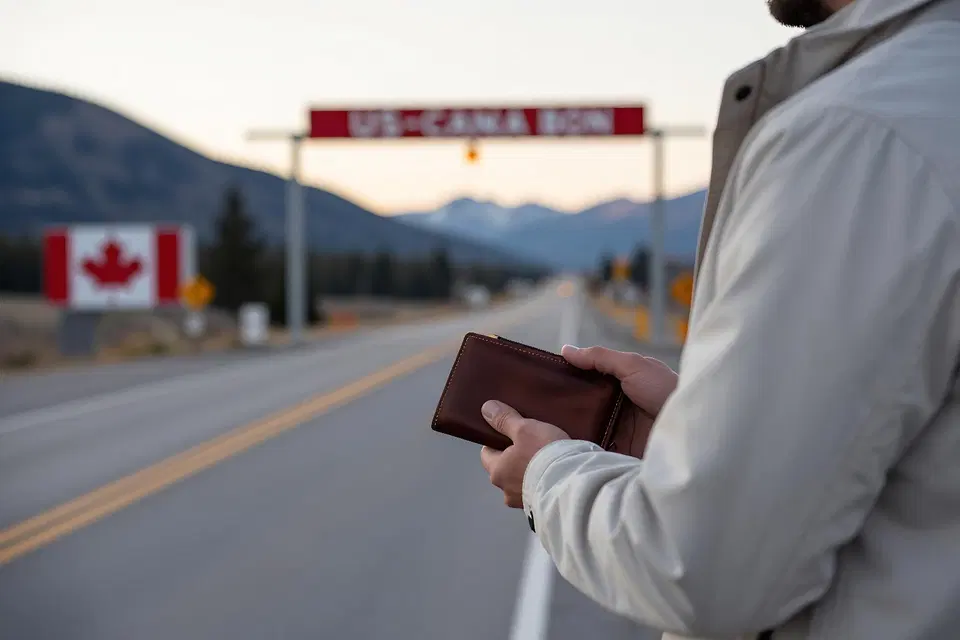
Type “100 usd to cad converter” into a search box and you get an answer in well under a second: something like 137.24. That number is real, but it isn't a promise. It's the mid-market rate, the midpoint between buyers and sellers on the global currency market, and almost nobody transacts at it. What lands in your account, your wallet, or your card statement will be a little lower, and the gap is where the interesting part lives.
Here's what 100 US dollars is genuinely worth in Canadian cash, where the value quietly leaks away, and how to keep more of it whether you're crossing the border for a weekend or invoicing a client in Ohio.
What 100 USD Converts To (And How the Math Works)
Currency conversion is multiplication. Find the USD/CAD rate, multiply your amount by it, and you're done.
At a rate of 1.3700, 100 US dollars becomes 137.00 Canadian dollars. At 1.3450, it becomes 134.50. The rate does all the work, and it moves constantly during the trading week, which is why two people converting 100 USD an hour apart can walk away with different amounts.
Worth internalizing: the number is quoted as Canadian dollars per one US dollar. A higher rate means the US dollar is stronger and your 100 USD buys more loonies. A rate of 1.40 is better for you than 1.32 when you're holding US dollars. It is very easy to flip that in your head by accident, especially on a tired brain at a border-town kiosk.
Why the Converter's Number Isn't the Number You Get
That 137.24 on your screen is the wholesale rate between banks trading millions at a time. Retail providers buy currency near it and sell it to you at a markup, and the markup is usually baked into the rate rather than shown as a line item. That's what makes it hard to see.
Say mid-market is 1.3700 and your bank offers 1.3320. Your 100 USD now converts to 133.20 CAD instead of 137.00. That's 3.80 CAD gone, about 2.8%, and nothing on the receipt announces it. Understanding the gap between the displayed rate and the delivered rate is the single most useful thing to sort out before you convert anything.
What 100 USD Gets You at Different Places
- A major bank branch: roughly 1.32 to 1.35, plus a possible flat fee of $0 to $5 for non-customers. Convenient, rarely the cheapest.
- An online-first provider or fintech app: often within 0.5% to 1% of mid-market plus a small visible fee. Usually the best mix of price and speed under a few thousand dollars.
- A credit card at a Canadian till: the network rate tracks mid-market closely, then your issuer adds about 2.5%. Net cost lands near 2.5% to 3%.
- An airport kiosk: 1.25 to 1.31 is common. You're paying for the location, and 100 USD can shrink to 125 CAD.
- A US debit card at a Canadian ATM: the ATM owner's fee, your bank's fee, and a 3% currency markup. On 100 USD that can total 8 to 12 CAD.
- A no-foreign-fee card: close to mid-market with no markup. If you have one, use it for everything and skip the cash conversion entirely.
Across that list, 100 USD ranges from roughly 125 CAD to 137 CAD. Same money, a twelve-dollar difference, decided entirely by where you convert.
The Quiet 2% to 4% Tax
On 100 USD, a 3% spread costs about $4. That's a coffee. On 10,000 USD, the same percentage costs $300, which is a flight. The percentage doesn't care about the size of the transaction; it simply scales with it. Avoiding that loss is mostly about ten minutes of comparison shopping and refusing the first rate you're offered.
Watch the structure of the fee, too. A provider advertising “zero commission” with a 2.5% spread is pricier than one charging a flat $3 at a 0.6% spread once you're above roughly 150 USD. Do the arithmetic on the final CAD amount in both cases and compare that single number.
Timing: 100 USD Isn't a Fixed Amount of Canadian Money
Through 2024 and 2025 the USD/CAD rate ranged from about 1.32 to 1.47. Convert 100 USD at the low end and you get 132 CAD; at the high end, 147. That's an 11% swing on identical money, and nobody, forecasters included, consistently calls the turns.
For a hundred dollars, timing is noise. For tuition, a property purchase, or a business paying a US supplier every month, it's a real budget line. The workable approach is converting in chunks over several weeks rather than betting everything on one day. You give up the chance to nail the perfect rate in exchange for never getting the worst one. If you want a closer look at what the headline number is telling you, this breakdown of what the 1 USD to CAD calculator figure means for your money is worth your time.
What 100 US Dollars Feels Like in Canada
Abstract figures get easier to hold when you attach them to things.
- A mid-range dinner for two in Toronto or Vancouver, with a drink each: about 110 to 140 CAD after tax and tip.
- A tank of gas for a compact car: roughly 60 to 80 CAD.
- A Toronto to Montreal train ticket booked a few weeks out: often 50 to 110 CAD.
- A pair of mid-tier running shoes: 130 to 170 CAD.
So 100 USD, converted cleanly, is roughly a good evening out. Converted badly at an airport counter, it's the same evening without the drinks.
Situations Where the 100 USD Conversion Shows Up
Most people searching this aren't moving fortunes. They're doing something specific.
Crossing the border
A weekend in Vancouver or Buffalo. You want maybe 200 to 300 CAD in cash for small vendors, tips, and parking, with a card covering the rest. Ordering cash from your bank a few days ahead typically beats the airport currency desk by 2 to 4 points.
Paying or sending a US invoice
Freelancers and small businesses get paid in USD constantly. A $100 invoice processed through a platform can lose 4% to 6% between the platform fee and the conversion spread. Invoicing in CAD, or using a service that converts near mid-market, changes that math considerably. Flat fees plus a hidden spread are where the money goes on smaller transfers.
Buying from a US website
Your card converts at the network rate plus your issuer's markup. The USD price at checkout is not the price on your statement. Add 2.5% to 3% mentally before you click buy.
The Round Trip Costs More Than You Think
Converting 100 USD to CAD and later back to USD is not a neutral loop. Each direction carries a spread, so a round trip through retail channels typically costs 4% to 8% of the original amount. Send 100 USD over, convert back, and you might be holding 92 to 96 USD.
If there's any chance you'll return to the US or need dollars again, hold the USD rather than converting twice. When you do convert the other way, this explanation of why the CAD to USD converter on screen doesn't match your receipt covers the same traps from the opposite side.
Habits That Keep More of Your 100 Dollars
- Compare the final CAD number, not the rate. Enter 100 into two or three providers and check what actually lands in your account after every fee.
- Skip the airport and the hotel desk unless you need twenty dollars for a taxi. Order currency online or use a local ATM on arrival.
- Carry a no-foreign-transaction-fee card for spending, and use cash only where it's required.
- Batch small conversions. Three separate $30 conversions pay three spreads and possibly three minimum fees.
- Ask whether the rate is mid-market. If a provider can't tell you how far their rate sits from it, that silence is your answer.
- Keep a little USD cash if you cross the border more than once a year. Re-converting later almost always costs more than you'd save by converting the whole balance today.
Ten minutes of checking is the difference between 125 CAD and 137 CAD for the same hundred US dollars. On a single weekend trip that's a decent lunch; repeated across a year of cross-border payments, it's a number that starts to matter.