 Currencies
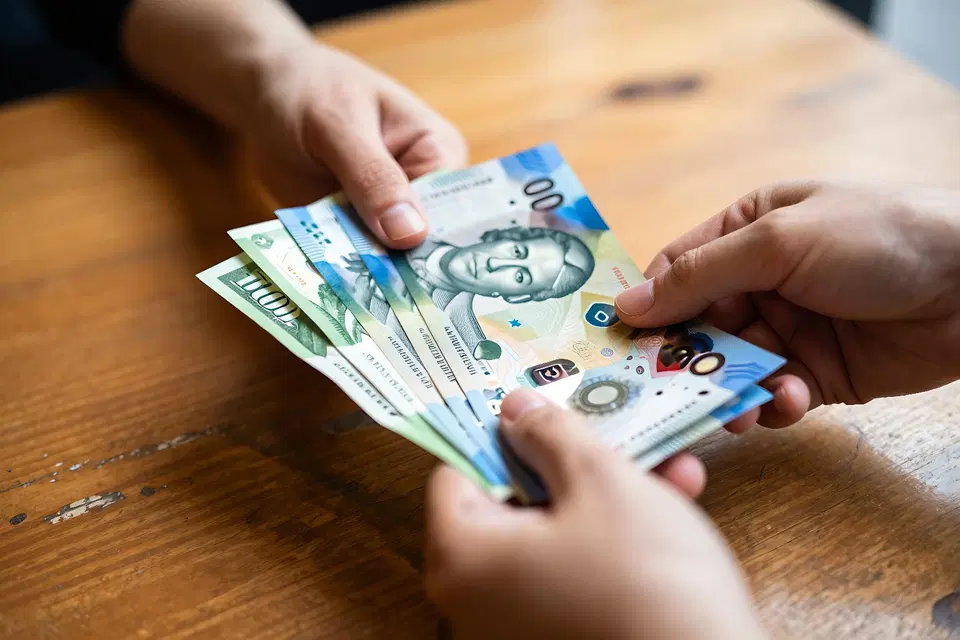
You send $1,000 USD to a Canadian account. The quote said 1.3620, so you expect $1,362. What lands is $1,336.10. Nothing went wrong, exactly. The difference is the cost of conversion, and it's the part most people never look at when they convert USD to CAD.
Understanding that gap takes about ten minutes and can save you a few hundred dollars on a large transfer, or $20 here and there if you move money often. Both are worth having.
The mid-market rate is a reference point, not a price
Every USD/CAD conversion starts from the mid-market rate: the midpoint between the best buy and sell prices on the wholesale currency market. It's the number on Google, on the Bank of Canada's daily page, and on almost every free currency site.
Nobody actually trades at it. Banks and brokers buy dollars at one price and sell at another, and the gap between those two prices, the spread, is how they earn money on the transaction. So the mid-market rate tells you what the dollar is worth. It doesn't tell you what the conversion will cost.
Here's the useful habit: treat the mid-market rate as a baseline, then ask what percentage you're paying above it. A 0.5% markup is competitive. Two percent is normal for a big bank. Three or four percent, which is common at airport kiosks and hotel front desks, is expensive.
Where the money actually goes
Your quoted rate is the mid-market rate minus a markup, plus whatever fixed fees sit on top. Three costs tend to stack up at once:
- The exchange-rate markup. Typically 1% to 4% of the amount, baked into the rate rather than shown as a line item.
- Transfer or wire fees. Usually $15 to $50 at a major bank, sometimes charged at both ends.
- Card and ATM charges. A 2.5% foreign transaction fee on credit cards is standard, and out-of-network ATMs add a flat charge plus a possible 3% dynamic currency conversion fee if you accept the machine's own rate.
The markup is the one that hurts, because it scales with the size of the transfer and it's invisible. A $40 fee on a $2,000 transfer is annoying but understandable. A 2.5% markup on the same transfer is $50 and never appears on a receipt. That second cost is the one worth chasing, and it's why your dollars shrink before they land even when the fee looks small.
A worked example with real numbers
Say the mid-market rate is 1.3600 and you're converting $5,000 USD. At that rate you'd get $6,800 CAD.
A big-bank online transfer quotes you 1.3300 and charges a $30 fee. You receive $6,650 minus $30, so $6,620. That's $180 short of the mid-market figure, or about 2.6%.
A specialist currency broker quotes 1.3532 with an $8 fee. You receive $6,766 minus $8, so $6,758. The difference between the two routes is $138, on the same transfer, on the same day, for the same currency pair.
On $500 the same gap is about $14, which is why people shrug it off. On $50,000 it's $1,380, which is why nobody should.
Which conversion method costs least
Big-bank wire or online transfer
Convenient, familiar, and usually the most expensive per dollar moved. The markup is often 1.5% to 3%, and the fee is fixed. Fine for a one-off where speed and certainty matter more than cost.
Specialist FX brokers and multi-currency accounts
Markups of 0.4% to 1% are typical, with low or no fixed fees. Some accounts let you hold USD and CAD side by side and convert when the rate suits you. These services do require identity verification and a day or two of setup, so they're not for a last-minute need.
Credit and debit cards
A card with no foreign transaction fee gives you close to the mid-market rate, which makes it excellent for purchases. Cash withdrawals are a different story, since interest on cash advances usually starts immediately. If you're spending in Canada rather than moving a lump sum, a no-fee card is hard to beat.
ATMs in Canada
Decent for spending money, poor for large amounts. Withdraw in Canadian dollars rather than letting the machine convert for you, and decline the offered exchange rate every time.
Airport kiosks and hotel desks
The most expensive option on this list, often 4% or worse. Use them for emergencies only. The same mechanics apply in every currency pair, which is why the number you see on a converter screen rarely matches what you actually get.
Should you wait for a better rate?
USD/CAD moves roughly 0.5% on a typical day and can jump 1% to 2% around a Bank of Canada or Federal Reserve decision. Those swings are bigger than the difference between a mediocre and a good provider, but far less predictable.
If you need CAD in three months, converting in three or four chunks spreads your risk and removes the pressure of picking a single day. If you need it Friday, the rate is almost beside the point, and the priority is simply finding a provider charging under 1%.
Rate alerts are genuinely useful here. Set a target, get a notification, act on it. What doesn't work is checking the rate every morning for a month and converting in a panic the day before you need the money.
The round trip is where people get hurt
Converting USD to CAD and then back again means paying two spreads, not one. At 2% each way, the rate has to move about 4% in your favour just to break even. That's a big move in a currency pair that often drifts less than that in a quarter.
If you regularly move between the two, holding a US-dollar account and a Canadian account side by side is usually cheaper than bouncing money back and forth. It also means you're never forced to convert at a bad moment. Anyone who has watched a CAD to USD conversion fall short of the quoted figure knows how quickly two spreads add up.
What to check before you hit convert
Run through this list and you'll avoid most of the avoidable losses:
- Compare what lands, not what's quoted. Enter the same amount with two or three providers and look at the final CAD figure after all fees.
- Ask for the all-in percentage. Take the amount received, divide by the mid-market figure, and see how far short it falls. Anything above 1.5% deserves a second look.
- Distrust "0% fee" claims. The fee is in the rate. It always is.
- Decline the ATM's conversion offer. Let your own bank handle it, and you'll usually save 3%.
- Batch small conversions. Fixed fees hurt most on small amounts, so moving $2,000 once beats $500 four times.
- Keep the paperwork if it's business. You'll want the exchange rate on the transaction date for your records, and reconstructing it later is tedious.
- Check both directions. Providers that are cheap for USD to CAD aren't always cheap the other way, and the number on screen isn't always the number you get in either direction.
The short version: find the mid-market rate, get two quotes, and check the final number in the account rather than the rate in the advert. Do that and a USD to CAD conversion becomes a boring administrative task, which is exactly what it should be.