 Currencies
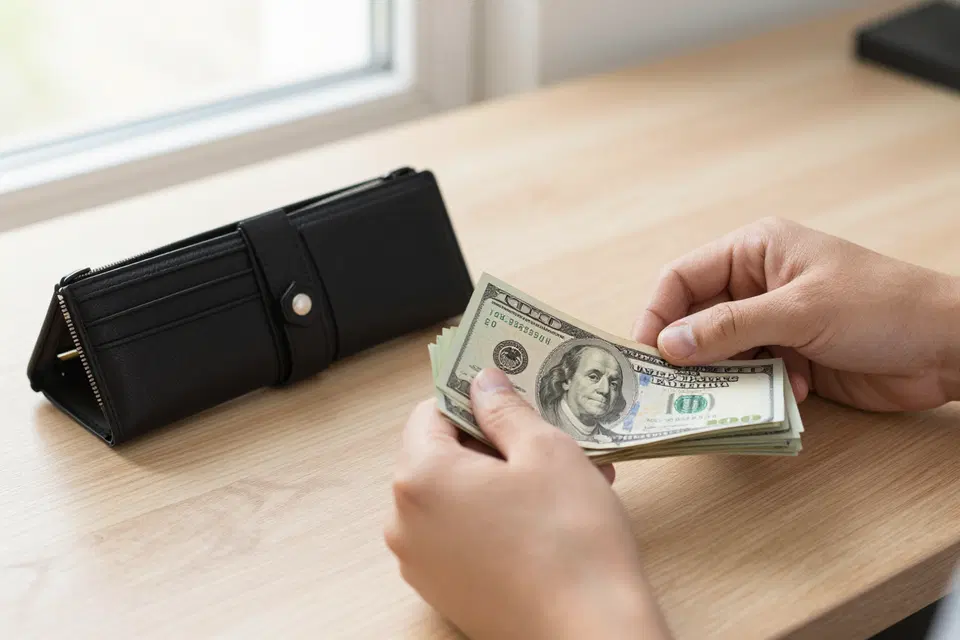
At 9:14 a.m. on a Tuesday, a price tracker says 1 SOL is worth $148.20. By the time you open an exchange, place an order, and confirm it, that number has moved. So has the amount you'll actually receive. The phrase solana to usd sounds like a single conversion, but it's a chain of small decisions: which venue, which order type, which fee schedule, and how deep the market is at that moment.
What "Solana to USD" Actually Means
SOL is the native token of the Solana network. USD is the U.S. dollar. Converting solana to USD means selling SOL for dollars, usually through an exchange or a broker. The rate you see is a market price, not a promise. If you're selling 0.5 SOL, the quoted price may be close to what you get. If you're selling 5,000 SOL, your order can push the price down as it fills. That effect is called slippage.
Price trackers add another wrinkle. They usually show the last trade or a midpoint between the best bid and ask. That's fine for a rough check, but it doesn't tell you what a specific trade will pay. For a plain-English breakdown of the forces behind the number, see what really moves SOL.
Where the SOL to USD Rate Comes From
Most solana to usd pricing you see is built from order books on large exchanges. Buyers post bids, sellers post asks, and the gap between them is the spread. When the spread is tight and volume is high, converting a few hundred dollars' worth is straightforward. When liquidity thins out, you eat a wider spread and possibly slippage. Decentralized exchanges add another layer: automated market makers set prices using pool balances, so large trades move the ratio more visibly.
Spot Price vs Fill Price
Spot price is the latest trade or midpoint. Fill price is what your order actually gets. A tracker might show $148.20, but a market sell on a smaller venue could fill at $147.90 before fees. On a 10 SOL trade, that 30-cent gap is $3. It sounds small until you multiply it across a larger position.
Fees That Show Up After the Headline Rate
- Trading fee: often 0.1% to 0.5% at retail brokers, lower on high-volume exchange tiers.
- Spread: the gap between the best bid and ask. It's invisible on many simple buy and sell screens but baked into the rate.
- Network fee: Solana transactions are cheap, usually fractions of a cent, but exchanges can charge a fixed withdrawal fee to move funds.
- Off-ramp fee: converting USD on an exchange to a bank account can cost a flat fee or a percentage.
How to Convert Solana to USD Without Guessing
Use a limit order if you want a specific solana to usd rate. A market order is faster, but it can fill at a worse price when the book is thin. For a small test, sell 0.1 SOL first and compare the confirmed amount with the quote. It's the quickest way to learn a venue's real costs.
Here's a concrete example. Say SOL trades at $145.00 and you sell 10 SOL. Gross proceeds are $1,450. A 0.2% trading fee takes $2.90. If your fill averaged $144.85, the gross is $1,448.50 before the fee. Add a $1 withdrawal fee to move dollars to your bank, and the practical difference between the tracker price and your bank balance is about $5.40.
If you hold SOL in a self-custody wallet, you'll need to send it to an exchange or use a swap service. Check the destination address, and send a small test transaction first. Solana fees are low, so a test costs little and catches mistakes before they get expensive.
What Moves the Solana to USD Rate
SOL can move 5% while the dollar index barely blinks. That's normal. Crypto prices respond to liquidity, market sentiment, bitcoin's direction, network activity, token unlocks, and macro news. Solana's throughput and low fees are real advantages, but they don't set the USD price by themselves. The comparison between Ethereum and Solana explains why raw speed was never the whole story.
The Dollar Side of the Pair
SOL/USD isn't only about Solana. If the dollar strengthens against risk assets, SOL can fall in USD terms even when network activity is steady. A move in BTC often drags the whole market, SOL included. Watch the pair, not just the token.
Reading a Quote Without Getting Burned
Check the timestamp, volume, and spread. A stale quote on a low-volume exchange can look great and fill badly. If a solana to usd rate is 2% better than every major venue, treat it as a warning, not a gift. Check whether the platform charges a withdrawal fee, has a minimum trade size, or requires identity verification before you can move dollars out.
The same logic applies to any crypto price quote. The article on how much one Ethereum really tells you makes the point well: a token's unit price is not the same as its value or your exit price.
Common Mistakes When Converting SOL to USD
- Using market orders on thin books. Split a large order or use a limit order when you care about the fill.
- Ignoring withdrawal fees. A $1 fee on a $50 conversion is 2%. On a $5,000 conversion, it's noise.
- Trusting one price tracker. Compare at least two venues before you sell.
- Forgetting tax records. In many countries, selling SOL for USD is a taxable event. Keep dates, amounts, and fees. Rules vary, so check your local guidance.
A Practical Checklist Before You Sell
Before you confirm a solana to usd conversion, run this quick check:
- Compare the live rate on at least two venues.
- Check the spread and 24-hour volume.
- Calculate the fee on your exact size, not a round number.
- Decide whether a limit order makes sense for your amount.
- Confirm withdrawal fees and bank timing.
A conversion that looks 0.3% better on a clean, liquid venue is usually worth more than a headline rate that hides costs. The best solana to usd rate is rarely the one on the biggest billboard. It's the one that lands in your account after every fee has been paid.