
Loading article...
Slot ID: blog-post-top
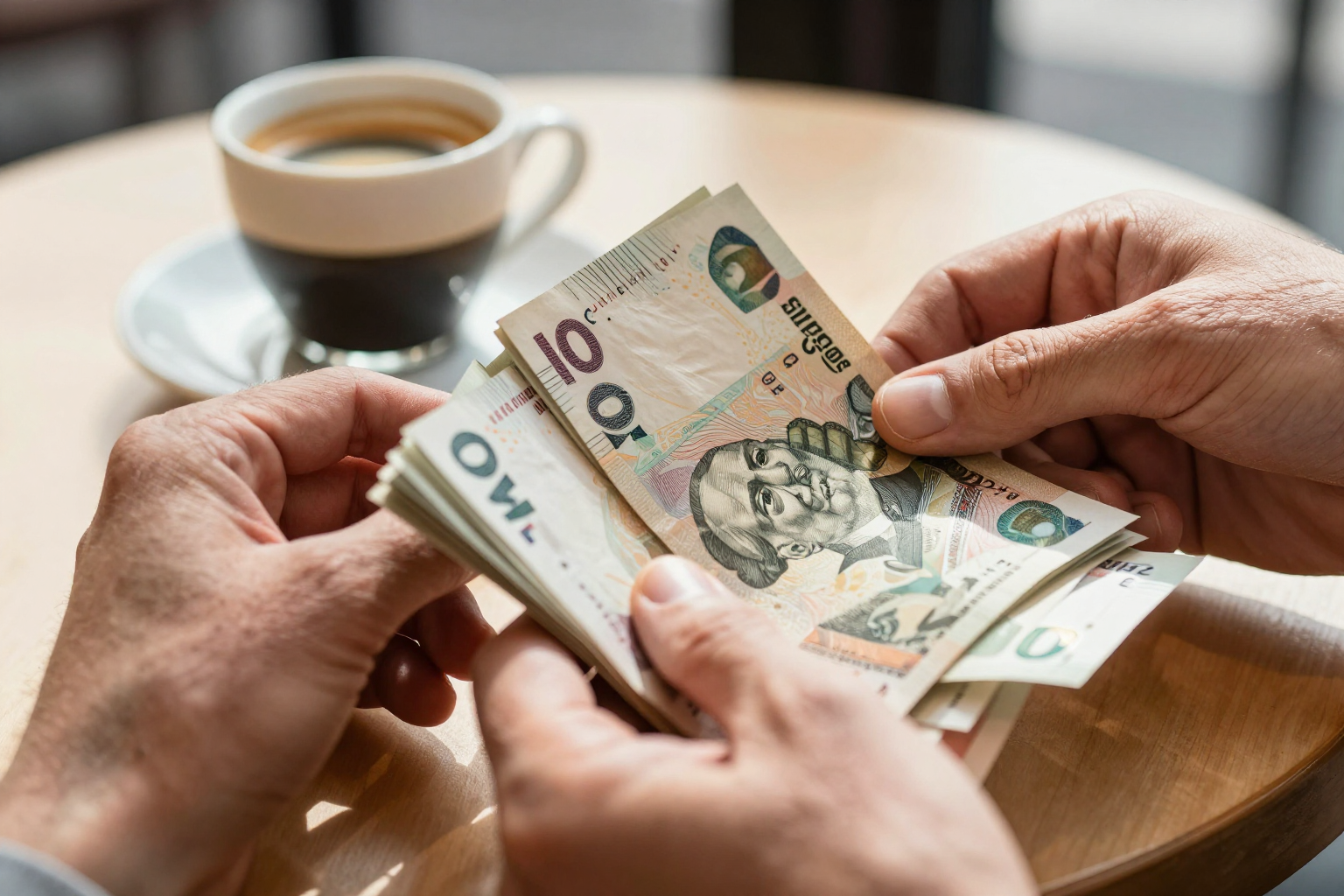
At 9:14 on a Tuesday morning, GBP/EUR reads 1.1685. Eight minutes later it's 1.1673. By lunch it's back at 1.1691. If you're sending £4,000 to a French contractor, that little wobble is worth about £4 — real money, but not the thing that decides whether you got a good deal. The number that decides that is the gap between the live rate you're watching and the rate your bank or app actually applies.
Most people check live currency exchange rates the way they check the weather: glance, react, forget. That works fine for curiosity. It works badly for money. Here's how to read those flickering numbers properly.
No single global price exists for a currency pair. Rates come from the interbank market, where banks and brokers quote each other continuously during trading hours. Aggregators pull from dozens of these liquidity providers, blend the quotes, and push an update every few seconds. Two apps showing you "live" GBP/USD at the same moment can differ in the fourth decimal simply because they weight their sources differently.
Some numbers labelled as live aren't. The European Central Bank publishes reference rates once a day, around 16:00 CET, and they're fixed until the next publication. Plenty of sites display that daily figure next to a ticking clock and a green arrow. It's a useful benchmark, not a live quote.
Market hours matter too. Foreign exchange runs around the clock Sunday evening to Friday evening, but liquidity thins out between the New York close and the Tokyo open. Spreads widen in that window, and thin liquidity can turn a small order into an ugly fill.
The rate you see on Google or Reuters is usually the mid-market rate — halfway between the price at which dealers will buy a currency and the price at which they'll sell it. It's the fairest single reference point available, and nobody is obliged to give it to you.
That's the whole game. A bank can advertise "commission-free transfers" and still profit handsomely by applying a rate 1.5% away from mid-market. On £5,000, that's £75 disappearing without a line item anywhere on your statement. There's a reason the rate you see often isn't the rate you get, and it's rarely explained at the counter.
Try this: take the mid-market rate, compare it to the rate on your quote, divide the difference by the mid-market rate, then multiply by the amount. That percentage is a fee. Treat it as one.
When you look at a quote from a provider, you're really looking at a bundle:
That last one catches people out. A transfer quoted at 0.5% over mid-market can still arrive short because two intermediary banks each took £12 on the way through. Understanding what a money transfer exchange rate is really charging you means asking about the amount that lands, not the amount that leaves.
EUR/USD at 1.08 means one euro buys 1.08 dollars. The first currency is the base; the second is the quote. Simple enough — until you need the reverse.
If USD/EUR is 0.9259, that's the same price expressed the other way, not a different one. A surprising number of people compare a provider quoting USD/EUR against one quoting EUR/USD and conclude one is far cheaper. Flip the number (divide 1 by the rate) before you compare anything.
Watch the direction of travel too. A rising GBP/USD is good news if you're sending pounds to the US and bad news if you're repatriating dollars. "The rate went up" means nothing without knowing which side of the trade you're on.
For a benchmark, central bank published rates and major financial data providers are reliable and free. For a decision about a specific transfer, though, you want the rate your chosen provider will apply — and you want it seconds before you confirm, not from a screenshot taken an hour ago.
Comparison sites are decent for a first pass, but their figures are often cached. A rate that looked competitive at 10:00 may have drifted by 10:40, especially on pairs like USD/TRY or GBP/ARS where daily moves of 2% aren't unusual. Rates on exotic pairs also carry wider spreads, which is why remittance exchange rates deserve closer scrutiny on corridors like these.
Honest answer: less often than the internet suggests. Major pairs typically move 0.3% to 0.7% in a day. A 0.5% swing on a $10,000 transfer is $50 — meaningful, but often smaller than the difference between a cheap provider and an expensive one, or between a £20 flat fee and a free one. Sorting out wire transfer fees and who takes a cut along the way will usually beat waiting three weeks for a favourable tick.
Timing genuinely pays when:
For a £300 transfer to family, watching the charts for a week to save £1.80 is a hobby, not a strategy.
Rate alerts beat refreshing a page. Most major providers and a handful of independent apps let you set a target — say, notify me when GBP/EUR hits 1.1750 — and they'll email or ping you when it's there. Set the target somewhere realistic, based on the last month's range rather than a hopeful round number. Then let the alert do its job and get on with your day.
If you need certainty rather than the best possible price, a forward contract locks today's rate for a future transfer, usually for a deposit. It's the standard tool for anyone who knows they'll be paying €40,000 in three months and can't stomach a 4% adverse move.
Before any transfer, run the same short routine. It takes less time than making coffee and it's the difference between an average deal and a good one.
If a provider can't tell you the amount that lands, that's your answer. Pick one that can, set a rate alert for the pairs you use regularly, and stop treating live currency exchange rates as background noise. They're a price tag — and you're allowed to read it before you pay.
Slot ID: blog-post-bottom