 Currencies
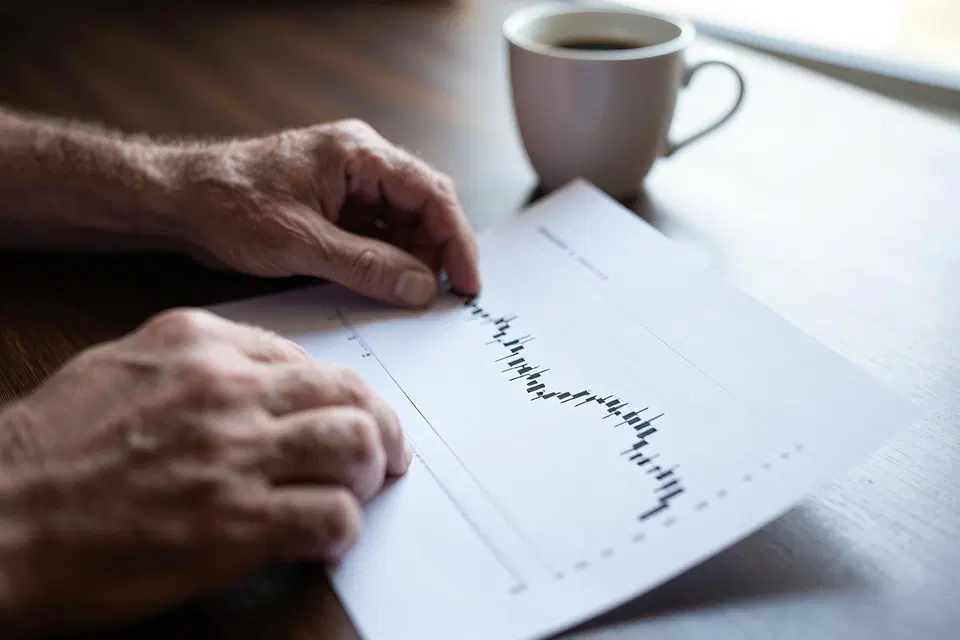
You have a rule set you like. Maybe it's a 20/50 EMA cross on the four-hour chart, stop under the last swing low, target at two times risk. Before you put £1,000 behind it, you want evidence. That's the job of forex backtesting: replaying historical price data, applying your rules mechanically, and counting what would have happened.
The trouble is that backtesting is easy to do badly. Sloppy data, no spread costs and a 40-trade sample will happily tell you anything you want to hear. Running the test is the easy part. Running one that survives contact with a live account is the skill.
What a backtest can and cannot tell you
Backtesting answers one narrow question: given these rules and this data, what would this strategy have returned? It does not tell you what EUR/USD will do next month, and it cannot capture the moment at 14:29 on a Friday when you've taken three losers and are deciding whether to take the fourth signal. Execution under pressure is a separate problem, and it's usually where good backtests quietly die.
Treat it as a filter rather than a prophecy. You run a test to throw out ideas that are obviously broken and keep the two or three worth watching in real time.
Three ways to test, ranked by how much you'll trust them
Manual bar-by-bar replay
Open a chart, hide the future candles, and step through one bar at a time, writing down entry, exit, position size and result. It's slow. A 200-trade sample can swallow a weekend. But you notice things a machine won't show you: how often price came within two pips of your stop before running to target, how many valid setups appeared in a single quiet Tuesday session, how the ranges felt when they were happening.
Spreadsheet replay
Faster than manual, and it forces you to record the details that matter. Columns for date, direction, entry, stop, target, R multiple and a notes field. If you already keep a forex trading journal, build the backtest log in the same format. Comparing your historical behaviour with your live behaviour then becomes a simple side-by-side read instead of an archaeology project.
Automated testing
MetaTrader's Strategy Tester, TradingView's bar replay and Pine backtester, or Python with pandas and backtrader. This gets you through ten years and thousands of trades in minutes. The catch is obvious once you think about it: an automated test is only as honest as the assumptions you feed it.
Data quality is where most tests fall apart
If your broker's history has gaps, or the tester defaults to "open prices only", your results are decoration. Free M1 data will do for most swing testing, but check for missing days, zero-volume candles and obviously wrong wicks before you trust a single number. On MT4, "every tick" modelling is the minimum. Anything less and intrabar stop placement becomes guesswork, which flatters any strategy with tight stops.
Cost your trades the way a live account would
A backtest that ignores costs is a fantasy with a nice equity curve. On EUR/USD a raw spread might average 0.2 pips with $7 per lot round-turn commission, then blow out to 3 or 4 pips at 08:30 London time or through an NFP print. On something like USD/TRY, 40 pips is a normal Tuesday. Build the average into every trade and test a slippage assumption on top, perhaps 0.3 pips per round turn for majors in liquid hours and 1 to 2 pips in thin conditions.
Swap matters too, and people forget it. A position held six days on a wide-rate-differential pair can lose more to financing than it makes on the price move. If you're testing a carry-style swing strategy, overnight financing isn't a footnote, it's half the P&L. Broker choice shapes all of this, and cheap spreads aren't the whole story; a broker's regulatory licence tells you something about how your money is held, which matters more than a tenth of a pip.
The numbers worth looking at, beyond win rate
- Expectancy: average result per trade in R. A system winning 35% of the time at 3R average is far healthier than one winning 70% at 0.3R.
- Sample size: 30 trades proves nothing. Aim for 100 as an absolute floor and 200+ for a swing system.
- Max drawdown and longest losing streak: the real test is whether you'd have kept following the rules through it.
- Distribution of results: if three monster winners carry the whole curve, you own a lottery ticket, not an edge.
- Performance by regime: split results by trending and ranging months. A trend system that only worked during 2020's volatility is a warning, not a feature.
Where backtests lie to you
Curve fitting is the big one. Nudge the moving average from 20 to 21, the stop from 1.5 ATR to 1.8, and a losing system turns profitable. That isn't discovery, it's fitting noise. A useful sanity check: if small parameter changes swing the result from +30% to -10%, you have found nothing at all.
Then come the quieter traps. Testing on the same data you used to design the rules. Testing only the pairs that worked. Ignoring how a strategy behaves when spreads widen. A good many of the forex trading mistakes that quietly empty accounts begin life as a backtest somebody ran once, on one pair, in one favourable year.
Be sceptical of anyone selling a system with a screenshot of a backtest attached. Vendors curve-fit too. The classic forex trading scam pitch arrives with a flawless equity curve and no audited live track record; if the seller won't show forward-tested, verifiable results, the backtest is marketing copy.
Crossing the gap from backtest to live
Once a strategy passes, run it forward on demo or a small live account for 50 to 100 trades. Then compare. If the backtest promised +0.4R per trade and the live sample is sitting at -0.1R after 60 trades, something in execution, spread or your own discipline is off, and you want to find that out at £0.50 per pip rather than £5. This is precisely where the boring forex trading tips that survive contact with a live account earn their keep: fixed risk per trade, no adding to losers, no widening stops mid-trade.
How much testing is actually enough
Enough looks like this: 200 trades of clean tick data, realistic spreads and commission baked in, results broken down by pair and by quarter, and a forward test that roughly matches. At that point the marginal value of more testing drops sharply, and continuing is usually procrastination dressed up as diligence. Traders who spend three years perfecting a backtest never find out whether they can execute it.
The honest position is that backtesting gives you a probability estimate, not a promise. It tells you the odds are decent, the drawdown is survivable, and the rules are specific enough to follow at 7am without inventing anything. That's a low bar in theory and a surprisingly rare achievement in practice. Run the test properly, cost it honestly, then go and find out what you're really like when the money is real.