
Loading article...
Slot ID: blog-post-top
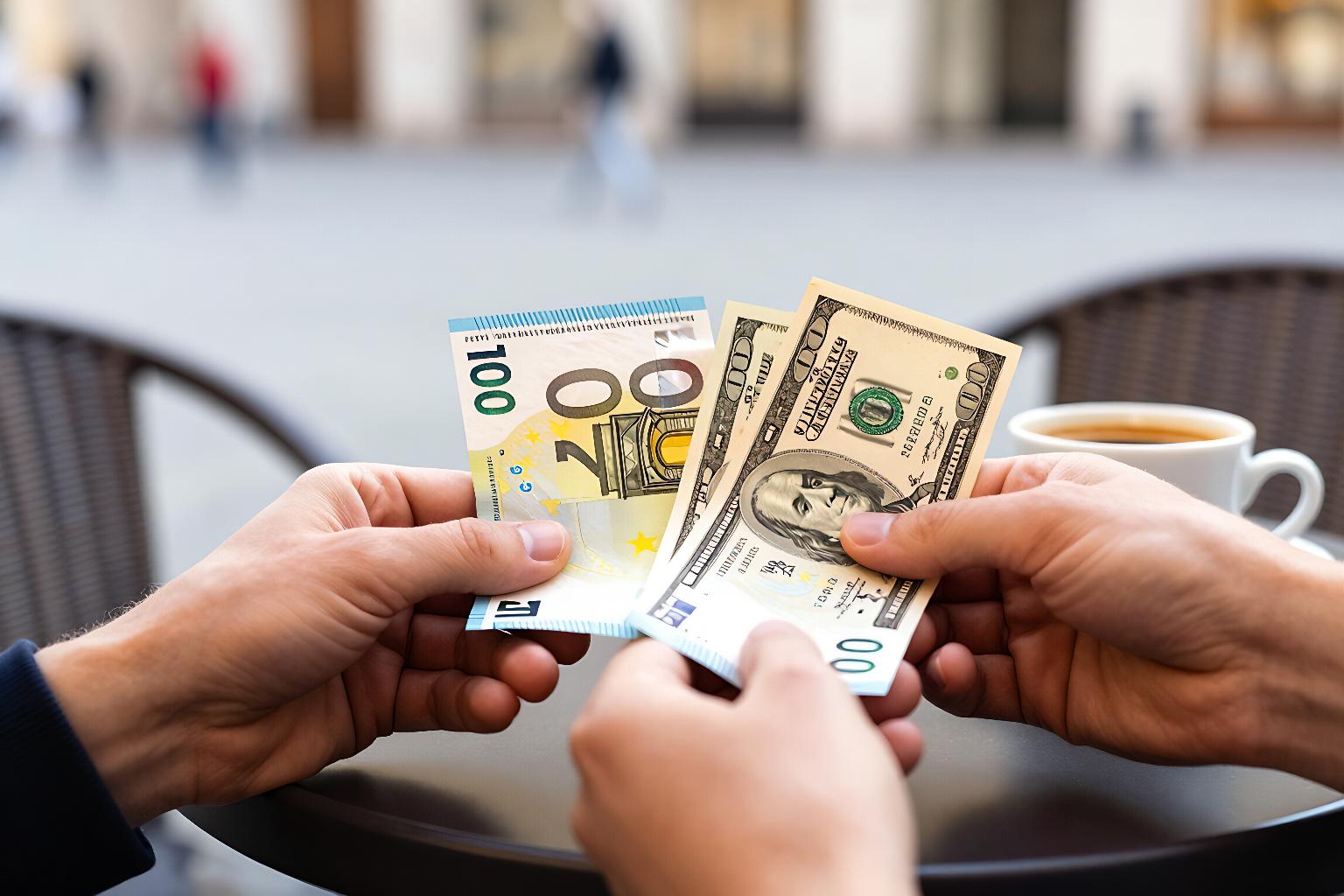
Two people check the dollar rate in Europe on the same Tuesday morning and walk away with different numbers. One sees 0.92 on a currency app. The other gets a receipt in Rome that works out to 0.885 once the commission is folded in. Both are "the dollar rate". Only one of them reflects what the second person actually paid.
That gap is the whole story. The dollar rate in Europe today is a single figure with a lot of fine print behind it: which European currency you mean, whether you're looking at a wholesale quote or a retail offer, and how much of the difference quietly becomes someone else's margin.
Start with geography. "Europe" takes in the 20-country euro area, the UK, Switzerland, Norway, Sweden and a long list of central and eastern European economies with currencies of their own. The dollar rate today means something different in Lisbon than it does in Warsaw.
The reference number most news outlets cite is the European Central Bank's daily fixing, published in the early afternoon Frankfurt time. It's a benchmark, not an offer. No bank, card network or kiosk is obliged to give you that number.
If a comparison site shows you one number and the board outside a bureau de change shows another, nobody is lying to you. The site is displaying the mid-market rate, the midpoint between wholesale buy and sell prices. The board is displaying a retail price that already contains the operator's rent, staff and profit.
The size of that built-in margin varies far more than most people realise. A mainstream bank card in the euro area typically adds around 0.5% to 3% on top of the mid-market rate. An airport kiosk in a tourist district can be several times that. It's worth knowing what you really pay on the US dollar exchange rate in Europe before you assume the first quote you see is close to fair.
Currency desks in London handle more dollar-euro volume before lunch than most regional markets see in a week, so the rate you check at breakfast can be genuinely stale by mid-afternoon. Three forces do most of the pushing.
When markets think the Federal Reserve will hold rates higher for longer than the ECB, dollars tend to firm. When the expectation flips, the euro catches a bid. Speeches from Fed governors and ECB board members move the rate more than the actual decisions do, because the decisions are usually priced in weeks ahead.
US inflation prints, non-farm payrolls and euro-area PMI releases are the three dates circled on most traders' calendars. A hot US CPI number can move USD/EUR by half a percentage point within minutes. If you're converting a large sum, checking the calendar first is not paranoia.
The dollar is still the default hiding place when equity markets get nervous. A sudden selloff in stocks usually means a stronger dollar against the euro, regardless of what the underlying economic data says.
Plenty of confusion comes from nothing more than direction. A quote of 1.08 USD/EUR means one euro costs 1.08 dollars. Flip it, and one dollar buys about 0.926 euros. Both statements describe the same market, but a rising first number means a weaker dollar, while a rising second number means a stronger one.
That inversion trips people up constantly when they compare providers. If you want a gut-check on what one dollar actually buys you in euros, convert a round amount like 100 or 500 and compare the final figure, not the quoted rate. The arithmetic is harder to fudge than the headline.
Your true cost of converting is the spread plus every fee bolted onto it. Most of these are avoidable once you know they exist.
The pattern holds well beyond Europe, too. The distance between the screen rate and the delivered rate is the same trick you see in the gap between the quoted and delivered USD to Nigerian naira rate, just with different numbers attached.
A short routine beats scrolling through rate widgets all afternoon.
That last point matters more than it sounds. Chasing a tenth of a percent across four providers can cost you a couple of hours and produce a worse outcome than a single clean transfer. Knowing what the dollar-to-euro rate really costs you after fees is useful, but only if it changes what you do.
For a $200 transfer, the difference between a good day and a bad day is roughly two coffees. It isn't worth monitoring charts. For a $25,000 property deposit or a year of tuition fees, every cent on USD/EUR is $250, and a swing from 1.06 to 1.10 is a four-figure difference.
If the sum is large, split it. Converting half now and half in six weeks averages out the timing risk without pretending you can predict the Fed. Set a target rate with your provider and let it execute automatically if the market touches it, which removes the temptation to check the dollar rate in Europe every morning and second-guess yourself.
One practical note for anyone paying European invoices from the US: book the transfer on a Tuesday or Wednesday morning in New York, when London and Frankfurt liquidity are both live. Spreads tighten, quotes hold longer, and you're less likely to be handed a weekend rate that quietly costs you 1.5% before you've even pressed send.
Slot ID: blog-post-bottom