
Loading article...
Slot ID: blog-post-top
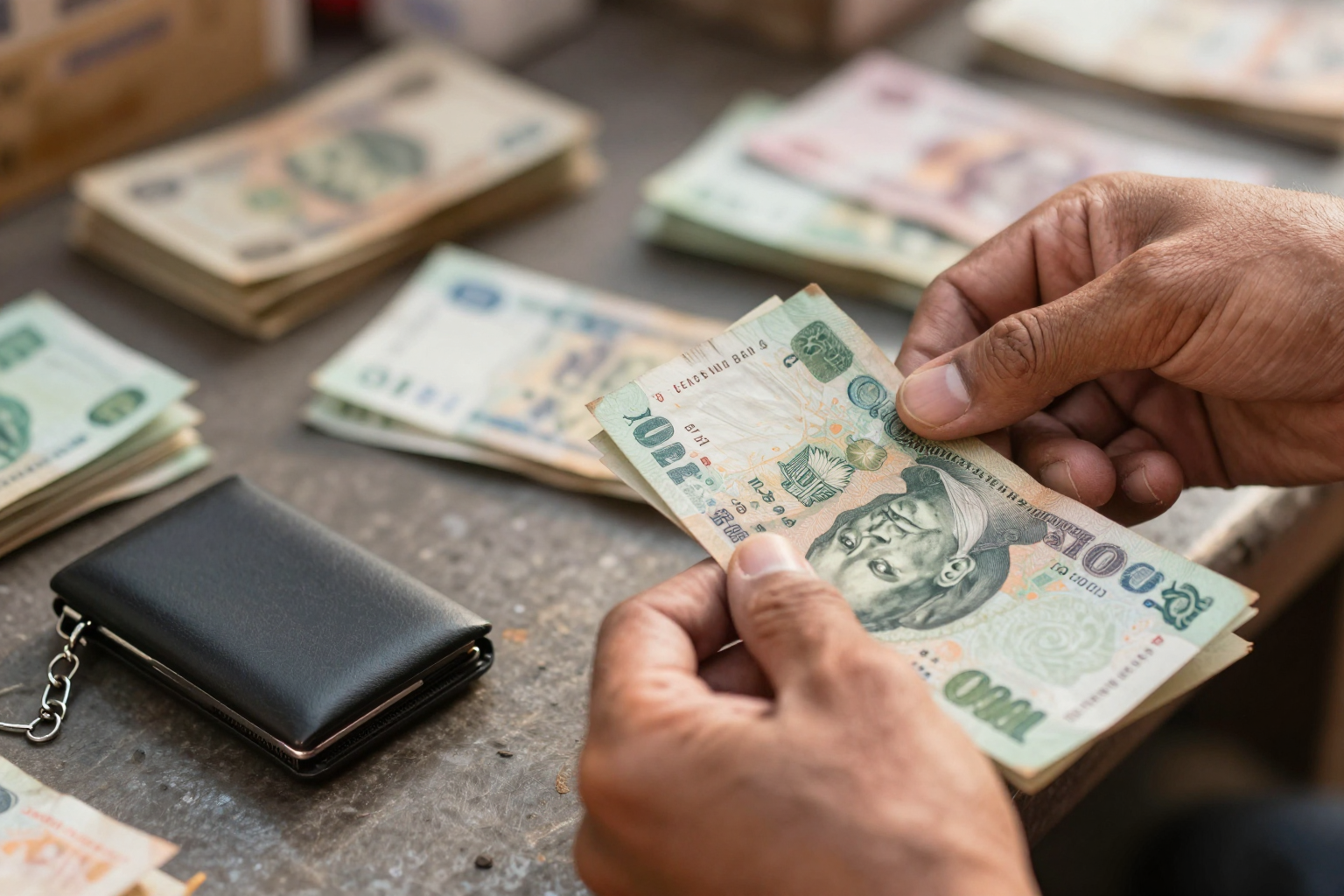
In September 2021, El Salvador became the first country to make Bitcoin legal tender. Two years later, surveys kept finding that only a small slice of Salvadorans had ever used it to buy anything. The dollar still ran the shops, the tax office still wanted dollars, and the government kept stacking sats anyway.
That gap between enthusiasm and daily habit is a good place to start any honest comparison of cryptocurrency vs fiat currency. The two aren't rival versions of the same thing. They're built on completely different foundations, and once you see that, most of the arguments online start to make sense.
The word comes from the Latin fiat, "let it be done." A dollar bill isn't valuable because of the paper or the ink. It's valuable because the US government says it is, demands it for taxes, and refuses to accept anything else. That legal status sits on top of a much older habit: everyone you know already uses the same money, which makes it useful whether or not you trust the issuer.
The trade-off is baked in. Because a central bank controls supply, it can expand it. US M2 money stock went from roughly $15.4 trillion in early 2020 to about $21.7 trillion by 2022, a jump of around 40% in two years. You felt that in grocery prices. Long-run erosion is steady too: a dollar in 1970 buys what about eight dollars buys today, which means the same dollar has lost roughly 87% of its purchasing power.
Bitcoin has no treasuries, no central bank, and no one to call when you fat-finger a transaction. What it has is a public list of every transaction ever made, copied onto thousands of machines, with a hard cap of 21 million coins written into the rules. New coins arrive roughly every ten minutes and the reward halves every four years. Nobody can quietly print more, and nobody can reverse your payment because they don't like your politics.
Self-custody is where that cuts both ways. If you hold your own keys, no bank can freeze your balance. Lose the seed phrase, though, and the coins are gone with no complaints department. Ask anyone who had funds on Mt. Gox in 2014 or FTX in 2022 how much comfort the slogan "not your keys, not your coins" offers after the fact.
Bitcoin's supply schedule is public and unchangeable without breaking the network. Fiat supply is a committee decision, adjusted for unemployment, credit conditions, and whatever else is worrying the people in the room. One gives you certainty about the denominator and zero certainty about the economy around it. The other gives you the reverse.
Fiat loses value gradually, in a way most people barely notice month to month. Crypto can move 8% before lunch. That makes it a poor unit of account for wages and a difficult store of value for anyone who might need the money next quarter. If you want to understand what the price swings are telling you and what they aren't, reading a live price board without getting fooled is a skill worth building before you buy anything.
Cross-border payments are the clearest practical gap. The World Bank puts the global average cost of sending remittances at around 6.2%, and a bank wire between countries can take two to five business days. A Bitcoin transfer on the Lightning Network settles in seconds for fractions of a cent, and stablecoins on cheap chains move billions a day for under a dollar. The catch is liquidity: someone at the other end has to be able to convert it into something they can spend locally.
Roughly 1.4 billion adults still have no bank account, according to World Bank data, but a growing majority of them have a smartphone. A crypto wallet needs no address proof, no minimum balance, and no branch visit. That's genuinely transformative in places where the nearest bank is a two-hour bus ride away. It's also transformative for people under sanctions or moving dirty money, which is the uncomfortable half of the same feature.
Here's the comparison in shorthand:
Legal recourse is the big one. Pay for a sofa with a card and it never arrives, you dispute the charge. Pay in Bitcoin and the transaction is settled whether or not the seller is honest. Deposit insurance, consumer protection rules, and the fact that your landlord, tax office, and local bakery all accept the same currency are enormous advantages that don't show up in technical comparisons.
Central banks also have tools crypto doesn't. In a banking panic, a lender of last resort can stop a spiral. In a recession, rates can be cut. You can argue about whether those tools get used well, but the absence of any equivalent in crypto is why bear markets there tend to run 70% deep rather than 20%.
Programmable money is the underrated one. A contract can hold funds in escrow and release them on delivery confirmation, with no lawyer and no trust in the counterparty. Public ledgers also make auditability trivial: anyone can verify total supply and every movement, which is a different world from trusting a quarterly statement.
Round-the-clock markets matter more than people expect. Your bank closes on Sunday. Bitcoin doesn't, and neither does the exchange, which is why news breaks get priced in minutes rather than Monday morning. That speed has a downside, and separating market-moving crypto news from clickbait becomes a survival skill rather than a hobby.
Most people arguing about cryptocurrency vs fiat currency are picturing Bitcoin, but the money actually being used for payments looks different. Dollar-pegged stablecoins like USDT and USDC now circulate in the hundreds of billions, and in places with capital controls or double-digit inflation they function as a savings account that happens to be denominated in dollars. That's fiat value with crypto rails.
Governments noticed. More than 130 countries are researching or piloting central bank digital currencies, which would put a state liability directly on a programmable ledger. Whether that ends up as a convenience or a surveillance tool is one of the live questions in the cryptocurrency future worth paying attention to, and it's a question that has nothing to do with price charts.
Treat them as serving different jobs. Fiat is your operating system: rent, groceries, emergency fund, the money you cannot afford to see drop 40% in a month. Crypto is a risk allocation, closer in behaviour to a volatile growth stock than to a savings account, which is why the real differences between cryptocurrency and stocks are worth understanding before you size a position.
A workable rule of thumb: keep three to twelve months of expenses in fiat, hold crypto in an amount you'd shrug off if it halved, and keep long-term holdings in self-custody rather than on an exchange you'd have to sue. The rest is noise. Most of the energy in this debate comes from people comparing the best case for one system with the worst case for the other. Both currencies do a job. Only one of them sends your rent to a landlord who accepts it, and only one of them lets you move a thousand dollars across a border at 2am without asking anybody's permission. Knowing which is which, and holding both on purpose rather than by accident, is most of what this comparison is good for.
Slot ID: blog-post-bottom