
Loading article...
Slot ID: blog-post-top
A bitcoin wallet does not hold bitcoin. That one fact explains more confusion, and more permanently lost coins, than anything else in crypto. What a wallet actually stores is the key that proves you are allowed to move coins recorded on the blockchain. Lose the key and the coins are still there, sitting at an address that nobody on earth can spend from.
Once that clicks, choosing a wallet stops being about logos and app design. It becomes one question: who controls the key, and what happens if it disappears?
Every wallet generates key pairs. The private key is a 256-bit number, usually written as 64 hex characters, and it is what lets you authorise a spend. The public key is derived from it, and addresses are derived from the public key. Give someone an address and they can send you coins. Give them the private key and they own everything at every address your wallet has ever generated.
So when someone says "send it to my wallet," what they mean is "send it to an address my wallet controls the key for." The app on your phone is a key manager and a transaction signer. That is the whole job.
You can load an extended public key into a watch-only wallet on your phone. You then see balances and generate fresh addresses in real time, while the private keys stay on an offline device at home. It is a good way to monitor a cold stash without dragging a hardware wallet out of a drawer every time you want to check a number.
A hot wallet keeps a private key on a device connected to the internet. Electrum on a laptop, BlueWallet on a phone, a browser extension. Convenient, free, and entirely dependent on your machine not being compromised.
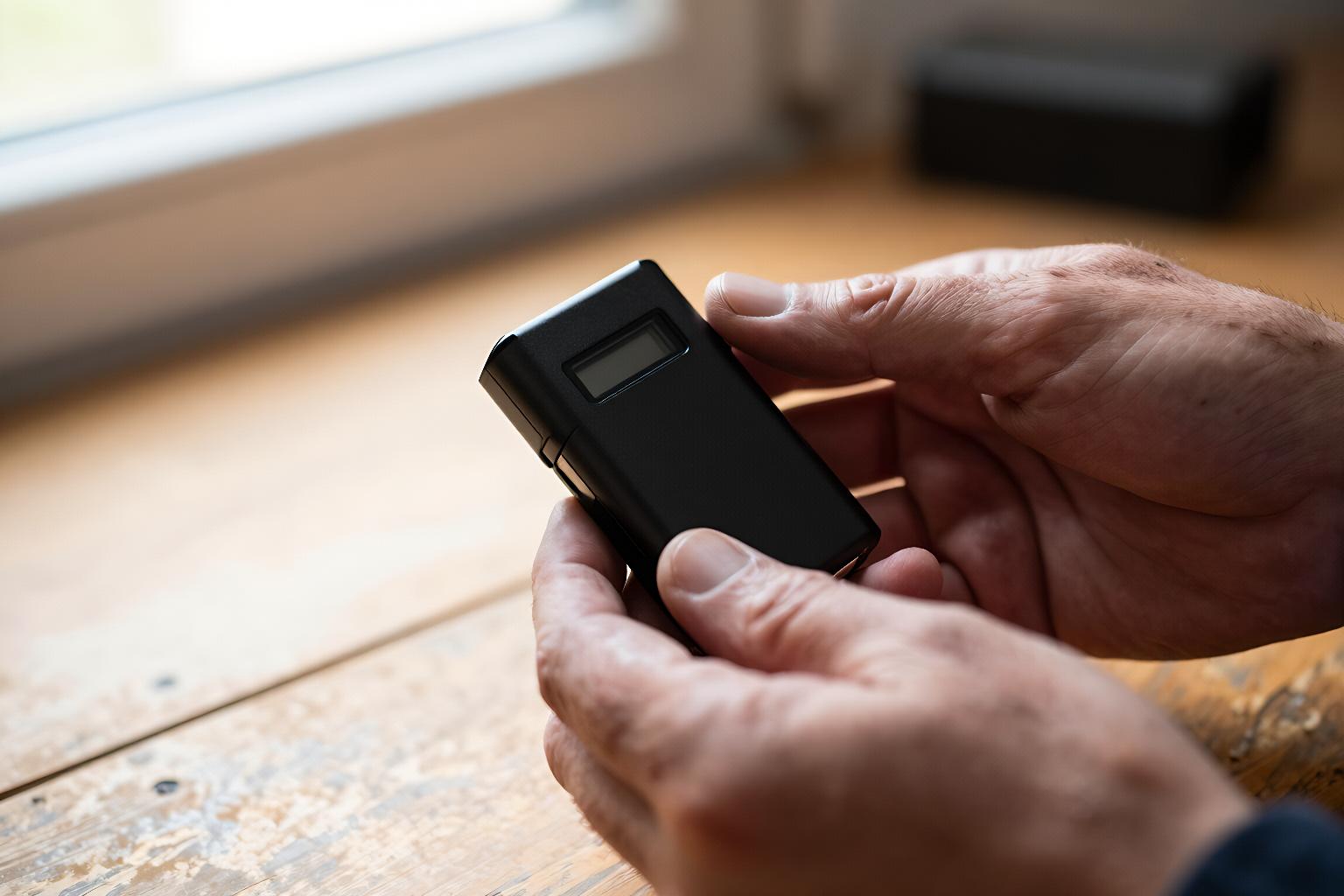
Cold storage keeps the key offline. These days that usually means a hardware wallet such as a Trezor, Coldcard or BitBox: a small device that signs transactions internally and never exports the key. You plug it in, approve the payment on the device's own screen, and a signed transaction goes back to your computer. Malware on the laptop can propose a transaction, but it cannot sign one behind your back.
Printed paper wallets are mostly obsolete. They encourage address reuse, fade in a damp drawer, and are easy to photograph by accident. "Brain wallets" are worse: memorised phrases get swept by crackers running dictionaries of every plausible quote and song lyric, often within minutes of first use.
Leaving bitcoin on an exchange means a company holds the keys and you hold an IOU. That is fine for the week you are actively buying, and a poor plan for a decade. Mt. Gox lost roughly 850,000 BTC in 2014. FTX froze customer withdrawals overnight in 2022. Neither was a wallet failure. Both were custody failures, and in both cases customers had no key to fall back on.
Self-custody moves the risk from a company to you. That is a genuine trade, not a free upgrade. Nobody can reset your password. The practical routine, from seed generation to geographic backups, is covered in detail in how to store bitcoin: custody, backups, and the mistakes that actually cost people coins.
Writing the seed phrase on paper and then photographing it is the single worst habit in self-custody. Photos sync to iCloud or Google Photos. Cloud accounts get phished. Phishing gets coins. The same applies to typing a phrase into a password manager, a note app, or a "wallet validation" web page. No legitimate service ever needs your seed phrase, and any site that asks is stealing from you.
Write it on paper and keep it somewhere dry and physically secure. If you are holding serious value, stamp the words into a metal plate so a fire does not end the exercise. Keep copies in two separate buildings. Then do the part almost nobody does: wipe the device, restore from the phrase, and watch the balance reappear. An untested backup is a rumour.
Bitcoin fees are charged by transaction size, not by value. A wallet that accumulates a dozen small unspent outputs (UTXOs), say from weekly $20 buys or old mining payouts, can end up paying far more to move coins than someone holding one large output. Sweeping twelve inputs at 40 sats/vbyte can easily cost several times what a single-input spend would.
Decent wallets let you consolidate during quiet weekends when the mempool is empty and the rate sits near 2 sats/vbyte. This matters more as time goes on: block subsidies shrink with each bitcoin halving, so fee revenue becomes a larger share of what miners earn and the fee market is not getting cheaper. When you eventually cash out, the timing and method matter too, as covered in how to sell bitcoin without leaving money on the table.
Under about $1,000, a well-reviewed mobile wallet with a written seed phrase is a reasonable place to start. Between $1,000 and $10,000, a hardware wallet at roughly $60 to $150 is cheap insurance. Above that, consider 2-of-3 multisig, where three keys exist and any two can spend, so a single lost or stolen key never strands the funds.
Most people end up with two wallets, not one: a hardware wallet for savings that rarely moves, and a small hot wallet on a phone holding spending money. Keep exchange balances near zero except while actively trading. If you are still acquiring coins, the mechanics of order type, spread and timing are worth reading up on before you click buy, starting with how to buy bitcoin without overpaying on fees, spread or timing.
A wallet that emails you a "security upgrade" link. A support agent in a Telegram group asking for your seed phrase to "sync" your account. A browser extension with 40 reviews, all posted last Tuesday. A hardware device bought second-hand from an auction site, arriving with a pre-filled recovery card in the box. That last one is a known scam: the card's phrase belongs to the seller, and the moment you fund it, your coins leave.
Buy hardware directly from the manufacturer, generate the seed yourself on the device, and treat any phrase you did not personally create as already stolen. Check the device's firmware signature, and if it arrives with a scratch-off card or a printed seed, send it back.
Slot ID: blog-post-bottom